Hanoi (VNA) – Vietnam’s tourism sector marked a milestone year in 2025, with international arrivals reaching nearly 21.2 million, up more than 20.4% from 2024 and the highest level on record, highlighting the sector’s strong recovery.
The surge in visitor numbers and tourism revenue made a significant contribution to growth in the services sector and the broader economy.
According to the Vietnam National Authority of Tourism (VNAT), more than 2 million international visitors arrived in December alone, up 15.7% year on year, pushing total arrivals for the year to a new high. Compared with 2019, the pre-COVID-19 benchmark, international arrivals rose by 17.8%.
A report by the National Statistics Office showed that Vietnam’s gross domestic product (GDP) expanded by 8.02% in 2025. The services sector grew by 8.62%, accounting for 51.08% of total value added. Buoyant trade and tourism activities, with international arrivals at an all-time high, played a key role in driving services growth. Revenue from accommodation and catering services was estimated at 843.1 trillion VND (32 billion USD), up 14.6%, while travel services revenue reached 93.9 trillion VND, an increase of 20.2%.
VNAT Chairman Nguyen Trung Khanh said welcoming nearly 21.2 million international visitors in 2025 marked a new breakthrough in Vietnam’s tourism development, enhancing the country’s position and brand on the global tourism map. While global international arrivals increased by only about 5%, Vietnam far outpaced the average, ranking among the world’s fastest-growing destinations alongside Japan. This performance provides a solid foundation for the sector’s target of attracting 25 million international visitors in 2026.
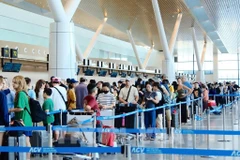
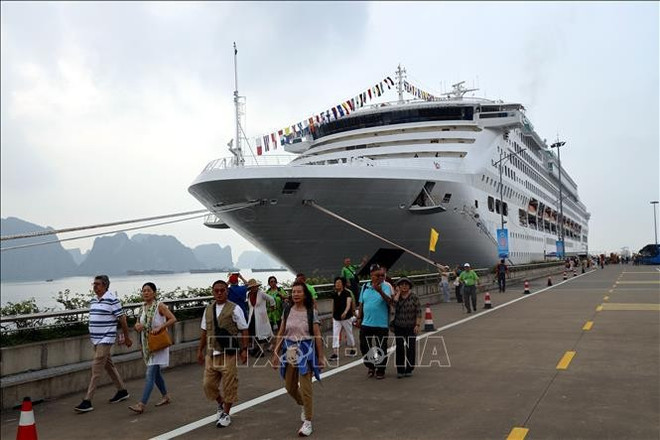
In terms of entry modes, arrivals by air exceeded 17.8 million, accounting for more than 84.3% of the total, underscoring the pivotal role of aviation and Vietnam’s expanding international connectivity. Arrivals by land and sea also posted positive growth of between 10% and over 20%.
By source markets, Asia remained Vietnam’s largest contributor, accounting for 78.6% of total international arrivals with 16.6 million visitors, followed by Europe with 2.8 million, then Oceania and Africa.
China continued to lead with more than 5.3 million visitors, accounting for about 25% of total international arrivals, followed by the Republic of Korea (RoK), Taiwan (China), the US, Japan, India, Russia, Cambodia, Malaysia and Australia. These markets recorded steady growth, supporting the diversification of Vietnam’s international visitor base.
Large Asian markets remained the main growth drivers in 2025. Arrivals from China surged by 41.3% compared with 2024, Japan increased by 14.4%, and India jumped by 48.9%, while arrivals from the RoK edged down by 5.2%.
Neighbouring Southeast Asian markets continued to expand strongly, notably the Philippines (up 81.3%), Cambodia 44.8%, Laos 20.6%, Malaysia 15.8%, Singapore 15.5%, Indonesia 12.5% and Thailand 9.5%.
Europe recorded particularly robust growth of 38.8% year on year, with many markets posting double-digit increases. Russia emerged as the largest European source market, with 690,000 visitors, up 196.9%. Thanks to the effectiveness of short-term visa exemption policies under Resolution No. 11/NQ-CP, arrivals from Poland, the Czech Republic and Switzerland also rose sharply.
Amid intensifying global competition and rising demand for sustainable tourism, VNAT said it will continue to guide localities and businesses to focus on developing green tourism, improving service quality, training human resources, and expanding promotion in new markets to sustain growth.
Alongside core tourism products based on cultural, natural, coastal and urban assets, greater emphasis will be placed on innovative offerings linked to smart and sustainable tourism, such as volunteer tourism, environmental protection, agricultural and rural tourism, film studio tours, street music and gastronomy. Destinations are also renewing products through modern technology, including virtual tourism, upgraded automated interpretation systems and enhanced visitor experiences.
Recently, the Ministry of Culture, Sports and Tourism directed efforts to accelerate the development of new tourism products linked to cultural industries, while coordinating with the Ministry of Health to develop medical and wellness tourism. To attract higher-spending visitor segments, Vietnam is also studying and developing new and premium tourism products, including those tailored for Muslim travellers./.