Vietnam becomes RoK’s key export market in ASEAN

The RoK’s exports to Vietnam rose 7.6% in 2025 from a year earlier to 62.8 billion USD, while imports from Vietnam climbed 11.7% to 31.8 billion USD, according to data released by the RoK’s Ministry of Trade, Industry and Energy and the Korea International Trade Association (KITA).

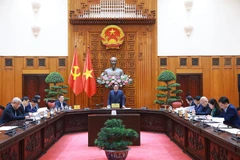
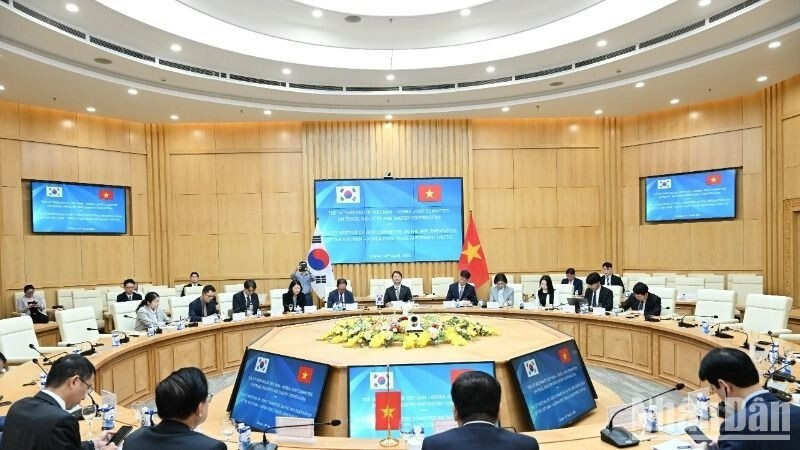
At a session of the Vietnam-RoK Joint Committee on Trade, Industry and Energy Cooperation in April, 2025 in Hanoi. (Photo: nhandan.vn)

Seoul (VNA) – Vietnam has emerged as the Republic of Korea’s (RoK) key export market in the Association of Southeast Asian Nations (ASEAN), as the East Asian country seeks to diversify trade and reduce its reliance on the US and China amid global volatility.

The RoK’s exports to Vietnam rose 7.6% in 2025 from a year earlier to 62.8 billion USD, while imports from Vietnam climbed 11.7% to 31.8 billion USD, according to data released by the RoK’s Ministry of Trade, Industry and Energy and the Korea International Trade Association (KITA).

That lifted two-way trade to 94.5 billion USD, up 9% from 86.8 billion USD. The total equals about 35% of the RoK’s trade with top partner China (272.7 billion USD) and 48% of that with the US (196.2 billion USD).

By export growth, Vietnam ranked second among the RoK’s markets at 7.6%, trailing only Taiwan (China), where demand surged for artificial intelligence chips.

The RoK posted a 31 billion USD trade surplus with Vietnam in 2025, up 1.1 billion USD from 29.9 billion USD a year earlier. The result made Vietnam the RoK’s second-largest source of trade surplus, after the US.

Vietnam topped the list in 2022 and has held second place for the past three years. The main driver has been a rebound in semiconductors. Fuelled by AI and global data-centre investment, chips — the RoK’s flagship export — hit a record 173.4 billion USD in revenue.

In Vietnam, semiconductors were also the largest export, with a turnover of 24.7 billion USD in 2025, a 36.7% jump from a year earlier.

Since the two countries established diplomatic ties in 1992, bilateral trade has surged 190-fold from 500 million USD, expanding from labour-intensive goods such as textiles to higher value-added products, including semiconductors and wireless communications equipment.

Trade has tripled since the Vietnam–RoK Free Trade Agreement took effect in 2014, lifting Vietnam from the RoK’s eighth-largest partner to third.

The trade structure is largely complementary. The RoK invests in Vietnam and exports intermediate goods to factories here, with Vietnam shipping finished products back. Samsung Electronics produces more than 50% of its global smartphone output in Vietnam and accounts for about 20% of the country’s total exports. The company has continued to expand its footprint, opening a large R&D centre in Hanoi in 2022. Exports of K-beauty and K-food products have also posted strong growth, supported by the global reach of the Korean Wave.

On the other side, the RoK plays a key role in Vietnam’s economy. Vietnamese customs data show that in the first 11 months of 2025, the RoK was Vietnam’s second-largest import market and fourth-largest export destination./.
VNA

See more

Turning international trade into sustainable growth driver

Turning international trade into sustainable growth driver

With total import-export revenue reaching 920 billion USD in 2025, Vietnam has officially entered the world’s top 15 economies in terms of international trade, marking a significant milestone in national development after decades of global economic integration and 40 years of Doi moi (Renewal). International trade has become a key driver of Vietnam’s economic growth.

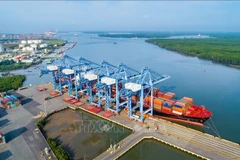
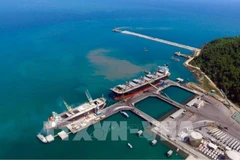
Cai Mep–Thi Vai deep-water port has helped with FDI attraction to the southeastern region. (Photo: VNA)

Resolution 79: State economic sector to lead, catalyse private sector development

More than a document reaffirming the leading role of the state economic sector in a new era, the Resolution opens up an unprecedented space of “mutual reinforcement”, in which the sector shifts from an administrative management mindset to one of “development facilitation”, and is expected to serve as a solid pillar enabling the private sector and other economic components to make breakthroughs.

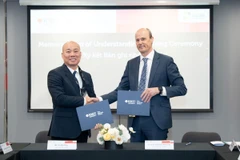
Vietnamese Ambassador to the RoK Vu Ho speaks at the event (Photo: VNA)

Vietnamese, Korean firms seek to enhance connectivity in new context

The association has actively contributed to policy discussions on issues important to Vietnam, including support for small- and medium-sized enterprises, artificial intelligence (AI) and sovereignty, as well as AI and semiconductor development policies in the RoK, while proposing recommendations for Vietnam.

Prime Minister Pham Minh Chinh chairs the Government Steering Committee for Macroeconomic Management and Administration's second meeting. (Photo: VNA)

Macroeconomic management must match words with action: PM

In 2025 the global environment remained highly uncertain due to geopolitical tensions and tariff policies, while domestically, natural disasters, storms and floods were unusually severe, exceeding historical levels. Despite these challenges, Vietnam recorded encouraging economic results, with inflation kept under control at 3.31%, macroeconomic stability consolidated, major economic balances safeguarded, and GDP growth reaching 8.02% – a notable rate globally.

A view of Chan May deep-water port (Illustrative image. Photo: VNA)

Resolution 79: Encouraging State-owned enterprises to link with FDI sector

The State economic sector has effectively fulfilled its function of orienting, leading and regulating economic activities, contributing to promoting economic growth, stabilising the macro economy, maintaining major economic balances, ensuring national defence and security, fostering social progress and justice, improving living standards and raising Vietnam’s international standing.

Delegates attend the closing session of the 14th National Party Congress (Photo: VNA)

14th National Party Congress: Chinese expert praises Vietnam’s growth targets

Vietnam should further refine mechanisms for mobilising infrastructure capital, including expanding public–private partnership (PPP) models and considering the establishment of a national-level special infrastructure fund to attract sovereign wealth funds and long-term capital, said Liu Ying, a research fellow at the Chongyang Institute for Financial Studies under the Renmin University of China.

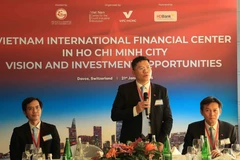
Vice Chairman of the Ho Chi Minh City People’s Committee Hoang Nguyen Dinh delivers remarks at the working luncheon themed “Vietnam International Financial Centre in Ho Chi Minh City (VIFC-HCMC) – Vision and Investment Opportunities”. (Photo: VNA)

Ho Chi Minh City strengthens global engagement at WEF Davos 2026

Vice Chairman of the Ho Chi Minh City People’s Committee Hoang Nguyen Dinh presented the city’s strategic vision, policy orientation and development priorities for building a modern, transparent and globally connected finance – technology ecosystem, with science – technology, data, artificial intelligence and fintech identified as core pillars.