Beijing (VNA) – Amid a global economic slowdown, Vietnam’s target of achieving average annual GDP growth of around 10% during the 2026–2030 period poses no small challenge. However, given its existing economic foundations and clear policy reform orientations, the goal remains attainable provided that the country effectively implements systemic structural reforms and accelerates infrastructure investment.
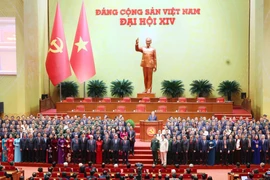
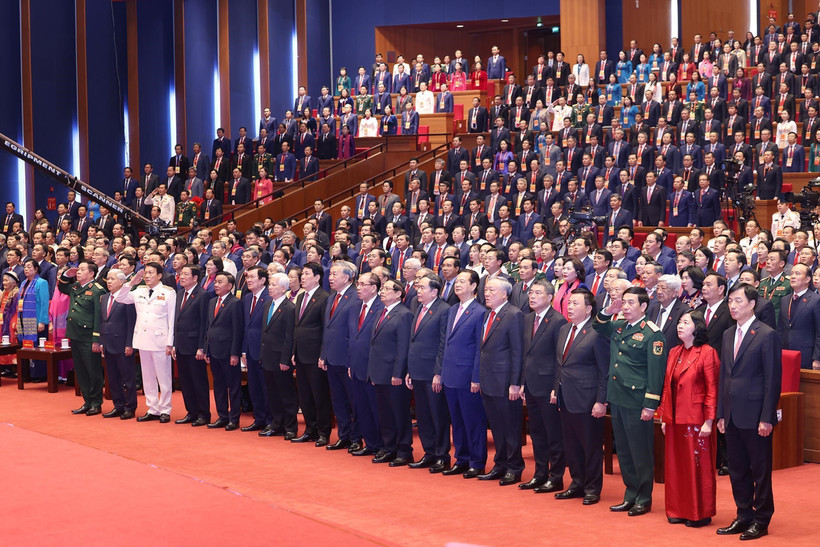
This assessment was made by Liu Ying, a research fellow at the Chongyang Institute for Financial Studies under the Renmin University of China, in an interview with Vietnam News Agency correspondents in China on the economic development objectives set out by the 14th National Congress of the Communist Party of Vietnam.
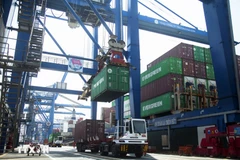
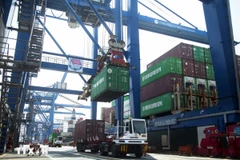
From an expert perspective, Liu noted that Vietnam should prioritise industrialisation and modernisation, increase infrastructure investment, and address bottlenecks related to logistics costs. She explained that Vietnam’s logistics costs account for about 16–18% of GDP, well above the global average of 10.7% and higher than in many ASEAN countries, weighing on the competitiveness of local businesses.
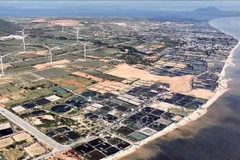
To better support production and expand exports, she recommended accelerating the implementation of the National Master Plan for the 2021–2030 period, with a vision to 2050. This includes a strong focus on expressway networks, high-speed railways, and seamless multimodal rail–sea transport systems. At the same time, Vietnam should further refine mechanisms for mobilising infrastructure capital, including expanding public–private partnership (PPP) models and considering the establishment of a national-level special infrastructure fund to attract sovereign wealth funds and long-term capital. Priority investment areas include upgrading key transport corridors linking the northern industrial belt (Hanoi–Hai Phong) with the southern economic zone (Ho Chi Minh City–Dong Nai–Binh Duong), thereby reducing transit time and logistics costs while enhancing supply chain efficiency.
The researcher also underscored the need for continued reform of the financial system. Alongside capital market development, Vietnam should further expand green financial incentives, particularly as the growth rate of green credit outstanding has already surpassed that of overall credit. Extending the 2% interest rate subsidy policy for green projects will help lay the groundwork for a carbon credit trading platform while directing capital flows toward renewable energy and the circular economy, she noted.
Liu also said that with the International Financial Centre in Ho Chi Minh City and Da Nang coming into operation, the country should accelerate the establishment of international credit rating agencies, cross-border payment systems, and foreign financial licensing mechanisms, so as to help shape a regional-level capital mobilisation hub and enhance Vietnam’s financial connectivity.
Regarding new growth drivers, the Chinese expert emphasised the importance of advancing the digital economy in parallel with industrial upgrading. Vietnam should increase digital economy penetration, promote high-tech manufacturing, establish a national technology transfer fund, and introduce tax incentives for enterprises bringing advanced production technologies into the country. These measures should be complemented by the development of a comprehensive human resources system, improved labour market adaptability, and policies aimed at fostering more balanced regional development.
Assessing China–Vietnam economic relations, Liu observed that the two countries are working toward building a community with a shared future that carries strategic significance, opening up opportunities for more comprehensive and systematic economic cooperation. She identified four key pillars for such cooperation: balanced trade, infrastructure connectivity, financial coordination, and collaboration in emerging sectors.
To further advance bilateral economic ties, she proposed four specific measures, which are promoting more sustainable and balanced bilateral trade by expanding access to the Chinese market for Vietnam’s competitive products, while encouraging Chinese enterprises to establish regional research-and-development centres and procurement hubs in Vietnam; accelerating strategic infrastructure connectivity between the two countries, viewing it as a cornerstone of bilateral economic relations; expanding financial cooperation by promoting settlement in local currencies and considering the signing of a bilateral currency swap agreement; and cultivating new highlights of cooperation in emerging fields, with a focus on developing “new quality productive forces” and joint growth poles over the coming decade, including enhanced exchanges of experience in reforming state-owned enterprises./.
See more
Ministry proposes May 6 as Vietnam Logistics Day
The week containing May 6 each year is proposed as Vietnam Logistics Week, to be organised flexibly depending on actual conditions each year.
International Financial Centre, infrastructure boost Da Nang's appeal
The IFC is not merely about attracting major financial institutions, but also about positioning Da Nang as a hub for digital finance and fintech.
VIETRADE, RMIT Vietnam partner to strengthen national brands
Under the MoU, the two sides agreed to establish a long-term cooperation framework in trade promotion, training, research, and education related to brand development and international business.
Ho Chi Minh City strengthens global engagement at WEF Davos 2026
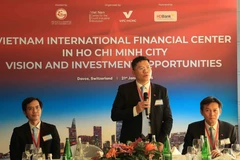
Vice Chairman of the Ho Chi Minh City People’s Committee Hoang Nguyen Dinh presented the city’s strategic vision, policy orientation and development priorities for building a modern, transparent and globally connected finance – technology ecosystem, with science – technology, data, artificial intelligence and fintech identified as core pillars.
Vietnam, India explore opportunities in food, beverage industries
Vietnamese Trade Counsellor Bui Trung Thuong highlighted India as one of the fastest-growing consumer markets in the world, with a large population, an expanding middle class, and rising demand for quality food and beverage products.
Small firms undergo digital transformation amid pressures
Unlike in the past, when the transition to the single-window mechanism was conducted manually, digital transformation is now taking place amid high compliance requirements and increasingly clear penalties.
Dong Thap’s OCOP products revamped, set sights on int'l markets
Dong Thap’s OCOP programme has grown beyond a rural economic initiative to become a strong driver for local businesses to upgrade both product quality and packaging to win over discerning consumers.
VSS pledges tighter fund management, diversified investments
The VSS will also impose stricter financial discipline in fund management, while pursuing broader diversification of investment portfolios, as guided by the principle of “safety, sustainability, and efficiency”. This approach aims to secure strong liquidity for prompt benefit payouts and support growth in Vietnam’s capital markets and overall economy.
AFT Connect portal links Vietnamese clean food producers
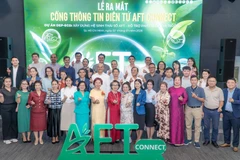
The platform is expected to serve as shared digital backbone enabling stakeholders in the clean food sector to gradually digitise, standardise, and publicly disclose information, ultimately aiding the fight against unsafe products and protecting consumer interests.
Ho Chi Minh City showcases Vietnam International Financial Centre at WEF Davos 2026
The strong turnout of major corporations, strategic investors and global billionaires at bilateral meetings and sidelines discussions further underscored the growing appeal of VIFC-HCMC, fuelling expectations of large-scale international capital inflows and laying the groundwork for long-term, sustainable partnerships.
Vietnam's biometric surge powers digital banking overhaul
As the Party identified breakthroughs in science – technology and innovation as a key driver of national progress, the mastery and adoption of biometric technologies must go hand in hand with safeguarding public trust, data security, and citizens’ interests, all aligned with the people-first philosophy guiding the country's digital agenda.
Da Nang 2026 spring fair features 200 booths
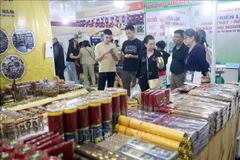
The fair features a diverse range of products and services, focusing on items for Tet such as food and beverages, regional specialties, OCOP products, and rural and industrial goods; fashion, footwear, cosmetics, and sports equipment; health care products and beauty services; household items, interior and exterior décor, and handicrafts; as well as equipment, technology, and services in sectors like electronics, automobiles, and telecommunications.
Fitch Ratings upgrades Vietnam’s senior secured long-term debt rating to BBB-
The rating for Vietnam’s secured long-term debt was raised to BBB-, equivalent to investment grade, one notch higher than the country’s long-term foreign-currency rating on unsecured debt, which remains at BB+. The upgrade followed Fitch’s review under its revised Sovereign Rating Criteria issued in last September, said the Ministry of Finance.
Livestock product exports exceed target in 2025
Vietnam's livestock product export revenue reached 628 million USD in 2025, marking a 17.4% increase compared to 2024. This figure exceeded the ministry's target of 550 million USD.
Reference exchange rate kept unchanged on January 23
The State Bank of Vietnam set the daily reference exchange rate at 25,125 VND/USD on January 23, unchanged from the previous day.
14th Party Congress: Laying new foundations for green growth
Vietnam has been gradually moving away from a volume-oriented model towards an agricultural economy focused on value addition, quality, efficiency and sustainability.
Nuclear experts urge century-long commitment at 14th Party Congress
VietNuc’s executive board, including Chairman Bui Nguyen Hoang from the Électricité de France SA (EDF) (EDF), Ung Quoc Hung from Setec Nucléaire Group, and Vu Minh Ngoc from French National Radioactive Waste Management Agency Andra, hoped that the Congress would refine mechanisms and policies to better tap OV nuclear talents.
Remittances to Ho Chi Minh City exceed 10.3 billion USD in 2025
By source region, Asia continued to be the largest contributor, with remittances approximating 5.06 billion USD, or 48.9% of the total inflows to the city.
Vietnam Airlines to operate more than 1,300 night flights during Tet holiday
The national flag carrier Vietnam Airlines plans to operate more than 1,300 night flights from February 1 to March 3, offering nearly 300,000 seats to meet surging travel demand during the Lunar New Year (Tet) holiday.
Industry, trade sector plays core role in national development in new era: official
Over the past tenure, the industry and trade sector remained a primary engine of growth, advancing development goals focused on self-reliance, modernisation, green transition, digital transformation, and broad and effective international integration.