Ho Chi Minh City (VNA) – As competition among global financial hubs intensifies, Ho Chi Minh City is moving to carve out a distinct position with a “latecomer but different” strategy, placing institutional reform and innovation at the heart of its competitiveness.
That approach was highlighted during a working trip by a Ho Chi Minh City People’s Committee delegation to the World Economic Forum (WEF) Annual Meeting in Davos, Switzerland, where the Vietnam International Financial Centre in Ho Chi Minh City (VIFC-HCMC) was introduced directly to the global policy and financial community.
The delegation, led by Vice Chairman of the municipal People's Committee Hoang Nguyen Dinh, attended the 56th WEF annual meeting, held from January 19 to 23, at the invitation of WEF President and CEO Børge Brende. This is the first time WEF has extended an invitation directly to leaders of a Vietnamese locality, showing the forum's recognition of Ho Chi Minh City's role as an economic locomotive of Vietnam.
Analysts said the presentation of VIFC-HCMC at Davos signalled the city’s determination to integrate more deeply into the international financial network. More than a branding exercise, the move conveyed a clear message of policy commitment, institutional readiness and ambition to elevate Ho Chi Minh City’s standing on the regional and global financial map.
The strong turnout of major corporations, strategic investors and global billionaires at bilateral meetings and sidelines discussions further underscored the growing appeal of VIFC-HCMC, fuelling expectations of large-scale international capital inflows and laying the groundwork for long-term, sustainable partnerships.
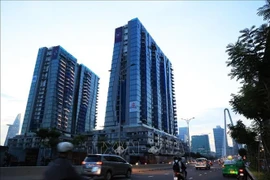
Following its merger with Ba Ria – Vung Tau and Binh Duong, Ho Chi Minh City’s expanded economic – administrative entity now contributes roughly one quarter of national GDP and nearly one third of total state budget revenue. This scale offers vast development potential while also reinforcing the need for a financial centre capable of channelling capital, supporting economic restructuring and boosting competitiveness.
Against this backdrop, city leaders called for close cooperation from domestic and international partners, particularly financial institutions, infrastructure investors, technology firms, training providers and international experts, to jointly support the development and operation of VIFC-HCMC.
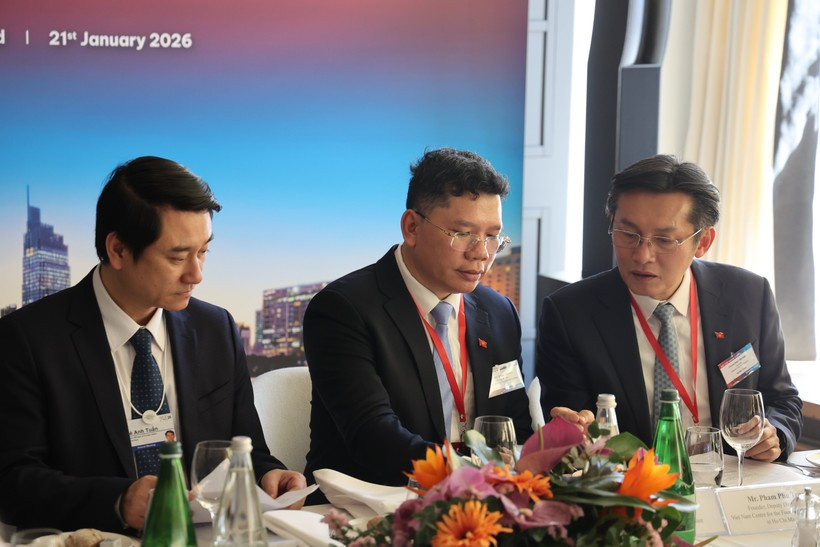
At a January 21 working luncheon themed “VIFC-HCMC: Vision and investment opportunities”, attended by nearly 100 businesses, municipal leaders further highlighted the centre’s development direction amid growing competition and connectivity among global financial hubs.
VIFC-HCMC aims to build a modern, transparent and integrated financial – technological ecosystem, with science – technology, data, artificial intelligence and fintech identified as key pillars. The city has pledged to translate this vision into concrete action plans while positioning itself as an institutional architect and long-term partner for businesses and investors.
Assoc. Prof. Dr. Nguyen Huu Huan, Vice Chairman of the VIFC-HCMC executive authority, said the centre is conceived as a “capital engine” prioritising support for the real economy before expanding into more sophisticated financial products.
Its three core pillars focus on mobilising and efficiently allocating long-term capital for infrastructure, green and digital transitions and innovation; upgrading market standards in line with international practices; and serving as a bridge enabling Vietnamese enterprises to access global financial markets and attracting long-term international capital into Vietnam.
Under this model, VIFC-HCMC is moving towards a hybrid financial centre that links traditional finance with the on-chain economy, balancing systemic safety with innovation. It is expected to emerge as an ASEAN gateway for financing the real economy, developing new financial products and advancing the fintech ecosystem.
According to VIFC-HCMC, numerous international partners have expressed interest in cooperation during the trip, reflecting growing market attention to the centre.
While in Davos, the delegation also held working sessions with the economic development board of Lugano, regarded as Switzerland’s “institutional laboratory” for cryptocurrencies and digital assets. Lugano’s experiences in legal frameworks, local government coordination and public – private partnerships were seen as valuable lessons for VIFC-HCMC.
Representatives of the Swiss Asian Chamber of Commerce (SACC) shared insights into Switzerland’s leading financial centres, stressing that success depends on market trust, close public – private coordination and a transparent, stable legal framework aligned with international standards.
Switzerland also signalled readiness to deepen cooperation with Vietnam through banking partnerships, knowledge exchange and technology transfer.
In technology and risk governance, Crystal Intelligence, a leading European blockchain analytics firm, highlighted Vietnam’s market potential and proposed public – private partnership models for long-term anti-money laundering initiatives, aimed at improving market transparency and strengthening investor confidence. The firm also signed an MoU with the Global On-chain Economic Alliance to develop cross-border payment infrastructure.
Separately, the Global On-chain Economic Alliance inked an MoU with Sumsub, a leading European verification solutions provider, focusing on cryptocurrency and stablecoin payment applications in the tourism sector.
The Ho Chi Minh City delegation also held discussions with Binance on potential cooperation in green finance, digital finance, cybersecurity and anti-money laundering.
Overall, observers said the Ho Chi Minh City leadership’s engagement at the WEF went beyond investment promotion, reflecting strong political resolve to pursue institutional reform, pilot new development models and enhance national competitiveness. VIFC-HCMC is expected to play a pivotal role in attracting international resources, fostering long-term cooperation and supporting the city’s fast and sustainable growth.
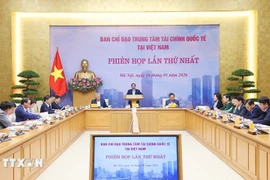
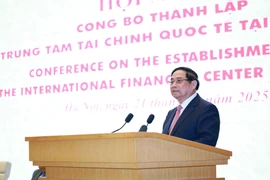
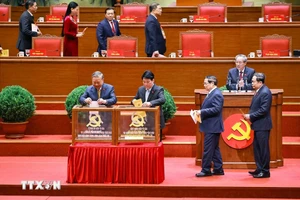
At the recent first meeting of the VIFC Steering Committee, Prime Minister Pham Minh Chinh, head of the committee, set the target of officially launching VIFC-HCMC no later than February 9, 2026. Ho Chi Minh City is currently working closely with ministries and agencies to finalise operating regulations and establish the legal framework, after which the centre will open registration and licensing for members, paving the way for international financial institutions to formally participate and begin operations./.
VNA