Vietnam remains Singapore’s third-largest seafood supplier in 2025

Data released by the Accounting and Corporate Regulatory Authority of Singapore (ACRA) show that Singapore spent 125.5 million SGD (97.7 million USD) importing seafood from Vietnam last year, up 10.7% year on year, accounting for 10.3% of the city-state’s total seafood import market.

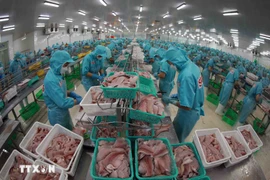
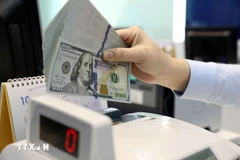
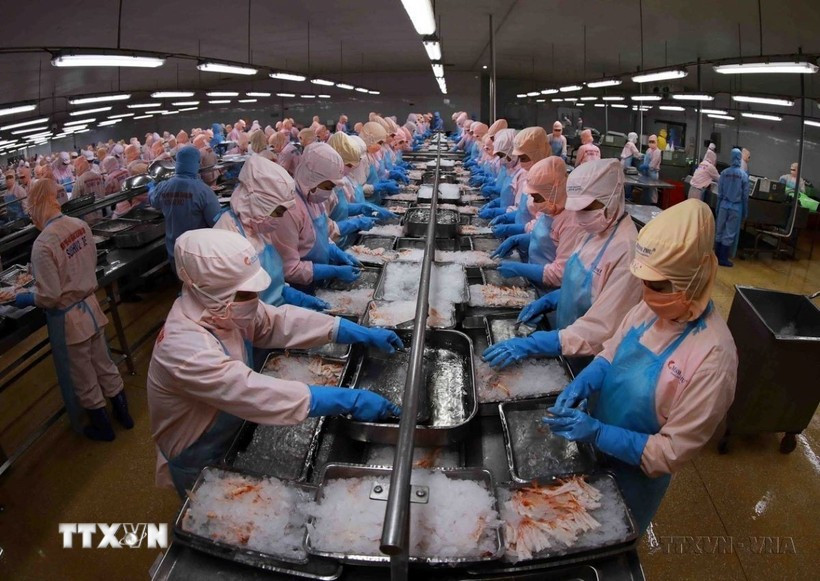
Illustrative image (Photo: VNA)

Singapore (VNA) – Vietnam retained its position as Singapore’s third-largest seafood supplier in 2025, trailing only Malaysia and Indonesia on a full-year basis, as bilateral trade in aquatic products continued to gain momentum.

Data released by the Accounting and Corporate Regulatory Authority of Singapore (ACRA) show that Singapore spent 125.5 million SGD (97.7 million USD) on importing seafood from Vietnam last year, up 10.7% year on year, accounting for 10.3% of the city-state’s total seafood import market.

Chilled or frozen fish fillets and fish meat recorded the highest import value among Vietnamese seafood categories, reaching 63 million SGD, up 4.8% year on year, and commanding 29.7% of market share. Vietnam continued to hold a leading position in this high-value category in the Singapore market.

Vietnam also posted robust gains in two other key segments during 2025. Exports of crustaceans (HS0306), whether processed or not, reached 28.6 million SGD, up 25.4% from the previous year and representing 9.8% of the share. Molluscs (HS0307), processed or unprocessed, recorded 15.8 million SGD, a 35.8% surge that gave Vietnam an 11.4% share.

The Vietnam Trade Office in Singapore noted that with the overall size of Singapore’s seafood import market expected to stay relatively stable, Vietnam is well-placed to defend its dominant share in chilled and frozen fish fillets and fish meat. However, competition in crustaceans and molluscs is expected to remain fierce, not only from established regional players Malaysia and Indonesia but also from China, Japan and Norway.

Norway now maintains its lead in the fresh or chilled fish category (excluding fillets and fish meat), capturing 42.5% of Singapore’s imports in that segment. Meanwhile, China overtook Norway in the third quarter of 2025 to become the city-state’s fourth-largest overall seafood supplier, just behind Vietnam, and continues to exert strong competitive pressure in crustaceans and molluscs.

ACRA figures show Singapore’s total seafood imports from all sources reached 1.2 billion SGD (934 million USD) in 2025, up 4.2% year on year. Demand remained evenly distributed across four major categories, including fresh or chilled fish (excluding fillets and fish meat), frozen fish (excluding fillets and fish meat), chilled or frozen fish fillets and fish meat, and crustaceans (processed or not), each generating annual import values exceeding 200 million SGD./.

VNA

See more

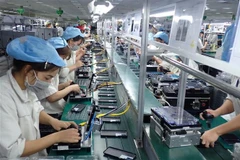
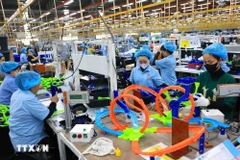
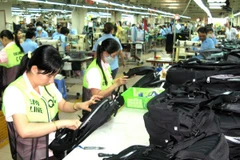
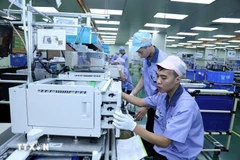
Workers assemble mobile phone components at Diem Thuy Industrial Park in the northern province of Thai Nguyen. (Photo: VNA)

Electronics exports surpass 107 billion USD in 2025

With an export turnover of 107.75 billion USD in 2025, computers, electronic products and components not only maintained their position as Vietnam’s largest export by value, but also contributed more than half of the overall increase in the country’s export turnover in 2025.

Experts said that Vietnam’s economic outlook continues to be underpinned by stable foreign direct investment inflows and public investment, which is playing an important role in driving growth. (Photo: thoibaotaichinh.vn)

Foreign investors maintain strong confidence in Vietnam’s market

Looking ahead to 2026, prospects remain bright as manufacturing, economic growth and foreign investment in Vietnam are expected to stay robust, with the country forecast to post the highest growth rate in the region this year, according to Adam Sitkoff, Executive Director of the American Chamber of Commerce (AmCham) in Vietnam.

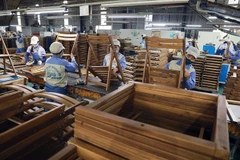
Toy production at a Hong Kong-invested factory (Photo: VNA)

Vietnam targets deeper market penetration in Hong Kong in 2026

Vietnam-Hong Kong trade hit 62.3 billion USD in the first 11 months of 2025, soaring 73.1% annually. Vietnamese exports to Hong Kong amounted to 36.8 billion USD, a 90.6% hike, ranking fourth among Hong Kong’s import sources, while imports from Hong Kong stood at 25.5 billion USD, up 52.9% and ranking third.

Vietnam’s start-up market enters restructuring phase

Vietnam’s start-up market enters restructuring phase

In 2026, venture capital inflows into Vietnam’s start-up ecosystem are expected to recover gradually, though in a more selective manner. VinVentures forecasts that capital will focus on start-ups that have survived the rigorous screening of 2024–2025, possess clear business models, strong commercialisation capacity, and the ability to generate real cash flows.

Eric Van Vaerenbergh, an energy expert and lecturer at the Brussels Engineering School (ECAM) (Photo: VNA)

Belgian expert optimistic about Vietnam’s economic outlook

Vietnam should move from a growth model based mainly on expanding capital and labour to one driven by productivity improvements. He said that this requires enhancing the quality of the workforce, particularly engineers, technicians, and managers in industrial sectors.

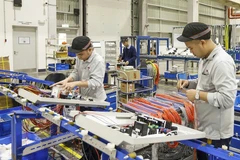
Workers at the VSIP Hai Phong industrial and urban complex, which specialises in producing electronic components for office equipment. (Photo: VNA)

Roadmap aims to improve business climate and boost competitiveness

By the end of 2026, Vietnam aims to rank among the world’s top 50 performers in the United Nations Sustainable Development Goals, advance at least three places in the International Property Rights Index, and climb at least one position in the Global Innovation Index.