Vietnam targets deeper market penetration in Hong Kong in 2026

Vietnam-Hong Kong trade hit 62.3 billion USD in the first 11 months of 2025, soaring 73.1% annually. Vietnamese exports to Hong Kong amounted to 36.8 billion USD, a 90.6% hike, ranking fourth among Hong Kong’s import sources, while imports from Hong Kong stood at 25.5 billion USD, up 52.9% and ranking third.

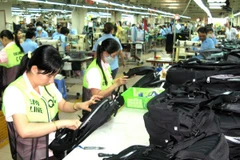
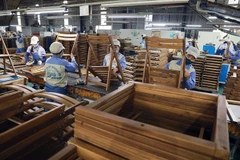
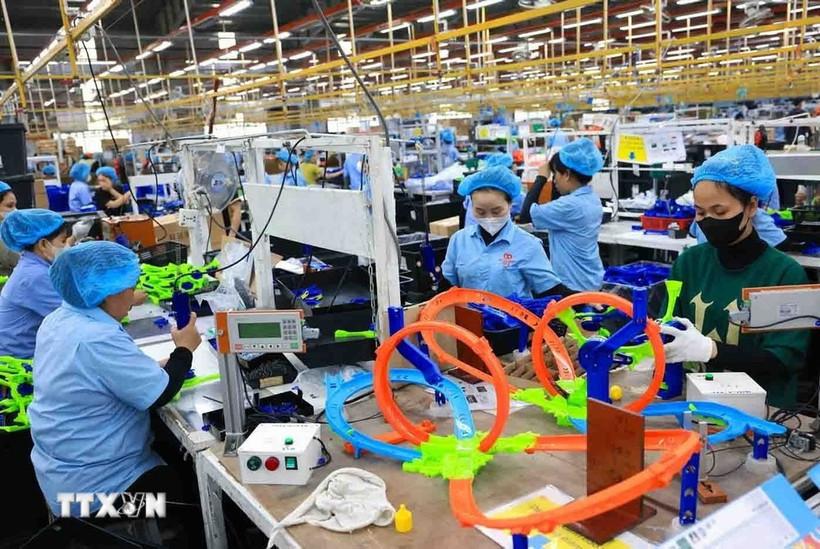
Toy production at a Hong Kong-invested factory (Photo: VNA)

Hong Kong (VNA) – The Vietnam Trade Office in Hong Kong (China) will continue with business matching and delegation exchanges this year to deepen bilateral trade ties, its head Vu Thi Thuy told Vietnam News Agency reporters based in Hong Kong.

Thuy, who also serves as Deputy Consul General, said the office will intensify market studies, closely track trends and product segments, and propose cooperation policies tailored to the Hong Kong market. It will also expand trade promotion activities by leveraging reputable trade fairs and business events, while helping Vietnamese firms gain direct market access and prepare export-ready products to spread Vietnamese brands’ presence in Hong Kong.

She noted that Hong Kong’s policy orientation in 2025 and beyond focuses on cooperation with Southeast Asia, South Asia and the Middle East, where Vietnam stands out as a promising partner across diverse sectors.

Last year, the Vietnam Consulate General and the Trade Office worked closely with domestic agencies to hold trade promotion events in both Vietnam and Hong Kong, attended trade fairs, conferences and events to promote Vietnamese products and national image in Hong Kong and Macau (China).

As a result, Vietnamese goods have greater shelf presence in Hong Kong, not only in volume but also in quality, design and overall consumer appeal.

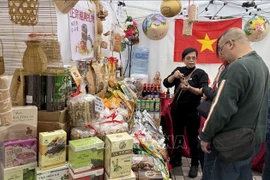
Key Vietnamese exports driving this growth include electrical appliances, household goods, telecom components, office equipment, apparel, footwear, and accessories. Beyond these, a broader range of products, from frozen pork and seafood to staples such as rice, instant pho and dried noodles, coffee, cashew nuts, pepper, and fish sauce, has become increasingly familiar to Hong Kong shoppers.

A growing number of Vietnamese entrepreneurs operating trading companies and restaurants in the territory have emerged as vital conduits, facilitating imports of Vietnamese goods and enabling re-exports to third markets.

According to Thuy, Hong Kong imports more than 90% of its food, consumer goods and daily necessities, making it a promising market for exporters globally and particularly for Vietnam, especially in the premium segment.

With a population of around 7.5 million and an economy dominated by trade and services, Hong Kong has almost no domestic agricultural or food production. Its consumers have strong purchasing power and are willing to pay for quality, safe and health-focused products.

Hong Kong also functions as a “super connector” bridging mainland China and global markets, playing a key role within the Guangdong–Hong Kong–Macau Greater Bay Area. Vietnam, Thuy said, can leverage this role to boost exports of its competitive products, especially agro-fisheries, using Hong Kong as a transit hub to reach global and regional markets.

Vietnam has long ranked among Hong Kong’s top 10 trade partners. In 2025, it rose to third place overall, fueled by accelerating two-way flows. Vietnamese firms actively attended major international trade fairs in Hong Kong, including the Mega Show, international food and consumer goods fairs, Asia Fruit Logistica, and textile and garment exhibitions, to introduce their products.

According to data from the Hong Kong Census and Statistics Department, total two-way trade hit 62.3 billion USD in the first 11 months of 2025, soaring 73.1% annually. Vietnamese exports to Hong Kong amounted to 36.8 billion USD, a 90.6% hike, ranking fourth among Hong Kong’s import sources, while imports from Hong Kong stood at 25.5 billion USD, up 52.9% and ranking third./.

VNA

See more

Vietnam’s start-up market enters restructuring phase

Vietnam’s start-up market enters restructuring phase

In 2026, venture capital inflows into Vietnam’s start-up ecosystem are expected to recover gradually, though in a more selective manner. VinVentures forecasts that capital will focus on start-ups that have survived the rigorous screening of 2024–2025, possess clear business models, strong commercialisation capacity, and the ability to generate real cash flows.

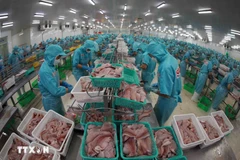
Workers process tra (pangasius) for export (Photo: VNA)

Vietnam–Singapore trade continues to thrive

For the year as a whole, Vietnam retained its position as Singapore’s 10th largest trading partner. Bilateral trade reached a record high of nearly 40 billion SGD, up 26.2% from the previous peak of 31.67 billion SGD recorded in 2024.

Eric Van Vaerenbergh, an energy expert and lecturer at the Brussels Engineering School (ECAM) (Photo: VNA)

Belgian expert optimistic about Vietnam’s economic outlook

Vietnam should move from a growth model based mainly on expanding capital and labour to one driven by productivity improvements. He said that this requires enhancing the quality of the workforce, particularly engineers, technicians, and managers in industrial sectors.

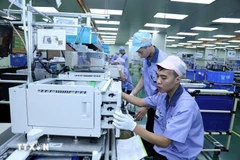
Workers at the VSIP Hai Phong industrial and urban complex, which specialises in producing electronic components for office equipment. (Photo: VNA)

Roadmap aims to improve business climate and boost competitiveness

By the end of 2026, Vietnam aims to rank among the world’s top 50 performers in the United Nations Sustainable Development Goals, advance at least three places in the International Property Rights Index, and climb at least one position in the Global Innovation Index.

Vietnam is strengthening its position in the technology value chain, becoming a major manufacturing hub for complete consumer electronics products. (Photo: VNA)

ESG standards offer opportunities to reposition Vietnam’s electronics firms

The 2025-2027 period will be a critical turning point, as exporters to the European market will be required to strictly comply with ESG standards, including net-zero emissions roadmaps, labour standards, corporate governance and transparency requirements. As a key export sector, the electronics industry is being directly and strongly affected by this shift.

A production line for camera modules and electronic components at the factory of MCNEX VINA Co. Ltd, a Republic of Korean-invested company in Phuc Son Industrial Park, Ninh Binh province. (Photo: VNA)

Science, technology, innovation as engines of economic growth

To ensure that science and technology truly act as a powerful growth engine, experts emphasised the need for the Government to put in place supportive mechanisms and policies that encourage enterprises to invest in research and development, while strengthening cooperation among the State, research institutions and the business sector.

The headquarters of the Ministry of Industry and Trade in Hanoi (Photo: VNA)

PM updates lead roles to drive UKVFTA forward

The Ministry of Industry and Trade (MoIT) is named the lead agency, with overall responsibility for the agreement’s general goals and definitions, trade remedies, non-tariff barriers to trade and investment in renewable energy, competition policies, State-owned enterprises, enterprises with special or exclusive rights and those with designated monopolies, as well as institutional, general and final terms.

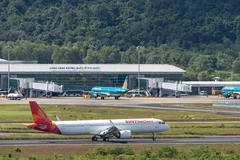
Vietravel Airlines is taking measures to enhance service quality and optimise operations amid high travel demand during Tet. (Photo: VNA)

Vietravel Airlines to add new route serving Lunar New Year travel peak

During the peak period of the Lunar New Year (Tet) festival in 2026, Vietravel Airlines plans to operate six – eight flights daily on the Ho Chi Minh City – Hanoi route, three flights daily on the Ho Chi Minh City – Da Nang and Ho Chi Minh City – Vinh routes; and two flights daily on the Ho Chi Minh City – Quy Nhon route.