ESG standards offer opportunities to reposition Vietnam’s electronics firms

The 2025-2027 period will be a critical turning point, as exporters to the European market will be required to strictly comply with ESG standards, including net-zero emissions roadmaps, labour standards, corporate governance and transparency requirements. As a key export sector, the electronics industry is being directly and strongly affected by this shift.

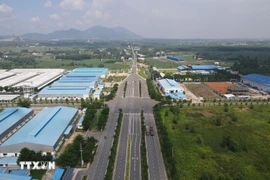
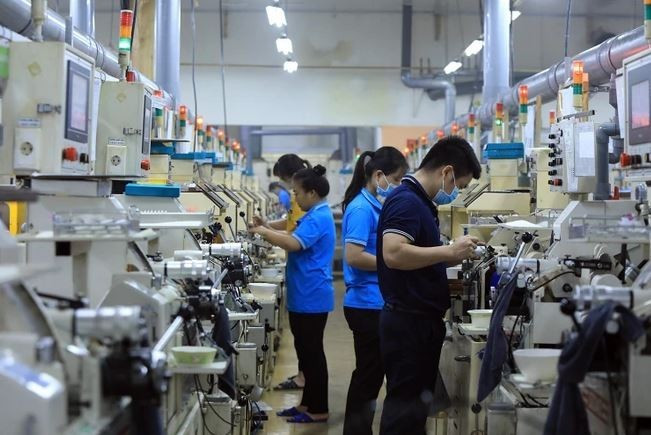
Vietnam is strengthening its position in the technology value chain, becoming a major manufacturing hub for complete consumer electronics products. (Photo: VNA)

Hanoi (VNA) – As international “rules of the game” grow increasingly stringent, environmental, social and governance (ESG) standards are becoming an essential “passport” for Vietnamese electronics enterprises seeking to integrate more deeply into global supply chains.

Meeting these new requirements not only poses significant challenges, but also opens up opportunities for domestic firms to reposition their competitive capabilities and gradually move up the value chain.

For many years, they have mainly participated in global supply chains on the basis of cost advantages and order-fulfilment capacity. However, this model is coming under growing pressure as major markets simultaneously tighten ESG requirements.

According to Do Thi Thuy Huong, a member of the executive committee of the Vietnam Electronic Industries Association (VEIA), ESG has now become a cross-cutting requirement throughout corporate operations, particularly for electronics and high-tech enterprises. Compliance with environmental, labour, governance and information-transparency standards is no longer voluntary, but a mandatory condition for participation in global supply chains or exports to international markets.

The VEIA notes that the 2025-2027 period will be a critical turning point, as exporters to the European market will be required to strictly comply with ESG standards, including net-zero emissions roadmaps, labour standards, corporate governance and transparency requirements. As a key export sector, the electronics industry is being directly and strongly affected by this shift.

Pham Thi Ngoc Thuy, director of the office of the Private Economic Development Research Board (Board IV) under the Prime Minister’s Advisory Council for Administrative Procedure Reform, said enterprises involved in export supply chains are feeling the most immediate impact of ESG requirements, while firms focused mainly on the domestic market are less affected. Nevertheless, amid rapidly changing global and domestic policies, businesses cannot stand aside from international trends if they wish to achieve sustainable development and expand markets over the medium and long term.

Vietnam’s legal framework on environmental protection and sustainable development is also being rapidly strengthened. Under the Law on Environmental Protection, more than 1,000 enterprises were required to conduct greenhouse-gas emissions reporting by the end of 2025. The net-zero target is not only an international commitment of the Government, but is also emphasised in many key resolutions of the Politburo, creating clear pressure for transformation across the business community.

From practical ESG implementation, a major bottleneck at present lies in corporate awareness. Many enterprises believe the main difficulties stem from a lack of capital, technology or information. However, experts argue that if ESG is viewed merely as an add-on to production and business activities, it will be difficult to achieve substantive change. Only when ESG is embedded in core strategy and becomes part of the business model can the transition be carried through effectively.

At the industry level, the VEIA has submitted a proposal to the Ministry of Industry and Trade to develop ESG guidelines for the electronics sector that are suited to domestic conditions. At the same time, the association is rolling out specialised ESG training programmes and working with international organisations to help businesses access and meet new standards.

As the world moves towards sustainability, ESG has become a litmus test of corporate governance capacity and resilience. Vietnamese electronics enterprises can only successfully reposition themselves by treating ESG as the foundation of long-term strategy, thereby shifting from low-cost suppliers to value-added partners in global supply chains./.

VNA
See more

A production line for camera modules and electronic components at the factory of MCNEX VINA Co. Ltd, a Republic of Korean-invested company in Phuc Son Industrial Park, Ninh Binh province. (Photo: VNA)

Science, technology, innovation as engines of economic growth

To ensure that science and technology truly act as a powerful growth engine, experts emphasised the need for the Government to put in place supportive mechanisms and policies that encourage enterprises to invest in research and development, while strengthening cooperation among the State, research institutions and the business sector.

The headquarters of the Ministry of Industry and Trade in Hanoi (Photo: VNA)

PM updates lead roles to drive UKVFTA forward

The Ministry of Industry and Trade (MoIT) is named the lead agency, with overall responsibility for the agreement’s general goals and definitions, trade remedies, non-tariff barriers to trade and investment in renewable energy, competition policies, State-owned enterprises, enterprises with special or exclusive rights and those with designated monopolies, as well as institutional, general and final terms.

Vietravel Airlines is taking measures to enhance service quality and optimise operations amid high travel demand during Tet. (Photo: VNA)

Vietravel Airlines to add new route serving Lunar New Year travel peak

During the peak period of the Lunar New Year (Tet) festival in 2026, Vietravel Airlines plans to operate six – eight flights daily on the Ho Chi Minh City – Hanoi route, three flights daily on the Ho Chi Minh City – Da Nang and Ho Chi Minh City – Vinh routes; and two flights daily on the Ho Chi Minh City – Quy Nhon route.

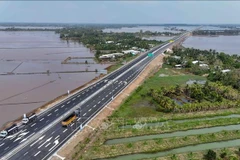
The completion of Can Tho - Ca Mau expressway has helped shorten travel time from Can Tho to Ca Mau to just one hour and a half (Photo: VNA)

Can Tho–Ca Mau expressway fully opens from January 19

The new section, together with the Can Tho–Hau Giang segment that has been operating smoothly since late December last year, has completed the entire 110.85-km route. With total investment exceeding 27.52 trillion VND (1.04 billion USD), the four-lane expressway is built to modern standards and serves as a key transport artery linking major economic and political centres, industrial zones and seaports in the southwestern region.

Vietnam aims to export 7 million tonnes of rice in 2026 (Photo: VNA)

Vietnam to proactively reduce rice exports from 2026

Do Ha Nam, Chairman of the Vietnam Food Association (VFA), said that 2026 presents numerous difficulties and challenges, and the global supply glut significantly impacts all exporters, including Vietnam.

Vietjet to operate nearly 1,800 additional flights for Lunar New Year peak (Photo: Vietjet Air)

Vietjet adds nearly 1,800 flights for peak Lunar New Year travel

Passengers planning to travel during the Tet peak period are advised to book tickets early to secure suitable flight schedules. They are also encouraged to complete online check-in within 24 hours prior to departure via Vietjet’s website at www.vietjetair.com, the Vietjet mobile application or the VNeID platform, in order to save time at airport check-in counters.