China-Vietnam economic, trade ties to become model for regional cooperation

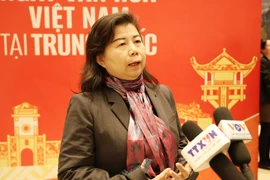
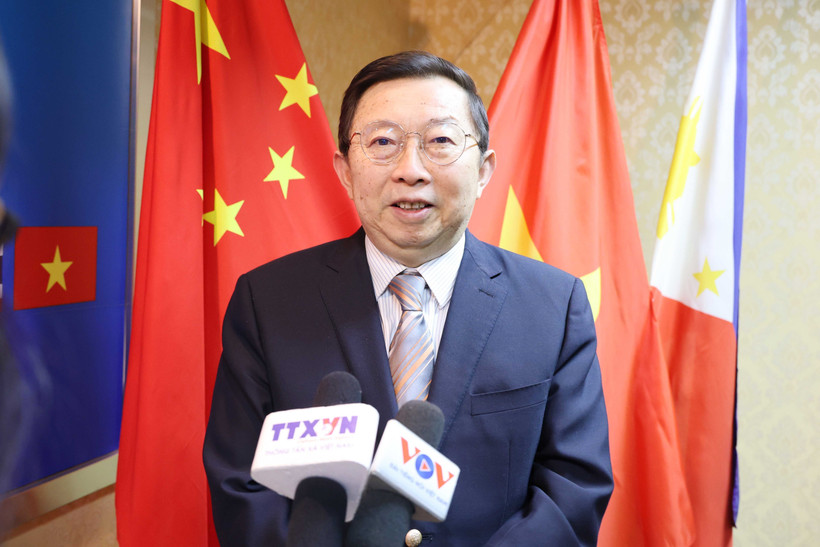
Chairman of the Regional Comprehensive Economic Partnership (RCEP) Industry Cooperation Committee Xu Ningning said the upside for economic and trade ties between the two countries remains enormous.

Chairman of RCEP Industry Cooperation Committee Xu Ningning (Photo: VNA)

Beijing (VNA) – Chairman of the Regional Comprehensive Economic Partnership (RCEP) Industry Cooperation Committee Xu Ningning has expressed his belief that China and Vietnam would achieve better quality in their economic-trade ties on the existing foundation, setting a model for regional cooperation.

Talking with the Vietnam News Agency’s reporters in Beijing, Xu pointed out that 2025 marked the 75th anniversary of diplomatic ties, with economic and trade ties delivering notable and effective results that vividly reflect their longstanding fraternal friendship.

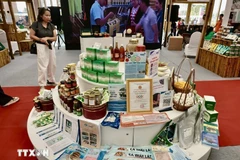
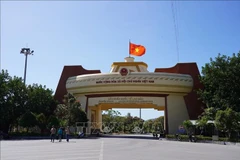
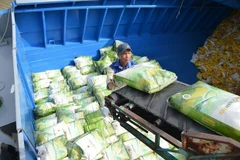
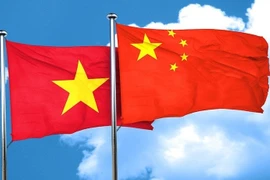
For many consecutive years, China has remained Vietnam’s largest trade partner, while Vietnam has ranked as China’s top trade partner within the Association of Southeast Asian Nations (ASEAN). Complementary collaboration in agriculture and manufacturing has continued to deepen, generating tangible benefits for the people of both nations, he said.

Looking ahead, Xu said the upside for economic and trade ties remains enormous. First, deeper integration of industrial chains by combining China’s massive market scale and technological capabilities with Vietnam’s dynamic manufacturing base could forge a more resilient regional supply chain.

Second, expanded collaboration in emerging sectors, including joint research, development, and application in new energy, digital economy, and green industries, would support Vietnam’s industrial upgrading.

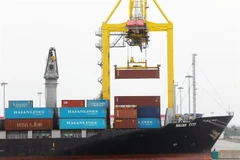
Third, stronger infrastructure connectivity, particularly through coordinated investment in road, rail and port projects could further reduce trade costs.

Fourth, as two key drivers of regional economy, China and Vietnam should enhance coordination under the RCEP framework to facilitate regional flows, jointly advance regional economic integration and safeguard the free trade system, he added./.
VNA

See more

Vietnam is strengthening its position in the technology value chain, becoming a major manufacturing hub for complete consumer electronics products. (Photo: VNA)

ESG standards offer opportunities to reposition Vietnam’s electronics firms

The 2025-2027 period will be a critical turning point, as exporters to the European market will be required to strictly comply with ESG standards, including net-zero emissions roadmaps, labour standards, corporate governance and transparency requirements. As a key export sector, the electronics industry is being directly and strongly affected by this shift.

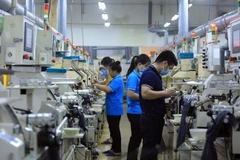
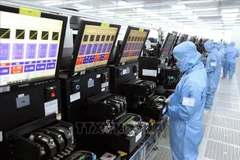
A production line for camera modules and electronic components at the factory of MCNEX VINA Co. Ltd, a Republic of Korean-invested company in Phuc Son Industrial Park, Ninh Binh province. (Photo: VNA)

Science, technology, innovation as engines of economic growth

To ensure that science and technology truly act as a powerful growth engine, experts emphasised the need for the Government to put in place supportive mechanisms and policies that encourage enterprises to invest in research and development, while strengthening cooperation among the State, research institutions and the business sector.

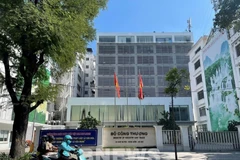
The headquarters of the Ministry of Industry and Trade in Hanoi (Photo: VNA)

PM updates lead roles to drive UKVFTA forward

The Ministry of Industry and Trade (MoIT) is named the lead agency, with overall responsibility for the agreement’s general goals and definitions, trade remedies, non-tariff barriers to trade and investment in renewable energy, competition policies, State-owned enterprises, enterprises with special or exclusive rights and those with designated monopolies, as well as institutional, general and final terms.

Vietravel Airlines is taking measures to enhance service quality and optimise operations amid high travel demand during Tet. (Photo: VNA)

Vietravel Airlines to add new route serving Lunar New Year travel peak

During the peak period of the Lunar New Year (Tet) festival in 2026, Vietravel Airlines plans to operate six – eight flights daily on the Ho Chi Minh City – Hanoi route, three flights daily on the Ho Chi Minh City – Da Nang and Ho Chi Minh City – Vinh routes; and two flights daily on the Ho Chi Minh City – Quy Nhon route.

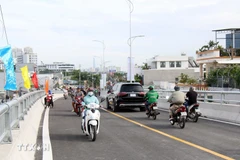
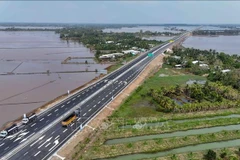
The completion of Can Tho - Ca Mau expressway has helped shorten travel time from Can Tho to Ca Mau to just one hour and a half (Photo: VNA)

Can Tho–Ca Mau expressway fully opens from January 19

The new section, together with the Can Tho–Hau Giang segment that has been operating smoothly since late December last year, has completed the entire 110.85-km route. With total investment exceeding 27.52 trillion VND (1.04 billion USD), the four-lane expressway is built to modern standards and serves as a key transport artery linking major economic and political centres, industrial zones and seaports in the southwestern region.

Vietnam aims to export 7 million tonnes of rice in 2026 (Photo: VNA)

Vietnam to proactively reduce rice exports from 2026

Do Ha Nam, Chairman of the Vietnam Food Association (VFA), said that 2026 presents numerous difficulties and challenges, and the global supply glut significantly impacts all exporters, including Vietnam.

Vietjet to operate nearly 1,800 additional flights for Lunar New Year peak (Photo: Vietjet Air)

Vietjet adds nearly 1,800 flights for peak Lunar New Year travel

Passengers planning to travel during the Tet peak period are advised to book tickets early to secure suitable flight schedules. They are also encouraged to complete online check-in within 24 hours prior to departure via Vietjet’s website at www.vietjetair.com, the Vietjet mobile application or the VNeID platform, in order to save time at airport check-in counters.