Ho Chi Minh City shifts OCOP products toward quality, sustainability after seven years

By late 2025, the city proudly counted more than 1,000 OCOP-certified products, including over 790 three-star and 220 four-star items, produced by nearly 430 participating entities, establishing a robust base for further expansion in the years ahead.

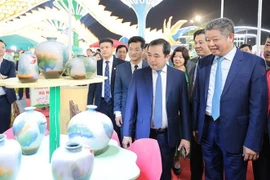
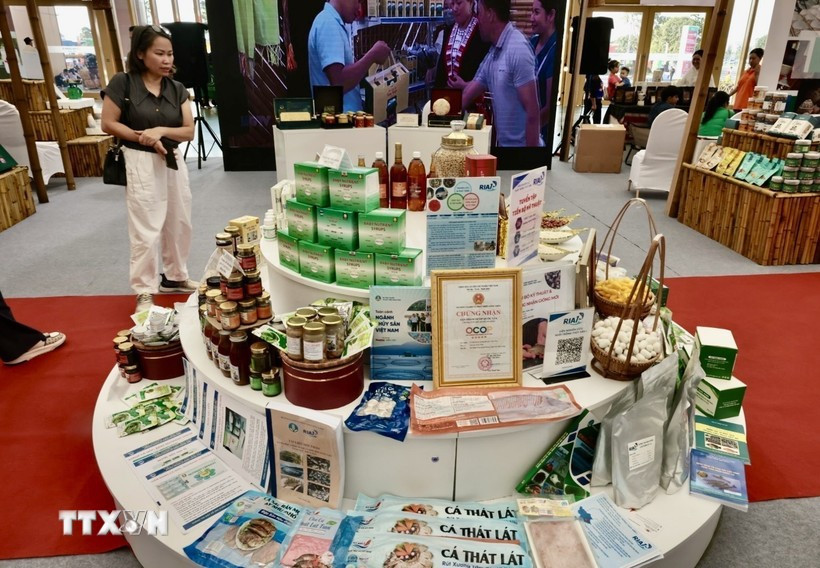
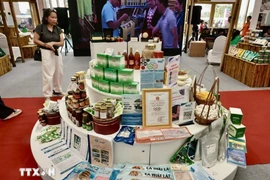
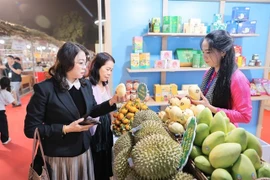
OCOP products are displayed at the Autumn Fair 2025. (Photo: VNA)

Ho Chi Minh City (VNA) – More than seven years after its launch, Ho Chi Minh City’s One Commune, One Product (OCOP) programme is shifting gears, focusing less on sheer numbers and more on genuine sustainability, polished branding, and building a confident global presence for Vietnam’s beloved local specialities and crafts.

By late 2025, the city proudly counted more than 1,000 OCOP-certified products, including over 790 three-star and 220 four-star items, produced by nearly 430 participating entities, establishing a robust base for further expansion in the years ahead.

In major local supermarket chains, shoppers are paying more attention to OCOP labels, traceability information, expiration dates, and food safety certifications when deciding what to buy.

Tran Nhu Quynh, Deputy Head of the Trade Management Division at the municipal Department of Industry and Trade, said there remains ample room to boost OCOP presence in key distribution networks such as Saigon Co-op, Satra and other modern retail chains. The department plans to step forward as a connector, guiding producers toward technical excellence, refined packaging, and flawless documentation, while collaborating on global and domestic trade promotion events.

Vice Chairman of the municipal People’s Committee Bui Minh Thanh stated that the city will conduct a comprehensive review of each producer’s capacity, needs, and operating conditions. Based on these evaluations, authorities will identify specific constraints and provide targeted, timely support. Assistance will be tailored to actual needs, helping enterprises improve product quality, refine production processes and enhance value-added and market competitiveness.
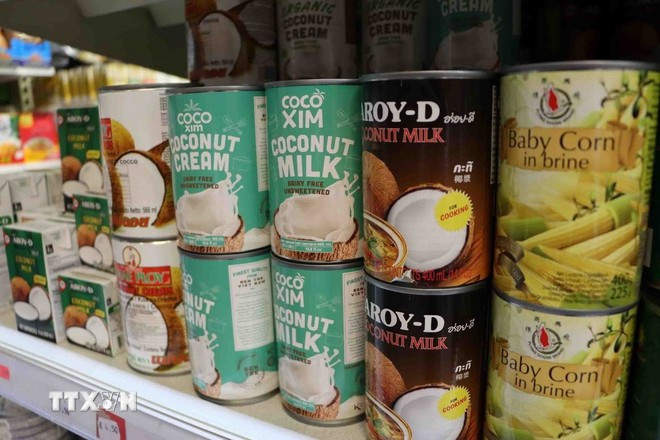
ht.jpg
Canned coconut milk by a Vietnamese company is favoured in Belgium. (Photo: VNA)

Looking forward, authorities intend to intensify post-certification monitoring of OCOP items, increase the frequency of quality checks, and tie star-rating maintenance to regular evaluations and consumer market feedback. Entities failing to uphold standards or breaching commitments on food safety and traceability may find their stars downgraded or their certificates withdrawn to protect the OCOP brand’s reputation and consumer interests.

The city is also working to standardise digital traceability by introducing a unified QR code system for OCOP products, making it easy to see where raw materials come from, how items are made, and any certifications or inspection records. This update not only strengthens regulatory oversight but also gives consumers the tools to check details themselves, helping to build trust.

On market strategy, Thanh stressed the need to focus on high-potential OCOP categories suited for mass-scale penetration, rather than spreading resources too thinly. Priority will go to supporting four-star products in their push toward five-star certification through technological upgrades, process standardisation, improved packaging and adherence to rigorous demands from modern retail and export channels.

Additionally, the city is encouraging OCOP producers to weave themselves into industry value chains, along with creating beautifully curated gift collections and bundled offerings steeped in local legend, heritage, and soul. In this way, commercial value is elevated while every customer is invited to feel not merely the product quality, but the heart, responsibility, and singular character behind it, moving far beyond the ordinary into something truly unforgettable./.
VNA

See more

Toy production at a Hong Kong-invested factory (Photo: VNA)

Vietnam targets deeper market penetration in Hong Kong in 2026

Vietnam-Hong Kong trade hit 62.3 billion USD in the first 11 months of 2025, soaring 73.1% annually. Vietnamese exports to Hong Kong amounted to 36.8 billion USD, a 90.6% hike, ranking fourth among Hong Kong’s import sources, while imports from Hong Kong stood at 25.5 billion USD, up 52.9% and ranking third.

Vietnam’s start-up market enters restructuring phase

Vietnam’s start-up market enters restructuring phase

In 2026, venture capital inflows into Vietnam’s start-up ecosystem are expected to recover gradually, though in a more selective manner. VinVentures forecasts that capital will focus on start-ups that have survived the rigorous screening of 2024–2025, possess clear business models, strong commercialisation capacity, and the ability to generate real cash flows.

Workers process tra (pangasius) for export (Photo: VNA)

Vietnam–Singapore trade continues to thrive

For the year as a whole, Vietnam retained its position as Singapore’s 10th largest trading partner. Bilateral trade reached a record high of nearly 40 billion SGD, up 26.2% from the previous peak of 31.67 billion SGD recorded in 2024.

Eric Van Vaerenbergh, an energy expert and lecturer at the Brussels Engineering School (ECAM) (Photo: VNA)

Belgian expert optimistic about Vietnam’s economic outlook

Vietnam should move from a growth model based mainly on expanding capital and labour to one driven by productivity improvements. He said that this requires enhancing the quality of the workforce, particularly engineers, technicians, and managers in industrial sectors.

Workers at the VSIP Hai Phong industrial and urban complex, which specialises in producing electronic components for office equipment. (Photo: VNA)

Roadmap aims to improve business climate and boost competitiveness

By the end of 2026, Vietnam aims to rank among the world’s top 50 performers in the United Nations Sustainable Development Goals, advance at least three places in the International Property Rights Index, and climb at least one position in the Global Innovation Index.

Vietnam is strengthening its position in the technology value chain, becoming a major manufacturing hub for complete consumer electronics products. (Photo: VNA)

ESG standards offer opportunities to reposition Vietnam’s electronics firms

The 2025-2027 period will be a critical turning point, as exporters to the European market will be required to strictly comply with ESG standards, including net-zero emissions roadmaps, labour standards, corporate governance and transparency requirements. As a key export sector, the electronics industry is being directly and strongly affected by this shift.

A production line for camera modules and electronic components at the factory of MCNEX VINA Co. Ltd, a Republic of Korean-invested company in Phuc Son Industrial Park, Ninh Binh province. (Photo: VNA)

Science, technology, innovation as engines of economic growth

To ensure that science and technology truly act as a powerful growth engine, experts emphasised the need for the Government to put in place supportive mechanisms and policies that encourage enterprises to invest in research and development, while strengthening cooperation among the State, research institutions and the business sector.

The headquarters of the Ministry of Industry and Trade in Hanoi (Photo: VNA)

PM updates lead roles to drive UKVFTA forward

The Ministry of Industry and Trade (MoIT) is named the lead agency, with overall responsibility for the agreement’s general goals and definitions, trade remedies, non-tariff barriers to trade and investment in renewable energy, competition policies, State-owned enterprises, enterprises with special or exclusive rights and those with designated monopolies, as well as institutional, general and final terms.