Hanoi (VNS/VNA) – Vietnam needs to change its trade promotion activities to increase the export of OCOP products in a more diversified, innovative and sustainable manner, experts said at a seminar on enhancing the export of these products held by the Industry and Trade Magazine on December 24.
Dao Duc Huan, head of the One Commune, One Product (OCOP) and Rural Tourism Management Division under the Ministry of Agriculture and Environment's Central Office for New-Style Rural Areas Development, said at the seminar that OCOP products are high-quality goods rooted in traditional, family-based, and village-level production.
OCOP products are diverse and abundant, with clear traceability and origins linked to specific localities and craft villages. This provides a reliable origin for both consumers and importers.
However, OCOP enterprises and producers still face numerous challenges. Many producers have not sufficiently researched markets to develop products aligned with market demand.
Household-based production remains small in scale, with limited links among producers to expand into larger, nationwide markets, let alone abroad.
Issues related to packaging, labelling and compliance with standard product information requirements also remain significant obstacles.
In addition to traditional trade promotion activities, the ministry has coordinated with other ministries, sectors and local authorities to focus on addressing several areas, Huan said.
First, priority has been given to building the image and enhancing the value of Vietnamese products. The objective is to raise international awareness of what OCOP products represent, thus promoting Vietnamese values and indirectly helping OCOP products access global markets.
In the past few years, the Ministry of Agriculture and Environment, along with other ministries and agencies, has actively brought OCOP products to international markets.
Although these products are often small in scale, they carry significant cultural and spiritual value. Vietnamese OCOP products have been introduced at major international trade fairs and forums.
For the past three years, OCOP products have been showcased at retail and wholesale exhibitions in Italy and Germany. The primary goal has been to gradually embed Vietnamese cultural identity and product values into the awareness and perceptions of foreign consumers.
In the process of providing policy support for OCOP product development, particular attention has been paid to strengthening the export capacity of OCOP stakeholders.
Research institutes under the ministry, in collaboration with relevant units, have conducted market research to assess the potential and competitive advantages of each OCOP product group in different international markets.
Based on these assessments, information is shared with OCOP producers to help them better understand the requirements and challenges of entering foreign markets.
For instance, exporters must be aware of regulatory barriers and standards in the US, as well as specific technical, quality and consumer requirements in markets like the EU or Japan.
This approach enables State management agencies to effectively support OCOP stakeholders in improving their market access.
One method that has been strongly promoted is cooperation with the Vietnam National Authority of Tourism. This initiative recognises that OCOP products should not rely solely on formal export channels. Instead, 'on-the-spot exports' are encouraged, as they align well with the scale and capacity of OCOP producers, who are predominantly small entities. At the same time, this model creates strong synergies with tourism development.
OCOP products have recently been integrated into tourism routes and destinations, becoming a combined service offering that includes experiential activities and shopping. Through tourism, OCOP products are disseminated beyond Vietnam’s borders via international visitors.
These approaches have proven to be appropriate and effective, given the inherent limitations of OCOP products.
Nguyen Ba Hai, Deputy Director of the Trade and Investment Promotion Support Centre under the Ministry of Industry and Trade's Vietnam Trade Promotion Agency (Vietrade), said that in recent years the agency has actively coordinated with other bodies to successfully organise key trade promotion programmes focused on exporting OCOP products.
These include Vietnam’s trade offices abroad, embassies and foreign international organisations in Vietnam, and especially the Trade and Investment Promotion Agency in cooperation with the Central Office for New-Style Rural Area Development, the Vietnam Cooperative Alliance and Hanoi’s Department of Industry and Trade.
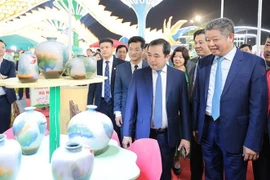
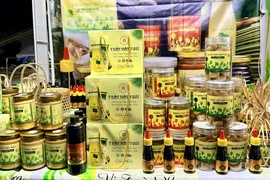
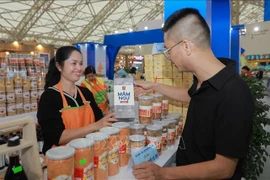
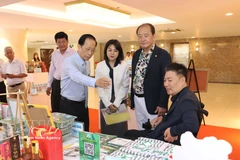
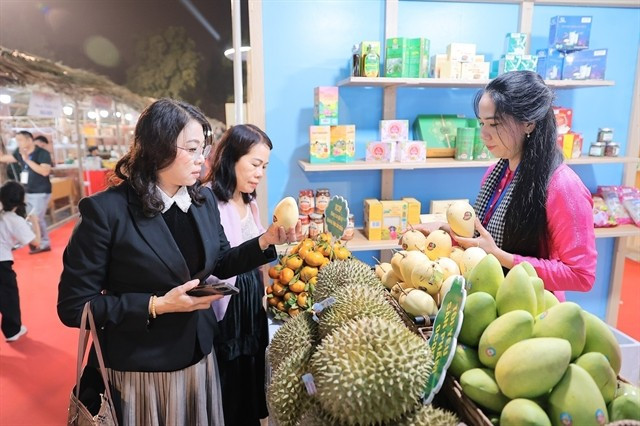
Specifically, the OCOPEX Fair was held in Hanoi within the framework of the National Trade Promotion Programme, attracting approximately 200–300 OCOP entities showcasing a wide range of distinctive products rated from three to five stars from 34 provinces and cities nationwide. Many outstanding products have successfully reached consumers as well as various trade organisations, notably export enterprises.
At the same time, the event facilitated international exchanges and interactions with countries in the region and beyond, including Laos, Cambodia and Peru.
In addition to exhibition activities, the organisers also hosted a variety of thematic side events, notably dialogue forums aimed at development and connectivity with international organisations to introduce Vietnamese products.
Digital transformation solutions were also implemented, including an online OCOPEX export exhibition, along with cooperation with media agencies and trade promotion organisations to enhance image promotion through virtual booths on digital platforms.
Vietrade also worked with major e-commerce platforms, notably Alibaba and Amazon. In particular, with Alibaba, the agency organised training courses and established booths within Vietnam’s national pavilion, allocating dedicated space to prioritise OCOP entities for promotion on the platform./.
VNA