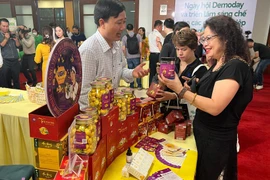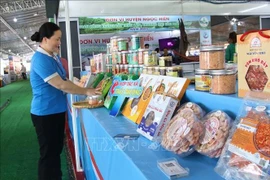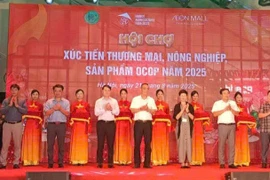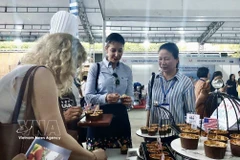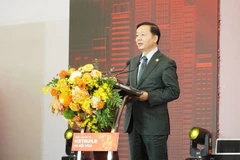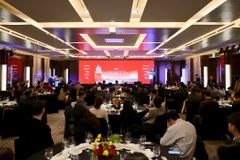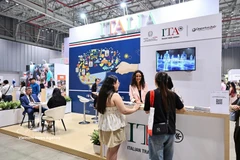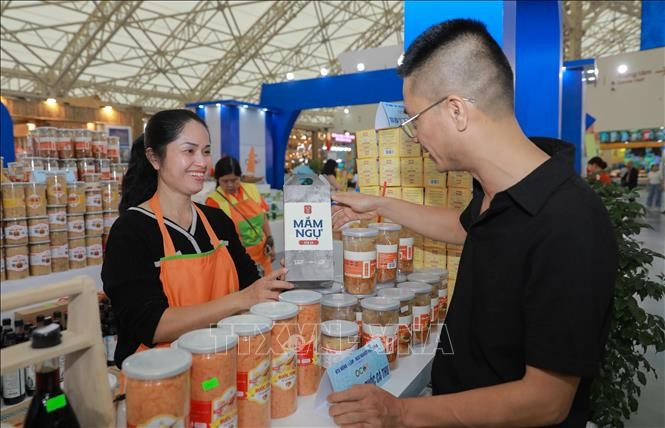
Hanoi (VNA) – Among hundreds of vibrant booths, OCOP-branded products stood out at the first Autumn Fair 2025 in the Vietnam Exposition Centre in Hanoi, not only for their quality and design, but for the cultural stories they carry.
Behind each item lies the essence of people, identity, and local knowledge - intangible values gradually being transformed into sustainable economic assets.
Culture – foundation to boost value of OCOP products
If the “One Commune, One Product” (OCOP) programme represents a path toward rural economic renewal, then local culture serves as its soul, infusing that journey with depth and distinctive identity.
In recent years, many businesses have realised that a product can only endure when it carries its own story. OCOP products from localities across the country articulate the stories of their homeland through flavour, memory, and the spirit of craftsmanship.
At a booth featuring OCOP products from Quang Ninh province, Le Manh Quy, Director of Quy Hoa Trading, Services, and Import-Export Co., Ltd., said golden camellia tea grows only on the eastern mountain slopes, where ethnic communities have lived for generations. In the past, they picked it for personal use, but today it has become a symbol of pride for Quang Ninh.
More than a premium beverage, the Quy Hoa Golden Camellia Tea embodies the harmony between traditional knowledge and modern science - transforming a local cultural heritage into a high-value economic product.
Similarly, the Khanh Dan Bird’s Nest tells the story of the working culture in coastal communities. Its products are made from locally sourced ingredients and crafted by the people of Can Gio, Ho Chi Minh City.
Firm representative Le Anh Chien said that marketing cannot be separated from culture. He noted that only by understanding local customs and consumer psychology can a product truly touch people’s hearts.
Meanwhile, Hoa Long Mushroom Farming Co., Ltd. made its mark by blending the traditional Hoa Long rice wine craft - renowned for its unique herbal yeast and pure water source - with modern cultured cordyceps. Its director, Cao Thi Hong Van, said that when culture is woven into marketing, a product resonates more deeply with consumers, as culture is the foundation rooted in their consciousness.
Three stories from different regions share a common message - economic development must go hand in hand with culture. When culture is embedded in every OCOP product, each item becomes more than just a commodity; it carries the story and identity of its local community to the world.
Key to creating added-value products
Integrating cultural elements has helped OCOP products build trust and foster emotional connections with consumers. Many exhibitors noted that customers are drawn not only to a product’s function or design, but to the story behind it.
Chien said when culture is integrated into marketing, consumers perceive not just the product, but also the people and the land behind it.
Experts said this is a sustainable approach - when a product carries not just material value, but also cultural and emotional significance, its economic value is greatly amplified. When communicated effectively, culture becomes the most powerful marketing tool for Vietnamese products in the era of global integration.
However, Van also mentioned challenges, saying that to achieve 4-5 star OCOP certification, businesses must not only use local materials and labour but also comply with production processes, testing, and obtain Good Agricultural Practices (GAP) or the Hazard Analysis and Critical Control Points (HACCP) certifications - requirements that exceed the capacity of many small enterprises.
Therefore, to foster OCOP product development, Quy hoped for stronger support from the State in policy and communications, stressing that with larger-scale regional promotion programmes, more valuable products could gain recognition and reach their full potential.
Meanwhile, Chien underlined the need for more trade events like the Autumn Fair to showcase Vietnamese brands in major cities, noting that such opportunities help activate the market.
When each product acts as a “cultural ambassador” and each booth tells a vivid story of its homeland, the Autumn Fair not only spreads these values but also contributes to affirming Vietnam’s identity in the context of global integration, he added./.