Next-generation global capability centres gravitate towards Ho Chi Minh City

In Vietnam, Ho Chi Minh City is increasingly emerging as a frontrunner for this new wave of Global Capability Centres (GCCs), underpinned by its advantages in human capital, cost efficiency and high-quality office infrastructure.

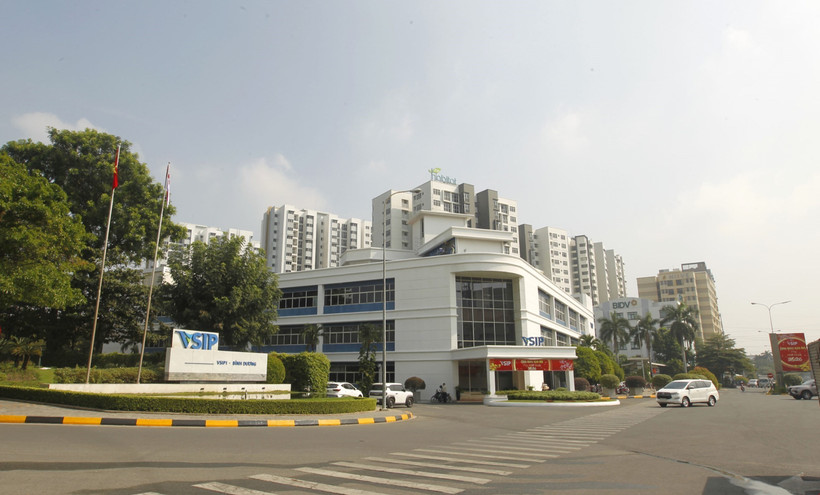
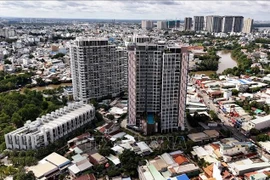
Buildings in the Vietnam-Singapore Industrial Park in Ho Chi Minh City (Photo: VNA)

Ho Chi Minh City (VNA) – Strong talent pools, competitive operating costs and an expanding supply of ESG-compliant Grade A offices are strengthening Ho Chi Minh City’s appeal as a top destination for Global Capability Centres (GCCs) in the long-term expansion plans of multinational corporations.

Savills Vietnam reports that as global groups reshape their operating models, GCCs are evolving beyond traditional back-office roles to become centres for technology, innovation and strategic operations. In Vietnam, Ho Chi Minh City is increasingly emerging as a frontrunner for this new wave of GCCs, underpinned by its advantages in human capital, cost efficiency and high-quality office infrastructure.

According to Lai Thi Nhu Quynh, Senior Leasing Manager for Commercial Leasing at Savills Ho Chi Minh City, the rise of GCCs is not only generating fresh office demand but is also redefining standards, layouts and development strategies across the office market in the medium and long term. New-generation GCCs are assuming more strategic functions, with a strong focus on technology, research and development (R&D), data and innovation, key pillars of global value chains.

The shift is evident in the city’s office leasing activity. Savills data show that in the first nine months of 2025, Ho Chi Minh City recorded 145 office leasing transactions across all segments, with information technology tenants accounting for 37% of newly leased space. Average deal size reached 924 sqm, highlighting the close link between the IT sector and the expansion of next-generation GCCs.

Quynh stressed that high-quality human resources remain the decisive factor in attracting large-scale GCCs. Ho Chi Minh City benefits from a young and plentiful workforce with solid expertise in technology and engineering, as well as a strong foreign language proficiency. The city also hosts the country’s largest concentration of universities, training institutions and technology ecosystems, providing a compelling talent base for GCC operations.

Alongside human capital, Grade A office rents in Ho Chi Minh City remain regionally competitive. Compared with major hubs such as Singapore, Hong Kong (China) and Tokyo (Japan), rental levels are markedly lower, enabling companies to optimise long-term operating costs while meeting international standards.

By the end of the fourth quarter of 2025, total office supply in Ho Chi Minh City stood at around 2.9 million sqm, with Grade A offices accounting for about 17%, or more than 490,000 sqm. Notably, 76% of Grade A space has achieved green certification, signalling a clear market shift towards higher benchmarks. The growing presence of next-generation GCCs is directly influencing both the structure and quality standards of the office market, particularly in the Grade A and A+ segments.

From a geographical perspective, GCCs are adopting a clear strategic footprint. The central business district remains the preferred choice for management, leadership and international transactions, while emerging core areas such as Thu Thiem and the former Thu Duc City are attracting large-scale GCCs, R&D centres and delivery hubs, thanks to greater space flexibility and lower cost pressures.

GCCs are not a passing trend, Quynh underscored. As strategic tenants with defined expansion roadmaps and high standards, their long-term presence is expected to elevate market benchmarks and accelerate the development of internationally aligned office projects in Ho Chi Minh City./.
VNA

See more

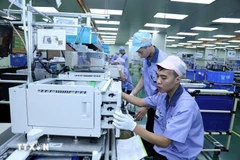
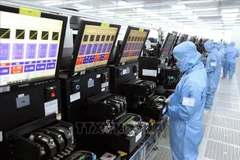
Workers at the VSIP Hai Phong industrial and urban complex, which specialises in producing electronic components for office equipment. (Photo: VNA)

Roadmap aims to improve business climate and boost competitiveness

By the end of 2026, Vietnam aims to rank among the world’s top 50 performers in the United Nations Sustainable Development Goals, advance at least three places in the International Property Rights Index, and climb at least one position in the Global Innovation Index.

Vietnam is strengthening its position in the technology value chain, becoming a major manufacturing hub for complete consumer electronics products. (Photo: VNA)

ESG standards offer opportunities to reposition Vietnam’s electronics firms

The 2025-2027 period will be a critical turning point, as exporters to the European market will be required to strictly comply with ESG standards, including net-zero emissions roadmaps, labour standards, corporate governance and transparency requirements. As a key export sector, the electronics industry is being directly and strongly affected by this shift.

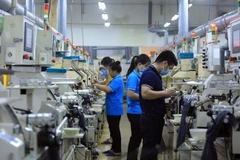
A production line for camera modules and electronic components at the factory of MCNEX VINA Co. Ltd, a Republic of Korean-invested company in Phuc Son Industrial Park, Ninh Binh province. (Photo: VNA)

Science, technology, innovation as engines of economic growth

To ensure that science and technology truly act as a powerful growth engine, experts emphasised the need for the Government to put in place supportive mechanisms and policies that encourage enterprises to invest in research and development, while strengthening cooperation among the State, research institutions and the business sector.

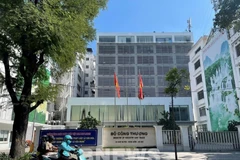
The headquarters of the Ministry of Industry and Trade in Hanoi (Photo: VNA)

PM updates lead roles to drive UKVFTA forward

The Ministry of Industry and Trade (MoIT) is named the lead agency, with overall responsibility for the agreement’s general goals and definitions, trade remedies, non-tariff barriers to trade and investment in renewable energy, competition policies, State-owned enterprises, enterprises with special or exclusive rights and those with designated monopolies, as well as institutional, general and final terms.

Vietravel Airlines is taking measures to enhance service quality and optimise operations amid high travel demand during Tet. (Photo: VNA)

Vietravel Airlines to add new route serving Lunar New Year travel peak

During the peak period of the Lunar New Year (Tet) festival in 2026, Vietravel Airlines plans to operate six – eight flights daily on the Ho Chi Minh City – Hanoi route, three flights daily on the Ho Chi Minh City – Da Nang and Ho Chi Minh City – Vinh routes; and two flights daily on the Ho Chi Minh City – Quy Nhon route.

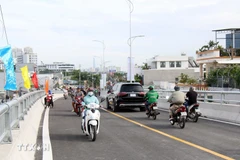
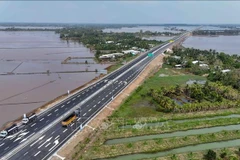
The completion of Can Tho - Ca Mau expressway has helped shorten travel time from Can Tho to Ca Mau to just one hour and a half (Photo: VNA)

Can Tho–Ca Mau expressway fully opens from January 19

The new section, together with the Can Tho–Hau Giang segment that has been operating smoothly since late December last year, has completed the entire 110.85-km route. With total investment exceeding 27.52 trillion VND (1.04 billion USD), the four-lane expressway is built to modern standards and serves as a key transport artery linking major economic and political centres, industrial zones and seaports in the southwestern region.