Government sets 10% growth target for provinces and cities

The Government framed the target as both necessary and achievable despite acknowledging significant headwinds.

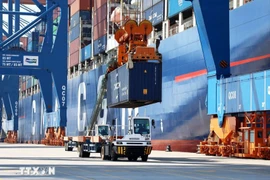
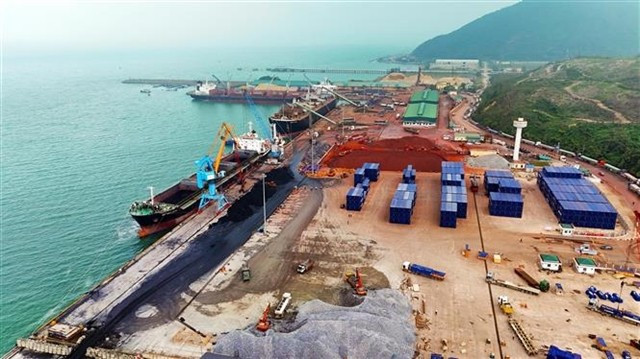
Berth No. 3 at Vung Ang Port in Ha Tinh province receives cargo vessels in early 2026. (Photo: VNA)

Hanoi (VNS/VNA) - The Government has directed provincial authorities to align their economic plans with a national target of at least 10% GDP growth for 2026, with instructions to pursue the goal without debate.

The directive, outlined in Resolution No. 01/NQ-CP dated January 8, ushers in a pivotal development phase for the country. The year 2026 will see the 14th National Party Congress, National Assembly elections and the rollout of a five-year economic plan to sustain double-digit growth through 2030.

The Government framed the target as both necessary and achievable despite acknowledging significant headwinds.

"The Party has directed, the Government has agreed, the National Assembly supports, the people back it, the Fatherland expects it, and friends are helping – so we only discuss doing it, not stepping back," the resolution states.

The growth target positions Vietnam among the world's fastest-growing economies if achieved, though it represents a significant acceleration from the estimated 8% expansion in 2025.

The ambitious goal comes as Vietnam navigates what officials characterise as a complex global environment with heightened risks. Domestically, the country faces mounting challenges from climate change, natural disasters and non-traditional security threats, even as it seeks to build on strong economic momentum from 2025.

Structural transformation at the core

At the heart of the government's strategy is a fundamental shift away from traditional growth drivers toward an innovation-based economy.

Officials are calling for a restructuring around productivity gains, digital transformation and science and technology development – moving beyond the investment, consumption and export model that has powered Vietnam's rise in recent decades.

The resolution identifies 12 key areas for action, with institutional reform topping the list. The government plans to streamline administrative procedures, strengthen decentralisation and hold leaders more accountable for results while tightening discipline across the bureaucracy.

Major infrastructure investment will anchor the growth push, particularly in strategic transport projects including national rail networks, international airports and seaports. Energy infrastructure and cross-regional connectivity projects are also prioritised, with officials pledging to adjust planning frameworks to match evolving conditions.

A breakthrough in science, technology and innovation lies at the heart of the blueprint.

The government is targeting the development of high-quality human resources, particularly in semiconductors, artificial intelligence, and chip manufacturing - sectors where Vietnam is seeking to climb the value chain.

While pursuing rapid expansion, authorities also emphasised maintaining macroeconomic stability, controlling inflation and keeping public debt and budget deficits within prescribed limits. The resolution calls for responding effectively to fluctuations in global trade and economic conditions while exploiting both traditional and new growth engines.

The government also stressed the need to combat corruption, waste and vested interests - long-standing challenges in Vietnam's political economy - while strengthening oversight mechanisms amid expanded decentralisation of authority.

The provincial and municipal administrations have been directed to review their resources and growth potential by February 2026, reporting to local legislative bodies on adjustments needed to align with the national target. This represents a coordinated effort to ensure regional economic plans support the overall objective./.

VNA
See more

Illustrative image (Photo: VNA)

Vietnam remains Singapore’s third-largest seafood supplier in 2025

Data released by the Accounting and Corporate Regulatory Authority of Singapore (ACRA) show that Singapore spent 125.5 million SGD (97.7 million USD) importing seafood from Vietnam last year, up 10.7% year on year, accounting for 10.3% of the city-state’s total seafood import market.

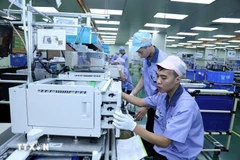
Workers assemble mobile phone components at Diem Thuy Industrial Park in the northern province of Thai Nguyen. (Photo: VNA)

Electronics exports surpass 107 billion USD in 2025

With an export turnover of 107.75 billion USD in 2025, computers, electronic products and components not only maintained their position as Vietnam’s largest export by value, but also contributed more than half of the overall increase in the country’s export turnover in 2025.

Experts said that Vietnam’s economic outlook continues to be underpinned by stable foreign direct investment inflows and public investment, which is playing an important role in driving growth. (Photo: thoibaotaichinh.vn)

Foreign investors maintain strong confidence in Vietnam’s market

Looking ahead to 2026, prospects remain bright as manufacturing, economic growth and foreign investment in Vietnam are expected to stay robust, with the country forecast to post the highest growth rate in the region this year, according to Adam Sitkoff, Executive Director of the American Chamber of Commerce (AmCham) in Vietnam.

Toy production at a Hong Kong-invested factory (Photo: VNA)

Vietnam targets deeper market penetration in Hong Kong in 2026

Vietnam-Hong Kong trade hit 62.3 billion USD in the first 11 months of 2025, soaring 73.1% annually. Vietnamese exports to Hong Kong amounted to 36.8 billion USD, a 90.6% hike, ranking fourth among Hong Kong’s import sources, while imports from Hong Kong stood at 25.5 billion USD, up 52.9% and ranking third.

Vietnam’s start-up market enters restructuring phase

Vietnam’s start-up market enters restructuring phase

In 2026, venture capital inflows into Vietnam’s start-up ecosystem are expected to recover gradually, though in a more selective manner. VinVentures forecasts that capital will focus on start-ups that have survived the rigorous screening of 2024–2025, possess clear business models, strong commercialisation capacity, and the ability to generate real cash flows.

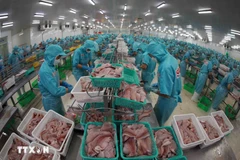
Workers process tra (pangasius) for export (Photo: VNA)

Vietnam–Singapore trade continues to thrive

For the year as a whole, Vietnam retained its position as Singapore’s 10th largest trading partner. Bilateral trade reached a record high of nearly 40 billion SGD, up 26.2% from the previous peak of 31.67 billion SGD recorded in 2024.

Eric Van Vaerenbergh, an energy expert and lecturer at the Brussels Engineering School (ECAM) (Photo: VNA)

Belgian expert optimistic about Vietnam’s economic outlook

Vietnam should move from a growth model based mainly on expanding capital and labour to one driven by productivity improvements. He said that this requires enhancing the quality of the workforce, particularly engineers, technicians, and managers in industrial sectors.

Workers at the VSIP Hai Phong industrial and urban complex, which specialises in producing electronic components for office equipment. (Photo: VNA)

Roadmap aims to improve business climate and boost competitiveness

By the end of 2026, Vietnam aims to rank among the world’s top 50 performers in the United Nations Sustainable Development Goals, advance at least three places in the International Property Rights Index, and climb at least one position in the Global Innovation Index.