Vietnam, Burkina Faso look to strengthen trade, economic cooperation

To further promote trade and economic ties, the Vietnamese official proposed increasing exchanges of delegations at various levels in order to update information about each other's market conditions, as well as economic and trade policies.

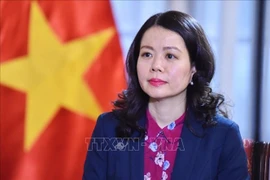
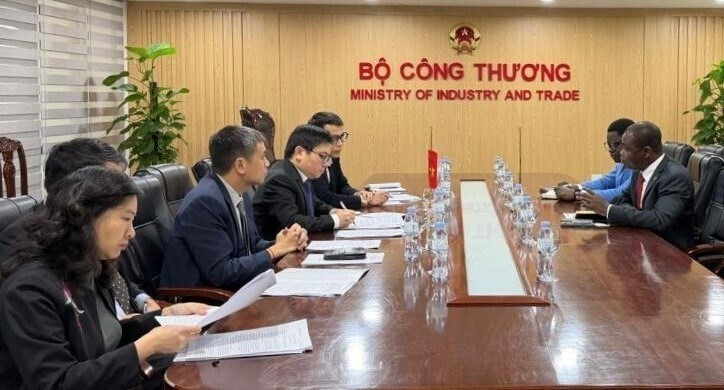
The meeting between Deputy Minister of Industry and Trade Truong Thanh Hoai and Ambassador of Burkina Faso to China and Vietnam Daouda Bitie (Photo: Ministry of Industry and Trade)

Hanoi (VNA) – Deputy Minister of Industry and Trade Truong Thanh Hoai held a meeting with Daouda Bitie, Ambassador of Burkina Faso to China and Vietnam, in Hanoi on January 21 to discuss ways for further strengthening bilateral trade and economic cooperation.

At the meeting, Hoai noted that in 2025, Vietnam’s economic structure continued to undergo a positive shift towards greater comprehensiveness and modernisation. Trade remained a bright spot, reaching a record turnover of 930 billion USD. Regarding international economic integration, the country has signed, implemented, and been negotiating 19 free trade agreements (FTAs), including 17 that have already entered into force.

Affirming that Vietnam represents a market of considerable potential for Burkina Faso, the Deputy Minister stressed that cooperation could be expanded across trade, industry, and energy.

He commended the achievements recorded by Burkina Faso in recent years under the leadership of President Ibrahim Traore, saying that during the 2020–2024 period, trade between Vietnam and Burkina Faso averaged nearly 95 million USD per year.

However, he acknowledged that this figure has yet to meet the two economies' potential. Exports to each other’s markets currently account for less than 0.05% of their overseas shipments, while industrial cooperation remains limited and requires clearer orientation and enhanced support for stronger business connectivity.

To further promote trade and economic ties, the Vietnamese official proposed increasing exchanges of delegations at various levels in order to update information about each other's market conditions, as well as economic and trade policies.

He also encouraged the organisation of business networking activities in each other’s markets and the participation of Burkina Faso’s agencies and enterprises in Vietnam’s major annual international trade fairs and exhibitions.

It is also necessary to step up trade promotion in the fields matching Vietnam's strengths and Burkina Faso's demand such as rice, agricultural machinery, electrical equipment, construction materials, household goods, and textiles. In addition, the two sides should explore cooperation in mining, textiles, agro-processing, chemicals, fertilisers, as well as food security, Hoai went on.

For his part, Ambassador Daouda Bitie said he is honoured to be invited to attend the 14th National Congress of the Communist Party of Vietnam.

Congratulating Vietnam on its socio-economic achievements in 2025, he said Burkina Faso has recently undertaken comprehensive reforms and wishes to deepen economic and trade cooperation with Vietnam.

Burkina Faso is learning other countries' experiences to support its national development, with a focus on key sectors like agriculture, basic industrial production, investment attraction, and technology transfer. It now has large demand for rice and oil import, along with motorcycle and component manufacturing to serve the domestic market, the diplomat added.

As Vietnam and Burkina Faso have yet to open representative diplomatic bodies in each other's countries, to ensure efficient coordination, Hoai proposed the two sides appoint focal points, with the Vietnamese side being the Department of Overseas Market Development under the Ministry of Industry and Trade, to share information to promote exchanges of technical and business delegations.

He also suggested studying the possibility of negotiating a memorandum of understanding on rice trade. He encouraged Burkina Faso to send business delegations to Vietnam to participate in trade fairs and exhibitions, thereby enhancing practical and sustainable cooperation.

The Burkina Faso Ambassador pledged close coordination with the Vietnamese ministry and relevant agencies to promote handling the issues his host mentioned./.

VNA
See more

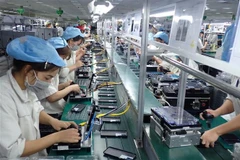
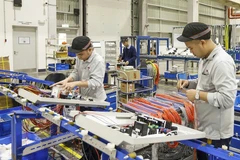
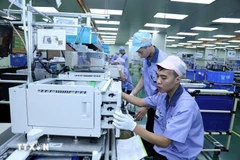
Workers assemble mobile phone components at Diem Thuy Industrial Park in the northern province of Thai Nguyen. (Photo: VNA)

Electronics exports surpass 107 billion USD in 2025

With an export turnover of 107.75 billion USD in 2025, computers, electronic products and components not only maintained their position as Vietnam’s largest export by value, but also contributed more than half of the overall increase in the country’s export turnover in 2025.

Experts said that Vietnam’s economic outlook continues to be underpinned by stable foreign direct investment inflows and public investment, which is playing an important role in driving growth. (Photo: thoibaotaichinh.vn)

Foreign investors maintain strong confidence in Vietnam’s market

Looking ahead to 2026, prospects remain bright as manufacturing, economic growth and foreign investment in Vietnam are expected to stay robust, with the country forecast to post the highest growth rate in the region this year, according to Adam Sitkoff, Executive Director of the American Chamber of Commerce (AmCham) in Vietnam.

Toy production at a Hong Kong-invested factory (Photo: VNA)

Vietnam targets deeper market penetration in Hong Kong in 2026

Vietnam-Hong Kong trade hit 62.3 billion USD in the first 11 months of 2025, soaring 73.1% annually. Vietnamese exports to Hong Kong amounted to 36.8 billion USD, a 90.6% hike, ranking fourth among Hong Kong’s import sources, while imports from Hong Kong stood at 25.5 billion USD, up 52.9% and ranking third.

Vietnam’s start-up market enters restructuring phase

Vietnam’s start-up market enters restructuring phase

In 2026, venture capital inflows into Vietnam’s start-up ecosystem are expected to recover gradually, though in a more selective manner. VinVentures forecasts that capital will focus on start-ups that have survived the rigorous screening of 2024–2025, possess clear business models, strong commercialisation capacity, and the ability to generate real cash flows.

Workers process tra (pangasius) for export (Photo: VNA)

Vietnam–Singapore trade continues to thrive

For the year as a whole, Vietnam retained its position as Singapore’s 10th largest trading partner. Bilateral trade reached a record high of nearly 40 billion SGD, up 26.2% from the previous peak of 31.67 billion SGD recorded in 2024.

Eric Van Vaerenbergh, an energy expert and lecturer at the Brussels Engineering School (ECAM) (Photo: VNA)

Belgian expert optimistic about Vietnam’s economic outlook

Vietnam should move from a growth model based mainly on expanding capital and labour to one driven by productivity improvements. He said that this requires enhancing the quality of the workforce, particularly engineers, technicians, and managers in industrial sectors.

Workers at the VSIP Hai Phong industrial and urban complex, which specialises in producing electronic components for office equipment. (Photo: VNA)

Roadmap aims to improve business climate and boost competitiveness

By the end of 2026, Vietnam aims to rank among the world’s top 50 performers in the United Nations Sustainable Development Goals, advance at least three places in the International Property Rights Index, and climb at least one position in the Global Innovation Index.