Small firms undergo digital transformation amid pressures

Unlike in the past, when the transition to the single-window mechanism was conducted manually, digital transformation is now taking place amid high compliance requirements and increasingly clear penalties.

small-firms-undergo-digital-transformation-amid-pressures-1.jpg
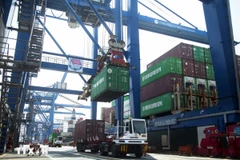
Small businesses account for over 95% of all operating businesses in Vietnam. (Illustrative photo: VNA)

Hanoi (VNA) – While digital transformation is expected to help businesses boost productivity, cut costs and enhance competitiveness, for many small firms, digitalisation is driven more by regulatory compliance pressures than by their strategies.

Over the past two years, amid the drive for administrative procedure reforms and digital government, businesses have been striving to satisfy a series of digitalisation requirements such as applying electronic invoices, digital signatures, electronic tax declaration and payment, labour reporting, social insurance, and data connection with regulatory agencies.

For large businesses with well-structured governance systems and sufficient financial resources, this process is relatively smooth. But for small ones – which account for over 95% of all operating businesses, digitalisation is a stressful "sprint".

Nguyen Van Khoa, Director of a 30-employee distribution and trading company in Hanoi, shared that the implementation of digital systems did not stem from the need for restructuring or improving governance efficiency, but simply because without it, they could not continue operating.

For small businesses, digital transformation is primarily about meeting requirements to survive, he said.

One of the biggest pressures facing small companies is the cost of digitalisation, including both tangible and intangible costs. Besides initial investments in accounting software, electronic invoicing, and digital signatures, they also have to pay for annual maintenance, implementation consulting, staff training, and even troubleshooting when systems don’t run smoothly.

Le Thuy Linh, owner of a tea production facility in Tan Cuong commune, Thai Nguyen province, said when adding all up, the annual digitalisation costs for her business are equivalent to the salary of a skilled worker. For large businesses, that figure may be insignificant, but for small firms, it's a problem they have to solve.

Notably, the biggest cost doesn't necessarily lie in the software itself, but in the risk of error. A data formatting error or a small discrepancy in electronic declarations can lead to administrative penalties, forcing businesses to both rectify the problem and provide explanations for authorities.

Unlike in the past, when the transition to the single-window mechanism was conducted manually, digital transformation is now taking place amid high compliance requirements and increasingly clear penalties.

Many small businesses admit that they embark on the digitalisation process with the understanding that "no mistakes are allowed". This inadvertently turns digital transformation, which should be a process of learning and improvement, into a potential legal risk.

Businesses said the problem lies not in the digitalisation policy itself, but in the speed and method of implementation. Small companies have almost no time to learn and experiment, while their technology adoption capacity, human resources, and finances are all limited.

The Government’s Resolution 02/2026/NQ-CP aims to further improve the business environment, reduce compliance costs, and place businesses at the centre of service delivery. However, from the perspective of small businesses, the gap between policy and practice remains significant.

Proposing a more suitable roadmap be implemented, Cuong suggested that in the initial phase, a certain extent of technical errors should be allowed, and specific guidelines provided for businesses instead of immediately imposing penalties.

Small businesses perceived that for digital transformation to truly become a growth driver, it is necessary to standardise and synchronise digital systems across regulatory agencies so that businesses do not have to repeatedly enter data. At the same time, technical support tailored to business sizes is needed, not just through written guidelines, but through substantive consulting and training.

Linh pointed out that digitalisation is an irreversible trend, but if businesses only view it as a compliance obligation, they will simply go through the motions. In that case, it will be very difficult to secure increased productivity and competitiveness.

From the perspective of a regulatory agency, a representative from a unit in the field of administrative procedure reform stated that technical errors are unavoidable during the transition process.

Authorities' viewpoint is to increase guidance and support to help businesses do correctly and gradually become familiar with new systems, rather than creating unnecessary pressure, the representative noted./.

VNA

See more

The VSS reported that total accumulated reserves across the social, health, and unemployment insurance funds now top 1.5 quadrillion VND. (Illustrative photo: VNA)

VSS pledges tighter fund management, diversified investments

The VSS will also impose stricter financial discipline in fund management, while pursuing broader diversification of investment portfolios, as guided by the principle of “safety, sustainability, and efficiency”. This approach aims to secure strong liquidity for prompt benefit payouts and support growth in Vietnam’s capital markets and overall economy.

The ceremony unveiling AFT Connect portal (Photo: nhandan.vn)

AFT Connect portal links Vietnamese clean food producers

The platform is expected to serve as shared digital backbone enabling stakeholders in the clean food sector to gradually digitise, standardise, and publicly disclose information, ultimately aiding the fight against unsafe products and protecting consumer interests.

A Vietcombank employee guides a client in biometric process (Photo: qdnd.vn)

Vietnam's biometric surge powers digital banking overhaul

As the Party identified breakthroughs in science – technology and innovation as a key driver of national progress, the mastery and adoption of biometric technologies must go hand in hand with safeguarding public trust, data security, and citizens’ interests, all aligned with the people-first philosophy guiding the country's digital agenda.

A spring fair kicks off in the central Da Nang city on January 22, 2026 (Photo: VNA)

Da Nang 2026 spring fair features 200 booths

The fair features a diverse range of products and services, focusing on items for Tet such as food and beverages, regional specialties, OCOP products, and rural and industrial goods; fashion, footwear, cosmetics, and sports equipment; health care products and beauty services; household items, interior and exterior décor, and handicrafts; as well as equipment, technology, and services in sectors like electronics, automobiles, and telecommunications.

The Ministry of Finance is working to establish a mechanism for regular and ongoing dialogue with international credit rating agencies, including Fitch, Moody’s and S&P. (Illustrative image: VNA)

Fitch Ratings upgrades Vietnam’s senior secured long-term debt rating to BBB-

The rating for Vietnam’s secured long-term debt was raised to BBB-, equivalent to investment grade, one notch higher than the country’s long-term foreign-currency rating on unsecured debt, which remains at BB+. The upgrade followed Fitch’s review under its revised Sovereign Rating Criteria issued in last September, said the Ministry of Finance.

A view of the site where the Ninh Thuan 1 Nuclear Power Plant is located in Phuoc Dinh commune, Khanh Hoa province (Photo: VNA)

Nuclear experts urge century-long commitment at 14th Party Congress

VietNuc’s executive board, including Chairman Bui Nguyen Hoang from the Électricité de France SA (EDF) (EDF), Ung Quoc Hung from Setec Nucléaire Group, and Vu Minh Ngoc from French National Radioactive Waste Management Agency Andra, hoped that the Congress would refine mechanisms and policies to better tap OV nuclear talents.

Ahmad Haikal Hasan, Head of the Halal Product Assurance Organising Agency (BPJPH) of Indonesia, speaks at the seminar (Photo: VNA)

Indonesia ready to cooperate with Vietnam in halal sector

Ahmad Haikal Hasan, Head of the Halal Product Assurance Organising Agency (BPJPH) of Indonesia, described Vietnam as a “potential supplier” of halal products with the capacity to play a larger role in the market, particularly in the fast-moving consumer goods (FMCG) sector. He revealed a plan to visit Vietnam next week to discuss the country’s progress in the global halal industry.

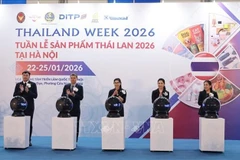
Delegates perform the opening ceremony. (Photo: VNA)

Thailand Week 2026 opens in Hanoi

The event brings together more than 100 companies, including Thai enterprises and Vietnamese importers, across about 120 booths. It features a wide range of Thai products aligned with consumer trends in Vietnam, including food and beverages, health and beauty, mother-and-baby and pet products, fashion and jewellery, household goods and tourism services.

Illustrative image (Photo: VNA)

Vietnam remains Singapore’s third-largest seafood supplier in 2025

Data released by the Accounting and Corporate Regulatory Authority of Singapore (ACRA) show that Singapore spent 125.5 million SGD (97.7 million USD) importing seafood from Vietnam last year, up 10.7% year on year, accounting for 10.3% of the city-state’s total seafood import market.