Resolution 79: State economic sector to lead, catalyse private sector development

More than a document reaffirming the leading role of the state economic sector in a new era, the Resolution opens up an unprecedented space of “mutual reinforcement”, in which the sector shifts from an administrative management mindset to one of “development facilitation”, and is expected to serve as a solid pillar enabling the private sector and other economic components to make breakthroughs.

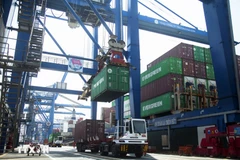
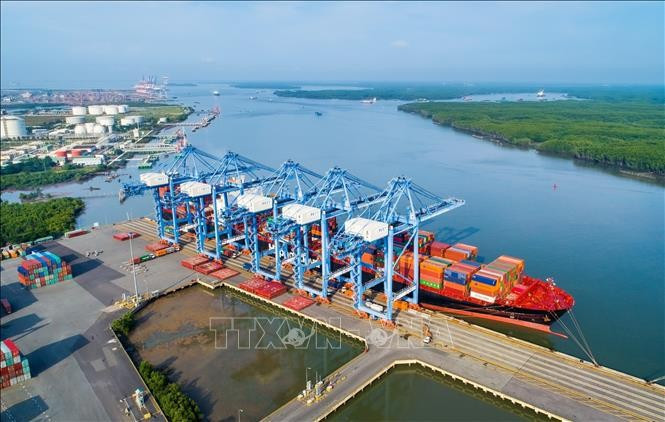
Cai Mep–Thi Vai deep-water port has helped with FDI attraction to the southeastern region. (Photo: VNA)

Hanoi (VNA) – The Politburo’s Resolution No. 79-NQ/TW on developing the state economic sector has received positive feedback from the business community immediately after its issuance.

More than a document reaffirming the leading role of the state economic sector in a new era, the Resolution opens up an unprecedented space of “mutual reinforcement”, in which the sector shifts from an administrative management mindset to one of “development facilitation”, and is expected to serve as a solid pillar enabling the private sector and other economic components to make breakthroughs, with a view to realising the goal and vision of turning the country into a developed, high-income nation by 2045.

Repositioning the “leader”

Resolution 79-NQ/TW affirms that the state economic sector is a particularly important component, holding key resources such as land, natural resources, infrastructure, the state budget and financial funds. However, its most groundbreaking aspect lies in the principle of fairness in operational mechanisms.

The resolution clearly states that this sector is equal before the law with other economic sectors, which jointly develop in the long term, cooperate and compete healthily.

As one of the leading providers of integrated consultancy solutions and corporate governance systems, Le Van Dung, General Director of ABSoft Group JSC, described Resolution No. 79 as a major shift in thinking.

Its most significant impact on the private sector lies not only in institutional mechanisms, but in the ambition to elevate the scale of the state sector. The Resolution sets a clear target that by 2030, there will be 50 state-owned enterprises (SOEs) among the top 500 largest enterprises in Southeast Asia, including 1–3 among the world’s top 500. This will create a powerful pull for private enterprises through supply chains. A state-owned conglomerate ranked among the world’s top 500 will require an ecosystem of thousands of satellite firms, many of which can be small- and medium-sized enterprises (SMEs).

Unlocking capital flows and resources

Another key highlight is the target of having at least three state-owned commercial banks ranked among the top 100 banks in Asia by 2030.

Pham Thi Hong Tham, former Director of Customer Services at Vietnam Maritime Bank (MSB) – South Hanoi branch and currently Chief Executive Officer of TKV Hanoi Production and Trading Co., Ltd., said this is a direct positive signal for the economy’s capital needs. When state-owned credit institutions become strong enough, capital flows for production and business activities, particularly green and digital transformation projects in the private sector, will be unlocked. In addition, the resolution defines the foundations of the state economic sector as including land, infrastructure and national reserves. Effective management and use of these resources, while preventing wastefulness and losses, will indirectly reduce logistics and land-use costs across the economy, enhancing the competitiveness of private enterprises.

With transparent governance identified as the cornerstone of trust, the resolution also creates the conditions for public–private partnerships (PPP) to become more substantive. Resolution No. 79 addresses this by requiring 100% of SOEs to adopt modern governance based on digital platforms, while state-owned groups and corporations must apply governance standards in line with OECD principles.

According to Tham, when SOEs operate under OECD standards, financial and investment information becomes transparent - an essential prerequisite for attracting major private and international investors into equitisation and investment cooperation projects.

The resolution’s emphasis on mechanisms to protect officials who dare to think big and act boldly is also highly valued by economists and the business community, as it helps remove fear of making mistakes and encourages SOE leaders to be more proactive in joint ventures and partnerships with the private sector, especially in high-risk areas such as core technologies and new energy.

To realise the 2045 vision - as the state economic sector, together with others, helps Vietnam become a developed, high-income country, economists and many businesses agree that comprehensive solutions are required. These include early publication of a clear list of sectors to be retained by the State and those fully open to private participation, in line with the resolution’s spirit. In addition, state-owned economic groups should set clear roadmaps for localisation rates and prioritise the use of Vietnamese products and services, thereby creating markets for private enterprises to grow alongside them. As required by the Politburo, implementation must be rigorous, with success measured by national competitiveness and the overall growth of the business ecosystem, regardless of ownership form./.

VNA
See more

Vietnamese Ambassador to the RoK Vu Ho speaks at the event (Photo: VNA)

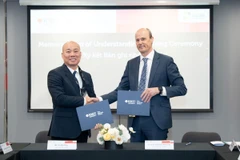
Vietnamese, Korean firms seek to enhance connectivity in new context

The association has actively contributed to policy discussions on issues important to Vietnam, including support for small- and medium-sized enterprises, artificial intelligence (AI) and sovereignty, as well as AI and semiconductor development policies in the RoK, while proposing recommendations for Vietnam.

Prime Minister Pham Minh Chinh chairs the Government Steering Committee for Macroeconomic Management and Administration's second meeting. (Photo: VNA)

Macroeconomic management must match words with action: PM

In 2025 the global environment remained highly uncertain due to geopolitical tensions and tariff policies, while domestically, natural disasters, storms and floods were unusually severe, exceeding historical levels. Despite these challenges, Vietnam recorded encouraging economic results, with inflation kept under control at 3.31%, macroeconomic stability consolidated, major economic balances safeguarded, and GDP growth reaching 8.02% – a notable rate globally.

Delegates attend the closing session of the 14th National Party Congress (Photo: VNA)

14th National Party Congress: Chinese expert praises Vietnam’s growth targets

Vietnam should further refine mechanisms for mobilising infrastructure capital, including expanding public–private partnership (PPP) models and considering the establishment of a national-level special infrastructure fund to attract sovereign wealth funds and long-term capital, said Liu Ying, a research fellow at the Chongyang Institute for Financial Studies under the Renmin University of China.

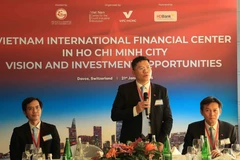
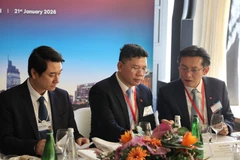
Vice Chairman of the Ho Chi Minh City People’s Committee Hoang Nguyen Dinh delivers remarks at the working luncheon themed “Vietnam International Financial Centre in Ho Chi Minh City (VIFC-HCMC) – Vision and Investment Opportunities”. (Photo: VNA)

Ho Chi Minh City strengthens global engagement at WEF Davos 2026

Vice Chairman of the Ho Chi Minh City People’s Committee Hoang Nguyen Dinh presented the city’s strategic vision, policy orientation and development priorities for building a modern, transparent and globally connected finance – technology ecosystem, with science – technology, data, artificial intelligence and fintech identified as core pillars.

The VSS reported that total accumulated reserves across the social, health, and unemployment insurance funds now top 1.5 quadrillion VND. (Illustrative photo: VNA)

VSS pledges tighter fund management, diversified investments

The VSS will also impose stricter financial discipline in fund management, while pursuing broader diversification of investment portfolios, as guided by the principle of “safety, sustainability, and efficiency”. This approach aims to secure strong liquidity for prompt benefit payouts and support growth in Vietnam’s capital markets and overall economy.

The ceremony unveiling AFT Connect portal (Photo: nhandan.vn)

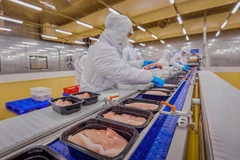
AFT Connect portal links Vietnamese clean food producers

The platform is expected to serve as shared digital backbone enabling stakeholders in the clean food sector to gradually digitise, standardise, and publicly disclose information, ultimately aiding the fight against unsafe products and protecting consumer interests.

A Vietcombank employee guides a client in biometric process (Photo: qdnd.vn)

Vietnam's biometric surge powers digital banking overhaul

As the Party identified breakthroughs in science – technology and innovation as a key driver of national progress, the mastery and adoption of biometric technologies must go hand in hand with safeguarding public trust, data security, and citizens’ interests, all aligned with the people-first philosophy guiding the country's digital agenda.

A spring fair kicks off in the central Da Nang city on January 22, 2026 (Photo: VNA)

Da Nang 2026 spring fair features 200 booths

The fair features a diverse range of products and services, focusing on items for Tet such as food and beverages, regional specialties, OCOP products, and rural and industrial goods; fashion, footwear, cosmetics, and sports equipment; health care products and beauty services; household items, interior and exterior décor, and handicrafts; as well as equipment, technology, and services in sectors like electronics, automobiles, and telecommunications.

The Ministry of Finance is working to establish a mechanism for regular and ongoing dialogue with international credit rating agencies, including Fitch, Moody’s and S&P. (Illustrative image: VNA)

Fitch Ratings upgrades Vietnam’s senior secured long-term debt rating to BBB-

The rating for Vietnam’s secured long-term debt was raised to BBB-, equivalent to investment grade, one notch higher than the country’s long-term foreign-currency rating on unsecured debt, which remains at BB+. The upgrade followed Fitch’s review under its revised Sovereign Rating Criteria issued in last September, said the Ministry of Finance.