Resolution 79: Encouraging State-owned enterprises to link with FDI sector

The State economic sector has effectively fulfilled its function of orienting, leading and regulating economic activities, contributing to promoting economic growth, stabilising the macro economy, maintaining major economic balances, ensuring national defence and security, fostering social progress and justice, improving living standards and raising Vietnam’s international standing.

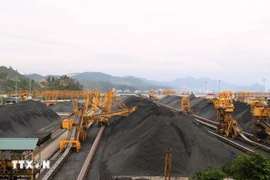
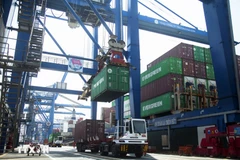
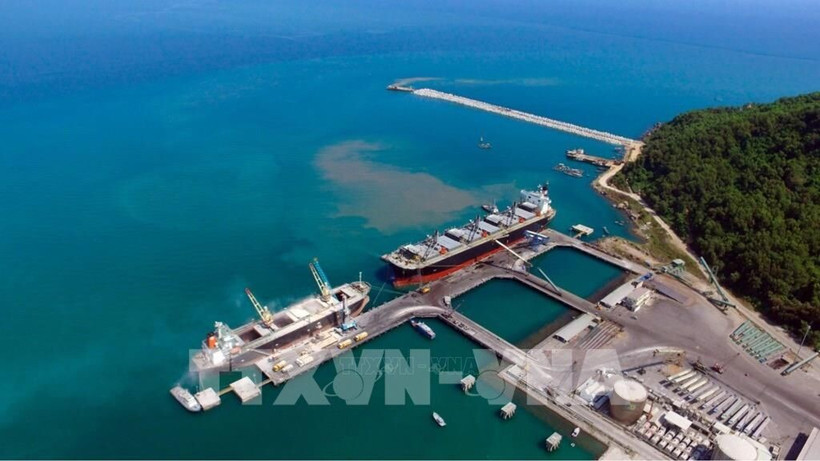
A view of Chan May deep-water port (Illustrative image. Photo: VNA)

Hanoi (VNA) – The Politburo’s Resolution No. 79-NQ/TW on the development of the State economic sector encourages State-owned enterprises (SOEs) to invest and forge linkages with other businesses along value chains, including those from the foreign direct investment (FDI) sector, a move seen as a solution to promote rapid and sustainable growth in Vietnam.

While reaffirming the State-owned economic sector as a particularly important component of the socialist-oriented market economy, Resolution 79 stresses that after 80 years of development, and especially nearly 40 years of Doi moi (Renewal), the State economic sector has always played a leading role.

It has effectively fulfilled its function of orienting, leading and regulating economic activities, contributing to promoting economic growth, stabilising the macro economy, maintaining major economic balances, ensuring national defence and security, fostering social progress and justice, improving living standards and raising Vietnam’s international standing.

At the same time, the resolution acknowledges persistent shortcomings. Policies and laws governing the state-owned economy have been slow to adapt to economic realities, while SOEs - the core force of this sector - have yet to operate commensurately with their position and resources. Their international competitiveness remains limited, and they have not played a pioneering role in innovation or in leading key and essential industries. Public service units remain cumbersome, with slow reforms in operational mechanisms, financial autonomy and service pricing, while some long-standing problems have caused waste and losses. To further promote the role of the state economy and realise the goal of making Vietnam a developing country with modern industry and upper-middle income by 2030, and a developed, high-income country by 2045, Resolution 79 outlines a range of solutions. It highlights the need to encourage SOEs to invest and link with other enterprises in core business areas, as well as technology, innovation and digital transformation, to form pioneering enterprise groups capable of mastering core and strategic technologies, optimising social resources and fostering innovation.

According to the Ministry of Finance, by 2025 Vietnam had attracted more than 520 billion USD in FDI from around 150 countries and territories, with FDI enterprises making significant contributions to socio-economic development.

However, Nguyen Anh Tuan, Chairman of the Vietnam's Association of Foreign Invested Enterprises (VAFIE), noted that linkages between the FDI sector and domestic enterprises remain weak. Localisation rates are still low, at only 30–35% in consumer electronics, 15% in telecommunications and 10–20% in the automobile industry, according to a recent survey conducted by the Institute for Economic Strategy and Policy.

Resolution 79-NQ/TW builds on Resolution 50-NQ/TW, which called for stronger linkages between foreign-invested and domestic enterprises, especially small and medium-sized ones, to enhance internal capacity and competitiveness.

Experts say SOEs should not replace the private sector, but act as ecosystem builders. Through large corporations and groups in key fields such as energy, infrastructure, logistics, telecommunications and technology, the state economy can serve as a hub to connect, standardise and lead value chains, enabling domestic firms to move deeper into production networks and higher value added segments.

In the context of global supply chain shifts, digital transformation and green growth commitments, Vietnam is repositioning its FDI strategy towards quality and value. Priorities include high-tech and innovative investment, particularly in semiconductors, artificial intelligence, biotechnology and R&D centres, as well as green transition, renewable energy and sustainable development. Strengthening cooperation between foreign-invested and domestic enterprises will be essential to raising localisation rates, accelerating technology transfer and enhancing production capacity./.

VNA

See more

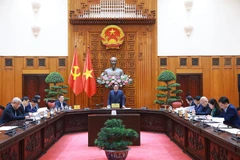
Prime Minister Pham Minh Chinh chairs the Government Steering Committee for Macroeconomic Management and Administration's second meeting. (Photo: VNA)

Macroeconomic management must match words with action: PM

In 2025 the global environment remained highly uncertain due to geopolitical tensions and tariff policies, while domestically, natural disasters, storms and floods were unusually severe, exceeding historical levels. Despite these challenges, Vietnam recorded encouraging economic results, with inflation kept under control at 3.31%, macroeconomic stability consolidated, major economic balances safeguarded, and GDP growth reaching 8.02% – a notable rate globally.

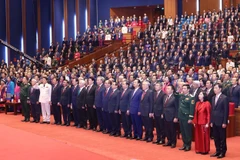
Delegates attend the closing session of the 14th National Party Congress (Photo: VNA)

14th National Party Congress: Chinese expert praises Vietnam’s growth targets

Vietnam should further refine mechanisms for mobilising infrastructure capital, including expanding public–private partnership (PPP) models and considering the establishment of a national-level special infrastructure fund to attract sovereign wealth funds and long-term capital, said Liu Ying, a research fellow at the Chongyang Institute for Financial Studies under the Renmin University of China.

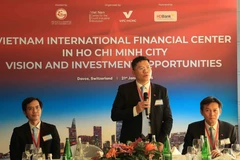
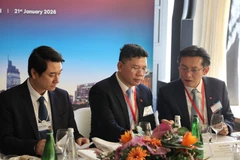
Vice Chairman of the Ho Chi Minh City People’s Committee Hoang Nguyen Dinh delivers remarks at the working luncheon themed “Vietnam International Financial Centre in Ho Chi Minh City (VIFC-HCMC) – Vision and Investment Opportunities”. (Photo: VNA)

Ho Chi Minh City strengthens global engagement at WEF Davos 2026

Vice Chairman of the Ho Chi Minh City People’s Committee Hoang Nguyen Dinh presented the city’s strategic vision, policy orientation and development priorities for building a modern, transparent and globally connected finance – technology ecosystem, with science – technology, data, artificial intelligence and fintech identified as core pillars.

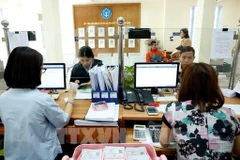
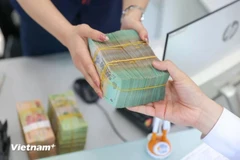
The VSS reported that total accumulated reserves across the social, health, and unemployment insurance funds now top 1.5 quadrillion VND. (Illustrative photo: VNA)

VSS pledges tighter fund management, diversified investments

The VSS will also impose stricter financial discipline in fund management, while pursuing broader diversification of investment portfolios, as guided by the principle of “safety, sustainability, and efficiency”. This approach aims to secure strong liquidity for prompt benefit payouts and support growth in Vietnam’s capital markets and overall economy.

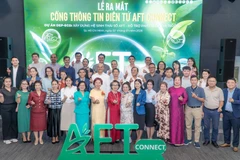
The ceremony unveiling AFT Connect portal (Photo: nhandan.vn)

AFT Connect portal links Vietnamese clean food producers

The platform is expected to serve as shared digital backbone enabling stakeholders in the clean food sector to gradually digitise, standardise, and publicly disclose information, ultimately aiding the fight against unsafe products and protecting consumer interests.

A Vietcombank employee guides a client in biometric process (Photo: qdnd.vn)

Vietnam's biometric surge powers digital banking overhaul

As the Party identified breakthroughs in science – technology and innovation as a key driver of national progress, the mastery and adoption of biometric technologies must go hand in hand with safeguarding public trust, data security, and citizens’ interests, all aligned with the people-first philosophy guiding the country's digital agenda.

A spring fair kicks off in the central Da Nang city on January 22, 2026 (Photo: VNA)

Da Nang 2026 spring fair features 200 booths

The fair features a diverse range of products and services, focusing on items for Tet such as food and beverages, regional specialties, OCOP products, and rural and industrial goods; fashion, footwear, cosmetics, and sports equipment; health care products and beauty services; household items, interior and exterior décor, and handicrafts; as well as equipment, technology, and services in sectors like electronics, automobiles, and telecommunications.

The Ministry of Finance is working to establish a mechanism for regular and ongoing dialogue with international credit rating agencies, including Fitch, Moody’s and S&P. (Illustrative image: VNA)

Fitch Ratings upgrades Vietnam’s senior secured long-term debt rating to BBB-

The rating for Vietnam’s secured long-term debt was raised to BBB-, equivalent to investment grade, one notch higher than the country’s long-term foreign-currency rating on unsecured debt, which remains at BB+. The upgrade followed Fitch’s review under its revised Sovereign Rating Criteria issued in last September, said the Ministry of Finance.