HCM City (VNA) – The draft documents to be submitted to the 14th National Party Congress have attracted strong public attention and feedback, particularly the draft report on the review of theoretical and practical issues in the 40 years of Doi Moi (Renewal) toward socialism in Vietnam.
Among key topics of interest is the Party’s evolving understanding and direction in building and developing Vietnamese culture and people.
Culture - nation’s spiritual foundation, “soft power”
The 40-year review report highlights the Party’s growing theoretical understanding of the role of culture and its goal of developing a vibrant national culture in the Doi Moi era. The 13th National Party Congress affirmed that culture is the spiritual foundation of society, and at the same time a goal, driving force, and internal strength for sustainable national development. It also recognised culture as an important “resource” and “soft power” in Vietnam’s integration process.
Dr. Pham Ngoc Huong from the Southern Institute of Social Sciences noted that for the first time, the Party’s documents identified “awakening and promoting the value of Vietnamese culture and human strength” as one of the strategic breakthroughs for socio-economic development in the 2021–2030 period.
After 40 years of Doi Moi and amid rapid global changes, it’s important to reaffirm the role of culture as both the spiritual foundation and a source of internal strength to ensure the country’s sustainable development, she said.
She suggested that Vietnam should focus more on developing cultural industries and digital culture in connection with the creative economy, viewing these as key economic sectors that can increase culture’s contribution to national GDP.
Huong also emphasised the need to invest in modern cultural institutions, preserve and promote tangible and intangible heritage, and apply digital transformation in conservation and cultural promotion.
Policies should encourage enterprises, communities, and individuals to take part in cultural creation, production, and consumption, thereby forming a healthy, unified, and globally integrated cultural market.
Nguyen Nhu Thuy, Deputy Principal of Hoang Dieu Secondary School in Ho Chi Minh City’s Tan Phu ward, observed that while previous decades saw a strong focus on economic growth, culture was not given equal attention.
It’s encouraging that culture is now recognised as the spiritual foundation and a national resource, she said.
She noted that Vietnam’s cultural life has significantly improved in both quality and depth in recent years. Nationwide movements, such as the patriotism education campaign and the “All people unite to build cultural life” campaign, have strengthened public awareness and community engagement in building cultural values.
Cultural values are like a shield that helps prevent and reverse moral and lifestyle degradation, Thuy stressed.
More resources needed for cultural development
Over four decades of Doi Moi, Vietnam has achieved comprehensive progress in many fields, including culture. The network of cultural institutions has expanded nationwide; people’s cultural lives have been improved; and cultural industries and services have made greater economic contributions. International cultural cooperation and exchanges have also been intensified, helping to promote Vietnam’s image and people worldwide.
According to People’s Artist Dang Thuy My Uyen, Director of the HCM City Small Theatre, these achievements have laid a solid foundation for building an advanced Vietnamese culture imbued with national identity — one that both preserves fine traditions and embraces the world’s cultural quintessence.
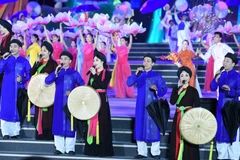
Cultural and artistic activities not only enrich spiritual life but also enhance aesthetics, creativity, and cultural appreciation among the people, she said.
However, she admitted that cultural development still faces limitations. The Party has frankly acknowledged that cultural investment remains insufficient and inconsistent. The number of literary and artistic works with profound ideological and artistic value is still limited, while some productions cater to low tastes or lack quality, she noted.
Uyen added that many art units are struggling to survive, and there is still a significant cultural enjoyment gap between urban and remote areas.
To develop culture and performing arts sustainably, stronger investment is needed. Alongside state support, artists and associations must also take greater responsibility in producing meaningful works that truly serve the public, not just sit in storage after production, Uyen said./.