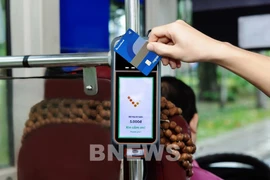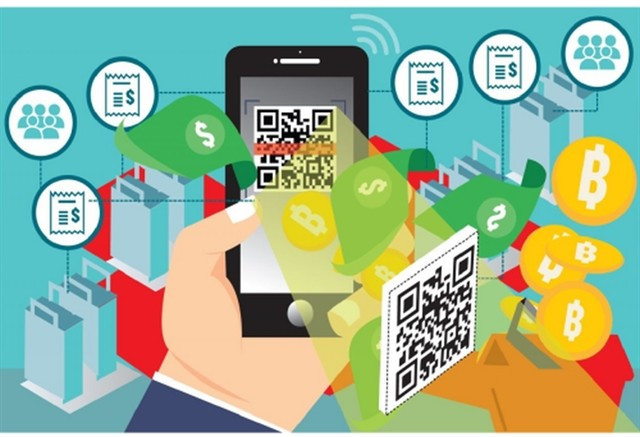
HCM City (VNS/VNA) – Vietnamese are adopting multi-currency cards and mobile wallets for both daily and overseas spending, while credit cards remain the top choice for larger purchases, according to Green Shoots Radar, the latest report by Visa.
According to the report, card use is among five trends that will shape how Vietnamese pay and travel in 2026.
As more young professionals and families explore new destinations and digital lifestyles, expectations for seamless, secure payments continue to rise.
Another trend found in the report is that premium and lifestyle spending is rising.
Accordingly, Vietnamese consumers are increasingly seeking premium experiences, from travel and shopping to wellness and dining, and are showing greater interest in payment cards with travel-related benefits.
In addition, this year, digital-first and instant experiences are expected in which consumers want fast, frictionless digital payments – whether booking, shopping, or managing travel – across all devices and platforms.
Another trend is that young, confident, and family-focused consumers lead the way. The report said that affluent and tech-savvy Vietnamese, especially younger generations, are driving growth in digital payments and outbound travel, with a strong focus on family and future goals.
Furthermore, Vietnamese expect secure, convenient payment solutions that work everywhere – at home, online, and abroad – enabling them to manage spending in real time.
Another study by Visa, entitled “Strengthening Southeast Asia’s Real-time Payments: Security, Trust and New Pathways to Financial Access", said that Vietnam’s digital payments landscape is expanding rapidly, but trust and security remain top priorities for consumers and small businesses.
According to a new study commissioned by Visa, 52% of Vietnamese consumers and 43% of small and medium-sized businesses (SMBs) are concerned about fraud, scams, and misdirected payments. At the same time, 34% of consumers say difficulties in tracking transactions or understanding refund processes hold them back from fully embracing digital payments.
The research also shows momentum for positive change. With 94% of SMBs already accepting real‑time payments in-store and 66% “very interested” in using payment data to strengthen security and improve credit scoring, Vietnam is well positioned to advance financial inclusion and unlock new economic opportunities. Continued cooperation between government and industry will be essential to creating a more trusted, secure, and interoperable payments ecosystem.
In detail, fraud and security remain top concerns.
The speed and finality of real time payments make them attractive targets for fraud. Vietnamese consumers and SMBs express worries about scams, data privacy, and varying levels of protection across providers.
Furthermore, users want clearer, more consistent dispute processes and better visibility into their transactions. In Vietnam, a third of consumers say they hesitate to use digital payments because they struggle to track transfers or understand how refunds work.
Innovation is driving smarter security and better access.
AI powered fraud detection, behavioural analytics, and tokenisation are becoming core tools for managing risks without slowing down payments. SMBs in Vietnam are particularly open to leveraging payment data to improve security and gain fairer access to credit.
The report “Strengthening Southeast Asia’s Real-time Payments: Security, Trust and New Pathways to Financial Access”, was developed in partnership with the Global Finance & Technology Network (GFTN), Nextrade Group, and the Visa Economic Empowerment Institute (VEEI). It draws insights from 5,500 consumers and 2,100 SMBs across six markets: Indonesia, Malaysia, the Philippines, Singapore, Thailand, and Vietnam. The report highlights what people need to feel safer using real-time payments, the biggest gaps in trust, and the opportunities for shared prosperity across the region./.
See more
Japanese firms in Vietnam hit 15-year profit high
JETRO’s 2025 Survey on the Business Conditions of Japanese Companies Investing Overseas shows that 67.5% of Japanese firms in Vietnam expect to be profitable this year, up 3.4 percentage points from 2024 and the highest level since 2009.
Reference exchange rate down on January 27
With the current trading band of +/- 5%, the ceiling rate applicable for commercial banks during the day is 26,353 VND/USD, and the floor rate 23,843 VND/USD.
Turning international trade into sustainable growth driver
With total import-export revenue reaching 920 billion USD in 2025, Vietnam has officially entered the world’s top 15 economies in terms of international trade, marking a significant milestone in national development after decades of global economic integration and 40 years of Doi moi (Renewal). International trade has become a key driver of Vietnam’s economic growth.
Vietnam becomes RoK’s key export market in ASEAN
The RoK’s exports to Vietnam rose 7.6% in 2025 from a year earlier to 62.8 billion USD, while imports from Vietnam climbed 11.7% to 31.8 billion USD, according to data released by the RoK’s Ministry of Trade, Industry and Energy and the Korea International Trade Association (KITA).
Electronics enterprises urged to embed ESG into core strategy amid global shifts
Compliance with environmental, labour, governance, and information transparency standards is no longer a voluntary choice, but a mandatory requirement for businesses participating in global supply chains or exporting to international markets
Bac Ninh ranks second nationwide in foreign investment attraction in 2025
Last year, Bac Ninh attracted around 20 billion USD in total investment capital, with FDI reaching 5.73 billion USD. The province also saw 7,686 newly established enterprises, bringing the total number of businesses to nearly 50,000.
Vietnam intensifies business networking with US chambers, associations
The Vietnamese Trade Office's branch in Houston in January convened an in-person seminar with two US associations and representatives of THACO Industries Group, drawing more than 60 participants from businesses in both countries.
Resolution 79: State economic sector to lead, catalyse private sector development
More than a document reaffirming the leading role of the state economic sector in a new era, the Resolution opens up an unprecedented space of “mutual reinforcement”, in which the sector shifts from an administrative management mindset to one of “development facilitation”, and is expected to serve as a solid pillar enabling the private sector and other economic components to make breakthroughs.
Vietnamese, Korean firms seek to enhance connectivity in new context
The association has actively contributed to policy discussions on issues important to Vietnam, including support for small- and medium-sized enterprises, artificial intelligence (AI) and sovereignty, as well as AI and semiconductor development policies in the RoK, while proposing recommendations for Vietnam.
Vietnam adopts solutions to improve business climate, boost national competitiveness in 2026
Resolution No. 02/NQ-CP stresses a comprehensive, synchronised approach to improving the investment and business climate across all fields, from mechanisms, policies, and administrative procedures to digital platform development and stronger enforcement capacity.
Macroeconomic management must match words with action: PM
In 2025 the global environment remained highly uncertain due to geopolitical tensions and tariff policies, while domestically, natural disasters, storms and floods were unusually severe, exceeding historical levels. Despite these challenges, Vietnam recorded encouraging economic results, with inflation kept under control at 3.31%, macroeconomic stability consolidated, major economic balances safeguarded, and GDP growth reaching 8.02% – a notable rate globally.
Resolution 79: Encouraging State-owned enterprises to link with FDI sector
The State economic sector has effectively fulfilled its function of orienting, leading and regulating economic activities, contributing to promoting economic growth, stabilising the macro economy, maintaining major economic balances, ensuring national defence and security, fostering social progress and justice, improving living standards and raising Vietnam’s international standing.
Resolution 68: Private economic sector affirms principal driver of growth, innovation
By 2030, Vietnam aims to have 2 million active enterprises, at least 20 large firms participating in global value chains, private sector growth of 10–12% annually, and contributions of 55–58% of GDP.
Reference exchange rate remains unchanged at week’s beginning
With the current trading band of +/- 5%, the ceiling rate applicable for commercial banks during the day is 26,369 VND/USD, and the floor rate 23,857 VND/USD.
14th National Party Congress: Chinese expert praises Vietnam’s growth targets
Vietnam should further refine mechanisms for mobilising infrastructure capital, including expanding public–private partnership (PPP) models and considering the establishment of a national-level special infrastructure fund to attract sovereign wealth funds and long-term capital, said Liu Ying, a research fellow at the Chongyang Institute for Financial Studies under the Renmin University of China.
Ministry proposes May 6 as Vietnam Logistics Day
The week containing May 6 each year is proposed as Vietnam Logistics Week, to be organised flexibly depending on actual conditions each year.
International Financial Centre, infrastructure boost Da Nang's appeal
The IFC is not merely about attracting major financial institutions, but also about positioning Da Nang as a hub for digital finance and fintech.
VIETRADE, RMIT Vietnam partner to strengthen national brands
Under the MoU, the two sides agreed to establish a long-term cooperation framework in trade promotion, training, research, and education related to brand development and international business.
Ho Chi Minh City strengthens global engagement at WEF Davos 2026
Vice Chairman of the Ho Chi Minh City People’s Committee Hoang Nguyen Dinh presented the city’s strategic vision, policy orientation and development priorities for building a modern, transparent and globally connected finance – technology ecosystem, with science – technology, data, artificial intelligence and fintech identified as core pillars.
Vietnam, India explore opportunities in food, beverage industries
Vietnamese Trade Counsellor Bui Trung Thuong highlighted India as one of the fastest-growing consumer markets in the world, with a large population, an expanding middle class, and rising demand for quality food and beverage products.