Can Tho woos Sumitomo with industrial park, green energy pledges

Can Tho spans more than 6,360 square kilometres with a population exceeding 4.2 million, and serves as the economic, cultural, and science-and-technology hub of the Mekong Delta, enjoying strategic advantages in transport, logistics and regional connectivity.

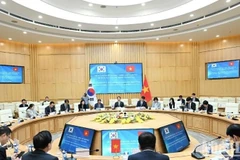
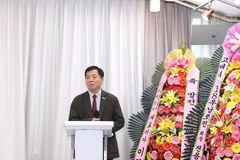
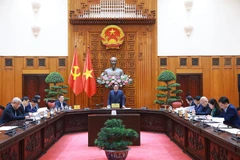
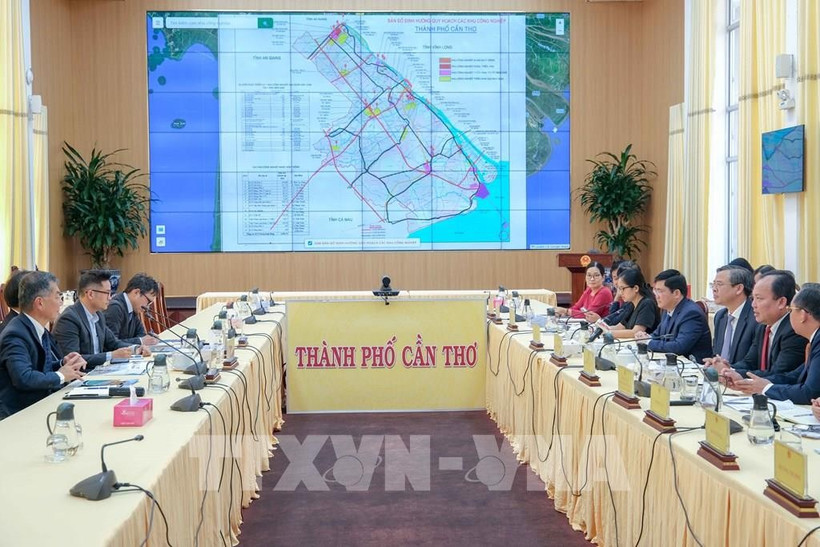
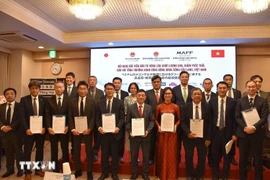
At the meeting between Can Tho authorities and the Sumitomo delegation on January 27 (Photo: VNA)

Can Tho (VNA) – The Mekong Delta city of Can Tho pledges to create the most favourable conditions for Japan’s Sumitomo Corporation to study and implement investment projects, particularly in industrial park infrastructure, green energy and smart urban development, city leaders said on January 27.

The commitment was made at a meeting with a Sumitomo delegation led by General Director Eita Fujikawa, who was in the city to survey the market and explore cooperation and investment opportunities.

Fujikawa said the Japanese conglomerate is keenly interested in high-value-added industries and green energy, sectors where Sumitomo believes it can make a meaningful contribution to Vietnam’s economic growth in the coming period. He noted that Sumitomo currently operates three industrial parks in Vietnam, is preparing to break ground on a fourth, and has another joint-venture project, bringing the total to five.

Most of the group’s existing investments are concentrated in northern Vietnam, Fujikawa said, adding the visit offers an opportunity to assess potential expansion in the south, particularly in Can Tho.

Akito Shiraishi, a senior Sumitomo executive, said he was impressed by Can Tho’s transport infrastructure, noting that travel time from Ho Chi Minh City took just 2.5 hours, faster than he had expected. He stressed that building industrial parks is only the starting point and the core objective is to attract foreign direct investment and secondary investors to generate sustainable economic value.

With more than 240 tenants and over 3 billion USD in registered capital across its existing industrial parks, he said Sumitomo believes close coordination with local authorities will be crucial to achieving similar success in Can Tho, he added.

Chairman of the municipal People’s Committee Truong Canh Tuyen said the city is ready to welcome leading Japanese corporations.

Briefing the guest on the region's potential, he stated that Can Tho spans more than 6,360 square kilometres with a population exceeding 4.2 million, and serves as the economic, cultural, and science-and-technology hub of the Mekong Delta, enjoying strategic advantages in transport, logistics and regional connectivity.

By the end of 2025, the province had hosted 13 Japanese-invested projects with a total registered capital of about 1.65 billion USD, including the O Mon II thermal power plant and an AEON Mall shopping centre. Exports from Can Tho to Japan reached 282.9 million USD in 2025, driven by high-quality rice, seafood and garments.

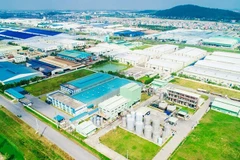
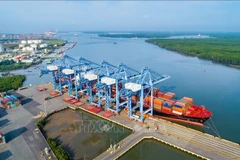
On industrial development planning, Tuyen said the city has approved plans for 27 additional industrial parks, including 15 larger than 500 hectares, grouped into three key sub-regions. These areas benefit from proximity to major transport routes such as the Chau Doc–Can Tho–Soc Trang expressway, National Highway 1, the Tran De deep-water port and Can Tho International Airport.

To address investor concerns about living and recreational amenities, the city is planning five modern golf courses near key industrial parks, taking advantage of recent policy adjustments related to land use.

Nguyen Tuan Anh, Deputy Secretary of the Can Tho Party Committee and head of the city’s delegation of National Assembly deputies, said Can Tho meets Sumitomo’s requirements, including large land availability, streamlined administrative procedures and attractive investment incentives.

City leaders urged Sumitomo to assess surveyed sites and move toward an official investment decision, helping position Can Tho as a hub for modern and sustainable industrial development./.
VNA

See more

Electronic device manufacturing at the Rhythm Precision Vietnam Co., Ltd., in Hanoi's Noi Bai Industrial Park. (Photo: hanoimoi.vn)

Hanoi creates new momentum for industrial growth

Manufacturing – processing remained the backbone of industrial growth last year, with value added in this sector increased by 7.18%, contributing 0.85 percentage points to Hanoi’s overall GRDP growth.

Multi-currency cards – a payment card supported by a mobile application that enables users to exchange local currency for foreign currency and make payments in stores or online - and mobile wallets for both daily and overseas spending will be popular in 2026. (Photo: courtesy of baochinhphu.vn)

Visa highlights Vietnamese payment trends for 2026

Vietnamese consumers are increasingly seeking premium experiences, from travel and shopping to wellness and dining, and are showing greater interest in payment cards with travel-related benefits.

In the manufacturing sector, the profitability ratio reached 74.1%, up 3.9 points, while the loss-making ratio dropped sharply to 13%, according to JETRO. (Illustrative photo: VNA)

Japanese firms in Vietnam hit 15-year profit high

JETRO’s 2025 Survey on the Business Conditions of Japanese Companies Investing Overseas shows that 67.5% of Japanese firms in Vietnam expect to be profitable this year, up 3.4 percentage points from 2024 and the highest level since 2009.

Turning international trade into sustainable growth driver

Turning international trade into sustainable growth driver

With total import-export revenue reaching 920 billion USD in 2025, Vietnam has officially entered the world’s top 15 economies in terms of international trade, marking a significant milestone in national development after decades of global economic integration and 40 years of Doi moi (Renewal). International trade has become a key driver of Vietnam’s economic growth.

At a session of the Vietnam-RoK Joint Committee on Trade, Industry and Energy Cooperation in April, 2025 in Hanoi. (Photo: nhandan.vn)

Vietnam becomes RoK’s key export market in ASEAN

The RoK’s exports to Vietnam rose 7.6% in 2025 from a year earlier to 62.8 billion USD, while imports from Vietnam climbed 11.7% to 31.8 billion USD, according to data released by the RoK’s Ministry of Trade, Industry and Energy and the Korea International Trade Association (KITA).

Cai Mep–Thi Vai deep-water port has helped with FDI attraction to the southeastern region. (Photo: VNA)

Resolution 79: State economic sector to lead, catalyse private sector development

More than a document reaffirming the leading role of the state economic sector in a new era, the Resolution opens up an unprecedented space of “mutual reinforcement”, in which the sector shifts from an administrative management mindset to one of “development facilitation”, and is expected to serve as a solid pillar enabling the private sector and other economic components to make breakthroughs.

Vietnamese Ambassador to the RoK Vu Ho speaks at the event (Photo: VNA)

Vietnamese, Korean firms seek to enhance connectivity in new context

The association has actively contributed to policy discussions on issues important to Vietnam, including support for small- and medium-sized enterprises, artificial intelligence (AI) and sovereignty, as well as AI and semiconductor development policies in the RoK, while proposing recommendations for Vietnam.

Prime Minister Pham Minh Chinh chairs the Government Steering Committee for Macroeconomic Management and Administration's second meeting. (Photo: VNA)

Macroeconomic management must match words with action: PM

In 2025 the global environment remained highly uncertain due to geopolitical tensions and tariff policies, while domestically, natural disasters, storms and floods were unusually severe, exceeding historical levels. Despite these challenges, Vietnam recorded encouraging economic results, with inflation kept under control at 3.31%, macroeconomic stability consolidated, major economic balances safeguarded, and GDP growth reaching 8.02% – a notable rate globally.

A view of Chan May deep-water port (Illustrative image. Photo: VNA)

Resolution 79: Encouraging State-owned enterprises to link with FDI sector

The State economic sector has effectively fulfilled its function of orienting, leading and regulating economic activities, contributing to promoting economic growth, stabilising the macro economy, maintaining major economic balances, ensuring national defence and security, fostering social progress and justice, improving living standards and raising Vietnam’s international standing.

Delegates attend the closing session of the 14th National Party Congress (Photo: VNA)

14th National Party Congress: Chinese expert praises Vietnam’s growth targets

Vietnam should further refine mechanisms for mobilising infrastructure capital, including expanding public–private partnership (PPP) models and considering the establishment of a national-level special infrastructure fund to attract sovereign wealth funds and long-term capital, said Liu Ying, a research fellow at the Chongyang Institute for Financial Studies under the Renmin University of China.