Crypto exchange licensing poised to boost foreign capital attraction

Experts believe that licensing Vietnam’s first crypto asset exchange will serve as a crucial catalyst for attracting foreign capital in a more formal and effective way.

Hanoi (VNA) – The launch of licensing procedures for providers of crypto asset trading platform services on January 20 is seen as a key step in completing Vietnam’s regulatory framework and creating fresh momentum for foreign investment inflows, according to the State Securities Commission.

The move follows the Government’s Resolution No. 05 on piloting the crypto asset market. On January 20, the Minister of Finance issued Decision No. 96, announcing a set of new administrative procedures to be applied on a trial basis in the sector. These cover the granting, adjustment and revocation of licences for crypto asset trading platform services, with applications to be accepted from January 20, 2026.

Experts believe that licensing Vietnam’s first crypto asset exchange will serve as a crucial catalyst for attracting foreign capital in a more formal and effective way.

Tran Xuan Tien, General Secretary of the Ho Chi Minh City Blockchain Association, said the requirement for applicants to have charter capital of up to 10 trillion VND (over 382 million USD) should not be seen simply as a technical hurdle. Instead, it functions as a screening mechanism to identify financially robust institutions, thereby strengthening confidence among foreign investors.

Tran Quy, Director of the Vietnam Institute for Digital Economy Development and Chairman of the MetaDAP digital asset platform, noted that previously, foreign capital often entered Vietnam through informal and difficult-to-be-monitored channels. Under the new framework, foreign investors, both individuals and organisations, will be able to participate transparently by opening indirect investment capital accounts at custodian banks. This approach allows authorities to better manage capital flows, enhances trust among international venture funds investing in Vietnamese blockchain projects, and supports tax collection on cross-border transactions.

Nguyen The Minh, head of research and development at Yuanta Securities Vietnam, described 2026 as a watershed year for the country’s crypto asset market when the Law on Digital Technology Industry comes into force and the first crypto exchange is licensed. With clearer, codified regulations in place, he said, fraud linked to digital assets is expected to fall sharply.

Sharing this view, Assoc. Prof. Dr Tran Hung Son, Director of the Institute for Development and Research in Banking Technology at the University of Economics and Law of the Vietnam National University, Ho Chi Minh City, said apart from provisions in the Law on Digital Technology Industry, the State will also put in place licensing and supervisory mechanisms for exchanges, alongside know-your-customer (KYC) and anti-money laundering (AML) requirements. These measures will bring service providers under closer regulatory monitoring, rather than allowing them to operate in jurisdictions that evade legal accountability.

However, Son cautioned that even with a comprehensive legal framework, fraud risks remain, largely due to limited financial literacy among investors. He stressed that the recognition and development of crypto assets should be accompanied by structured financial education programmes, enabling investors to better understand the nature and risks of digital assets and protect themselves in the market./.
VNA

See more

At the meeting between Can Tho authorities and the Sumitomo delegation on January 27 (Photo: VNA)

Can Tho woos Sumitomo with industrial park, green energy pledges

Can Tho spans more than 6,360 square kilometres with a population exceeding 4.2 million, and serves as the economic, cultural, and science-and-technology hub of the Mekong Delta, enjoying strategic advantages in transport, logistics and regional connectivity.

Multi-currency cards – a payment card supported by a mobile application that enables users to exchange local currency for foreign currency and make payments in stores or online - and mobile wallets for both daily and overseas spending will be popular in 2026. (Photo: courtesy of baochinhphu.vn)

Visa highlights Vietnamese payment trends for 2026

Vietnamese consumers are increasingly seeking premium experiences, from travel and shopping to wellness and dining, and are showing greater interest in payment cards with travel-related benefits.

In the manufacturing sector, the profitability ratio reached 74.1%, up 3.9 points, while the loss-making ratio dropped sharply to 13%, according to JETRO. (Illustrative photo: VNA)

Japanese firms in Vietnam hit 15-year profit high

JETRO’s 2025 Survey on the Business Conditions of Japanese Companies Investing Overseas shows that 67.5% of Japanese firms in Vietnam expect to be profitable this year, up 3.4 percentage points from 2024 and the highest level since 2009.

Turning international trade into sustainable growth driver

Turning international trade into sustainable growth driver

With total import-export revenue reaching 920 billion USD in 2025, Vietnam has officially entered the world’s top 15 economies in terms of international trade, marking a significant milestone in national development after decades of global economic integration and 40 years of Doi moi (Renewal). International trade has become a key driver of Vietnam’s economic growth.

At a session of the Vietnam-RoK Joint Committee on Trade, Industry and Energy Cooperation in April, 2025 in Hanoi. (Photo: nhandan.vn)

Vietnam becomes RoK’s key export market in ASEAN

The RoK’s exports to Vietnam rose 7.6% in 2025 from a year earlier to 62.8 billion USD, while imports from Vietnam climbed 11.7% to 31.8 billion USD, according to data released by the RoK’s Ministry of Trade, Industry and Energy and the Korea International Trade Association (KITA).

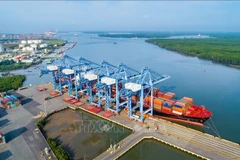
Cai Mep–Thi Vai deep-water port has helped with FDI attraction to the southeastern region. (Photo: VNA)

Resolution 79: State economic sector to lead, catalyse private sector development

More than a document reaffirming the leading role of the state economic sector in a new era, the Resolution opens up an unprecedented space of “mutual reinforcement”, in which the sector shifts from an administrative management mindset to one of “development facilitation”, and is expected to serve as a solid pillar enabling the private sector and other economic components to make breakthroughs.

Vietnamese Ambassador to the RoK Vu Ho speaks at the event (Photo: VNA)

Vietnamese, Korean firms seek to enhance connectivity in new context

The association has actively contributed to policy discussions on issues important to Vietnam, including support for small- and medium-sized enterprises, artificial intelligence (AI) and sovereignty, as well as AI and semiconductor development policies in the RoK, while proposing recommendations for Vietnam.

Prime Minister Pham Minh Chinh chairs the Government Steering Committee for Macroeconomic Management and Administration's second meeting. (Photo: VNA)

Macroeconomic management must match words with action: PM

In 2025 the global environment remained highly uncertain due to geopolitical tensions and tariff policies, while domestically, natural disasters, storms and floods were unusually severe, exceeding historical levels. Despite these challenges, Vietnam recorded encouraging economic results, with inflation kept under control at 3.31%, macroeconomic stability consolidated, major economic balances safeguarded, and GDP growth reaching 8.02% – a notable rate globally.

A view of Chan May deep-water port (Illustrative image. Photo: VNA)

Resolution 79: Encouraging State-owned enterprises to link with FDI sector

The State economic sector has effectively fulfilled its function of orienting, leading and regulating economic activities, contributing to promoting economic growth, stabilising the macro economy, maintaining major economic balances, ensuring national defence and security, fostering social progress and justice, improving living standards and raising Vietnam’s international standing.

Delegates attend the closing session of the 14th National Party Congress (Photo: VNA)

14th National Party Congress: Chinese expert praises Vietnam’s growth targets

Vietnam should further refine mechanisms for mobilising infrastructure capital, including expanding public–private partnership (PPP) models and considering the establishment of a national-level special infrastructure fund to attract sovereign wealth funds and long-term capital, said Liu Ying, a research fellow at the Chongyang Institute for Financial Studies under the Renmin University of China.