Resolution 68 seen as catalyst for private investment in key infrastructure projects: official

Following three waves of ground-breaking and inauguration of major projects, there are currently around 564 underway, with total mobilised capital of approximately 5.1 quadrillion VND (194 billion USD). Of this, the private economic sector has contributed more than 3.8 quadrillion VND, or 74.6% of the total.

Machinery and equipment at the groundbreaking ceremony for a resettlement project serving the high-speed railway in Da Nang city. (Illustrative photo: VNA)

Hanoi (VNA) – Resolution No. 68-NQ/TW of the Politburo on the development of the private economic sector has been warmly welcomed by the business community, as it introduces a wide range of comprehensive, innovative and breakthrough measures capable of mobilising the sector's resources for socio-economic development, particularly in major infrastructure projects, an official has said.

Trinh Thi Huong, Deputy Director of the Agency for Private Enterprise and Cooperative Development under the Ministry of Finance, told the Vietnam News Agency that the measures include proactive state commissioning, limited or designated bidding, as well as preferential and incentive mechanisms to encourage private participation alongside the state in investment in strategic infrastructure projects. These include digital infrastructure, energy infrastructure, logistics systems and green transport. She added that the resolution also promotes solutions to diversify and enhance the effectiveness of public-private partnership (PPP) models, such as public leadership–private governance, public investment–private management, and private investment–public use in economic infrastructure. These approaches are expected to expand opportunities for the sector’s involvement in key national projects.

According to official figures, following three waves of ground-breaking and inauguration of major projects, there are currently around 564 underway, with total mobilised capital of approximately 5.1 quadrillion VND (194 billion USD). Of this, the private economic sector has contributed more than 3.8 quadrillion VND, or 74.6% of the total.

However, Huong noted that several bottlenecks and challenges remain in mobilising private capital for socio-economic development, particularly in the implementation of large-scale projects.

Overlapping administrative procedures, licensing requirements and inter-agency coordination have led to significant delays, higher costs and, in some cases, missed business opportunities. Meanwhile, between 98% and 99% of Vietnamese enterprises are micro-, small- or medium-sized. Large projects require substantial capital, yet most private firms remain undercapitalised. A further challenge relates to contractual risks during implementation, which can adversely affect corporate cash flow.

According to the official, to address these difficulties, in early 2026, the finance ministry advised the Government on the issuance of Resolution No. 01 on socio-economic development and Resolution No. 02 on improving the business environment and enhancing national competitiveness. The ministry has also proposed refinements to policies under the investment law, reductions in conditional business requirements, and amendments to the laws on bidding and PPP, with a view to diversifying and improving the effectiveness of public-private cooperation models.

Recently, the ministry submitted to the Government a draft decree detailing the implementation of several provisions of National Assembly Resolution No. 198/2025/QH15 on special mechanisms and policies for private economic development. Under the proposal, eligible research and development (R&D) expenses will be deductible at twice their actual cost for corporate income tax purposes, and enterprises will be allowed to allocate up to 20% of taxable income for R&D investment.

In addition, the ministry has proposed two programmes to the Prime Minister: one to develop 1,000 pioneering enterprises, and another to train 10,000 chief executive officers for the sector.

The Government, along with ministries, sectors and local authorities, is currently intensifying efforts to reduce costs, administrative procedures and business conditions by 30% each.

Huong said another key solution that requires stronger implementation in the near future is enhancing the capacity of local administrations, particularly at the commune level, in order to foster a more enabling business environment for the sector./.

VNA
See more

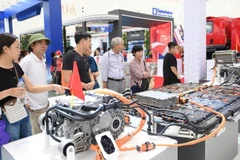
Auto technology solutions are on display at an exhibition on the 80-year national achievements (Photo: VNA)

Digital economy expected to revamp growth model

Meeting the goals set in Resolution No. 57-NQ/TW, including a digital economy share of at least 30% of GDP by 2030 and 50% by 2045, will demand more substantive, high-value progress fueled by breakthrough innovations.

Vietnam has set a target of expanding exports by 8% in 2026 (Illustrative photo: VNA)

Vietnam targets new export growth milestone in 2026

According to MB Securities’ Vietnam Outlook 2026 report, Vietnam's exports may grow by 15–16% in 2026, driven by market expansion and a shift towards higher-value products, led by electronics and high-tech industries amid rising global demand for AI and digital transformation.

Mobile Money services are not only a convenient payment tool but also an effective means of extending digital financial services to remote and disadvantaged areas. (Photo: VNA)

New legal framework for Mobile Money to take effect in Vietnam soon

The issuance of a implementation plan for Government Decree No. 368/2025/ND-CP on the provision of Mobile Money services is considered an important step toward promoting financial inclusion. Mobile Money services are not only a convenient payment tool but also an effective means of extending digital financial services to remote and disadvantaged areas.

Many OCOP gift baskets now combine nutritious food items and handcrafted products (Photo: VNA)

OCOP products dominate Tet gift baskets

A visit to major supermarkets such as Go!, Co.opmart and WinMart, as well as spring markets across Quang Ngai province, shows that OCOP product stalls are attracting the most attention.

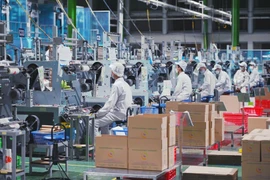
Electronic device manufacturing at the Rhythm Precision Vietnam Co., Ltd., in Hanoi's Noi Bai Industrial Park. (Photo: hanoimoi.vn)

Hanoi creates new momentum for industrial growth

Manufacturing – processing remained the backbone of industrial growth last year, with value added in this sector increased by 7.18%, contributing 0.85 percentage points to Hanoi’s overall GRDP growth.

At the meeting between Can Tho authorities and the Sumitomo delegation on January 27 (Photo: VNA)

Can Tho woos Sumitomo with industrial park, green energy pledges

Can Tho spans more than 6,360 square kilometres with a population exceeding 4.2 million, and serves as the economic, cultural, and science-and-technology hub of the Mekong Delta, enjoying strategic advantages in transport, logistics and regional connectivity.

Multi-currency cards – a payment card supported by a mobile application that enables users to exchange local currency for foreign currency and make payments in stores or online - and mobile wallets for both daily and overseas spending will be popular in 2026. (Photo: courtesy of baochinhphu.vn)

Visa highlights Vietnamese payment trends for 2026

Vietnamese consumers are increasingly seeking premium experiences, from travel and shopping to wellness and dining, and are showing greater interest in payment cards with travel-related benefits.

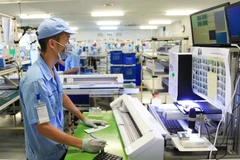
In the manufacturing sector, the profitability ratio reached 74.1%, up 3.9 points, while the loss-making ratio dropped sharply to 13%, according to JETRO. (Illustrative photo: VNA)

Japanese firms in Vietnam hit 15-year profit high

JETRO’s 2025 Survey on the Business Conditions of Japanese Companies Investing Overseas shows that 67.5% of Japanese firms in Vietnam expect to be profitable this year, up 3.4 percentage points from 2024 and the highest level since 2009.

Turning international trade into sustainable growth driver

Turning international trade into sustainable growth driver

With total import-export revenue reaching 920 billion USD in 2025, Vietnam has officially entered the world’s top 15 economies in terms of international trade, marking a significant milestone in national development after decades of global economic integration and 40 years of Doi moi (Renewal). International trade has become a key driver of Vietnam’s economic growth.

At a session of the Vietnam-RoK Joint Committee on Trade, Industry and Energy Cooperation in April, 2025 in Hanoi. (Photo: nhandan.vn)

Vietnam becomes RoK’s key export market in ASEAN

The RoK’s exports to Vietnam rose 7.6% in 2025 from a year earlier to 62.8 billion USD, while imports from Vietnam climbed 11.7% to 31.8 billion USD, according to data released by the RoK’s Ministry of Trade, Industry and Energy and the Korea International Trade Association (KITA).

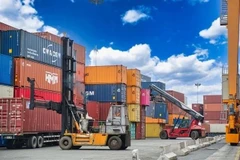
Cai Mep–Thi Vai deep-water port has helped with FDI attraction to the southeastern region. (Photo: VNA)

Resolution 79: State economic sector to lead, catalyse private sector development

More than a document reaffirming the leading role of the state economic sector in a new era, the Resolution opens up an unprecedented space of “mutual reinforcement”, in which the sector shifts from an administrative management mindset to one of “development facilitation”, and is expected to serve as a solid pillar enabling the private sector and other economic components to make breakthroughs.