Vietnam poised to drive regional growth: Malaysian expert

A Malaysian expert said Vietnam’s high and sustainable growth hinges on a productivity boost, stronger domestic value creation, and a robust innovation and R&D ecosystem, with successful reforms key to achieving these ambitious targets.

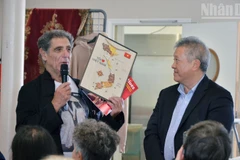
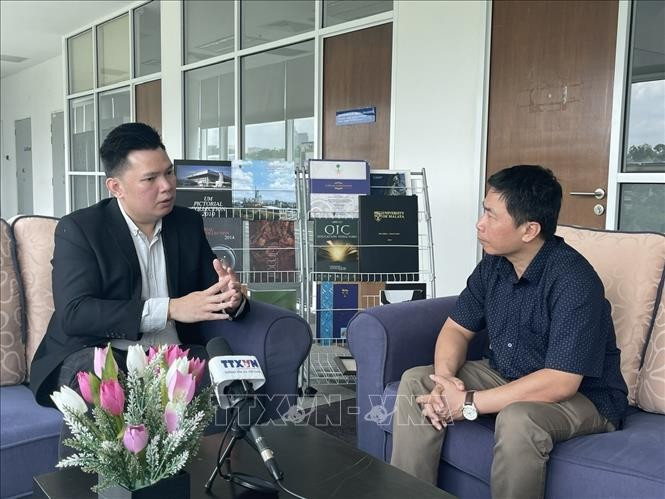
Collins Chong Yew Keat (left), an analyst on foreign, security, and strategic affairs at University of Malaya, in an interview granted to the Vietnam News Agency (Photo: VNA)

Kuala Lumpur (VNA) – Key economic development targets for 2026–2030 set by the 14th National Congress of the Communist Party of Vietnam (CPV)— focused on science – technology, innovation, foreign direct investment (FDI) attraction, and average annual growth of 10%—are strategically sound but also pose significant structural challenges, a Malaysian expert has said.

In an interview granted to the Vietnam News Agency correspondent in Malaysia, Collins Chong Yew Keat, an analyst on foreign, security, and strategic affairs at University of Malaya (UM), noted that Vietnam has correctly recognised that its current growth model—heavily reliant on export-oriented production and foreign-sourced assembly—is gradually reaching diminishing returns.

In the context of increasingly challenging global conditions due to trade fragmentation and geopolitical risks, the expert emphasised that sustaining 10% GDP growth will require a qualitative transformation, not merely quantitative expansion.

He said Vietnam’s high and sustainable growth hinges on a productivity boost, stronger domestic value creation, and a robust innovation and R&D ecosystem, with successful reforms key to achieving these ambitious targets.

Regarding the strategy of maintaining political stability while accelerating economic reforms, the expert said Vietnam’s approach helps strengthen confidence among regional investors thanks to policy continuity and quick mobilisation of infrastructure and labourers. However, Collins also warned that too much caution in administration could potentially slow the implementation of high-value and innovation-led projects.

The analyst noted that compared with other ASEAN countries, Vietnam has an edge in growth momentum, scale, and strategic positioning. While Malaysia leverages institutional maturity and Indonesia its market size, Vietnam stands out as a large alternative production hub capable of quickly mobilising its industrial resources.

However, Collins also highlighted risks, including overreliance on foreign assembly and emerging financial gaps in real estate and credit. He added that as Vietnam moves into sectors like semiconductors, AI, and robotics, it will face increasingly stringent institutional requirements.

Looking ahead, he sees strong potential for Vietnam to become a new growth engine for ASEAN, but noted that this hinges on the transition from cost-driven to capability-driven growth.

According to him, the next stage will depend on skilled labour rather than cheap labour, with education and health care as the core foundation of competitiveness. He stressed the importance of domestic technology and innovation, along with economic resilience tied to security across various sectors from energy to maritime trade.

From Malaysia’s perspective, Vietnam is both a key partner and a competitor in attracting high-quality FDI, Collins said, adding that regional partners expect Vietnam to remain committed to ASEAN integration and prioritise long-term productivity rather than relying solely on short-term incentives.

He also observed that outcomes from the past Party congresses and economic performance in recent years indicate that Vietnam is exercising strategic discipline toward 2030 and 2045, aiming to transform from a production hub into a connected economy driven by productivity and innovation./.

VNA
See more

A high-ranking military delegation from the Vietnamese Ministry of National Defence visits an exhibition booth (Photo: Ministry of National Defence)

Vietnam attends defence services, security exhibitions in Malaysia

This year’s exhibitions feature 15 thematic categories, highlighting modern military products such as aircraft, warships, armoured vehicles, man-portable low-range missile systems, anti-aircraft gun systems, laser weapons, as well as various types of ammunition, military uniforms, and logistics equipment serving defence purposes.

A view of the 16th National Assembly's first session (Photo: VNA)

16th NA reviews amendments to four tax-related laws on April 21

Lawmakers are expected to discuss the supplementary assessment of the implementation of the 2025 socio-economic development plan and state budget, as well as performance in the early months of 2026. They will also review the five-year socio-economic development plan for 2026–2030, thrift practices and anti-wastefulness efforts in 2025, and progress in achieving national gender equality targets. The session is broadcast live on radio and television, enabling voters and the public to follow proceedings.

The delegation of National Assembly deputies from Ho Chi Minh City holds a group discussion. (Photo: VNA)

Draft law proposes flexible tax thresholds, extended incentives for EVs

Presenting the Government’s proposal, Minister of Finance Ngo Van Tuan said the draft law proposes not to stipulate specific revenue thresholds for exemption from personal income tax or value-added tax for household and individual businesses in the law, instead assigning the Government to set these thresholds.

Deputies in a group discussion (Photo: VNA)

Lawmakers suggest groundbreaking mechanisms to revive Vietnamese culture

The draft resolution seeks to lure more investment into cultural industries, aiming for the sector to contribute 7% to GDP by 2030 and 9% by 2045. It also sets ambitious goals of ranking Vietnam among the top three countries in Southeast Asia and the global top 30 for national soft power.

NA Vice Chairman Nguyen Khac Dinh speaks at the 16th National Assembly (NA)’s first session on April 20 (Photo: VNA)

Pathways to double-digit growth to be tabled at 16th NA’s first session

In the morning sitting on April 20, deputies are expected to hear proposals and verification reports on a range of draft resolutions. The documents cover breakthrough mechanisms and policies for the development of Vietnamese culture; the establishment of Dong Nai as a centrally run city; a pilot framework for public lawyer institution; and special mechanisms to address land law violations committed prior to the 2024 Land Law taking effect, alongside measures to resolve long-delayed and stalled projects.

NA Chairman Tran Thanh Man and his spouse at Istanbul Airport in Türkiye (Photo: VNA)

Vietnam a proactive, responsible partner in promoting parliamentary cooperation

NA Chairman Tran Thanh Man’s working trip to Italy and Türkiye achieved important and comprehensive results at both bilateral and multilateral levels. It not only highlighted a proactive and responsible Vietnamese National Assembly with active and practical contributions to the IPU, but also created new momentum to deepen relations with key partners, including in Europe and the Middle East.

National Assembly Chairman Tran Thanh Man and his spouse Nguyen Thi Thanh Nga at the farewell ceremony at Istanbul Airport, Türkiye. (Photo: VNA)

NA Chairman wraps up successful working visit to Türkiye

With substantive activities, National Assembly Chairman Tran Thanh Man's working visit to Türkiye was a great success, contributing to affirming Vietnam’s image as a proactive and responsible partner in promoting parliamentary cooperation and strengthening multilateralism.