Party chief advises Cao Bang to turn distinctive advantages into practical development momentum

Expressing his confidence in Cao Bang’s revolutionary tradition and aspirations, Party chief To Lam said the province is well positioned to turn its distinctive advantages into substantive development momentum, contributing to national goals while steadily improving people’s lives.

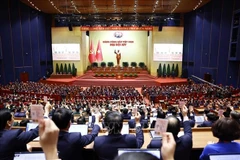
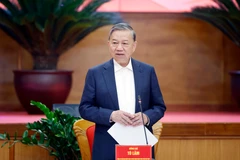
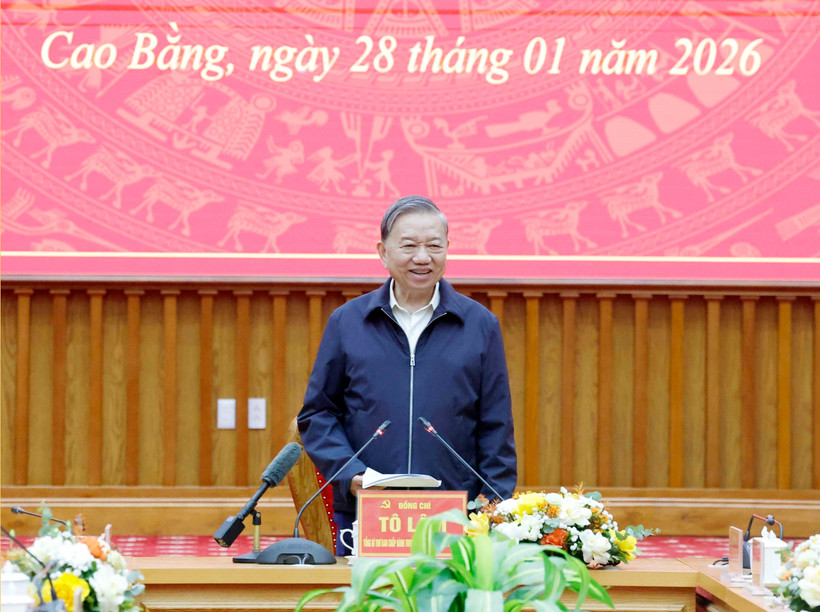
Party General Secretary To Lam speaks at the working session with the Cao Bang provincial Party Committee on January 28. (Photo: VNA)

Cao Bang (VNA) – During his working visit to the northern border province of Cao Bang on January 28, Party General Secretary To Lam held a working session with the provincial Party Committee, stressing the need for the locality to transform its distinctive advantages into concrete and sustainable drivers of development.

General Secretary Lam underscored Cao Bang’s uniquely important position as a mountainous, border province of strategic significance to national defence, security and foreign affairs, as well as the cradle of the Vietnamese revolution where President Ho Chi Minh first returned to the country to directly lead the revolutionary cause, laying the foundations for decisive turning points in the nation’s history. From this land, the revolutionary path of Vietnam was shaped, the Party’s strategic mettle was forged, and the aspiration for independence and self-reliance was powerfully awakened.

He noted that history has bestowed upon Cao Bang a dual role: a solid frontier shield at the nation’s northern gateway and a birthplace of strategic thinking and self-reliant spirit that underpinned Vietnam’s revolutionary victories. Today, alongside its historical pride, the province bears a major responsibility in safeguarding border stability, strengthening national defence and security, and charting an appropriate development path in the new context.

Therefore, the working session aimed to thoroughly grasp the spirit of the 14th National Party Congress and to clarify a development trajectory suited to a mountainous, border province with a rich revolutionary tradition, translating central strategic orientations into practical, feasible tasks and solutions aligned with local realities.

Acknowledging Cao Bang’s low development starting point, difficult natural conditions, limited infrastructure and high connectivity and production costs, the Party leader stressed that the province cannot pursue a scattered development approach or mechanically replicate models from more advantagous localities. Every development decision must stem from Cao Bang’s specific conditions, turning challenges into motivation, transforming its border position into a strategic advantage, and converting cultural and historical values into tangible development resources.
to-lam-2.jpg
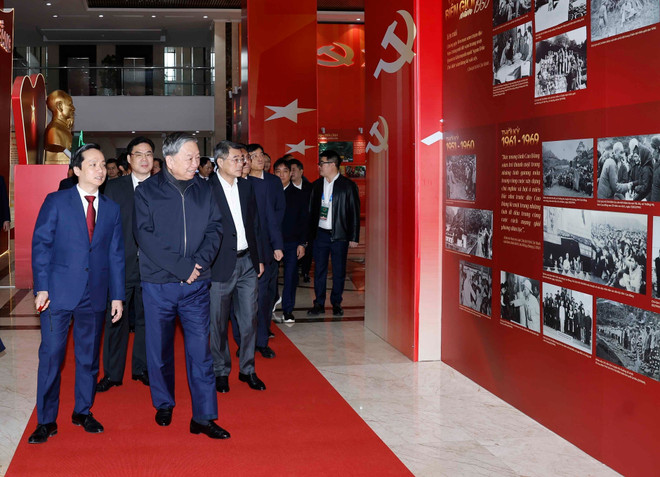
Party General Secretary To Lam and officials visit a photo exhibition on the Cao Bang provincial Party Committee. (Photo: VNA)

While recognising the province’s efforts and achievements in recent years under difficult circumstances, General Secretary Lam pointed out that approaches and mindsets, once suitable, are no longer sufficient to help it accelerate growth and narrow development gaps. He emphasised the decisive importance of renewing the growth model, promoting technological application and digital transformation, improving the business environment, and fostering a leadership style that is closer to reality and more action-oriented.

For a province like Cao Bang, development should be measured not only by scale or growth rates, but by improvements in people’s livelihoods, access to essential services in remote and border areas, sustainable livelihoods, and the consolidation of public trust, he stressed.

The province was advised to restructure its development model toward “efficiency, productivity and happiness,” shifting from growth driven mainly by capital and labour to one centred on efficiency, total factor productivity, income and quality of life. This direction, he said, is correct and should be institutionalised through concrete indicators, clear task assignments and accountability mechanisms.

The Party leader agreed that border-gate advantages should go beyond customs clearance to focus on value-added services, trade support, standardisation, traceability and digitalised processes. He also called for tourism to be developed into a truly spearhead economic sector, based on product-oriented thinking, destination branding and integrated service chains, while avoiding unchecked commercialisation that could harm natural resources and the province’s image.

Commending its choice to place the happiness index at the heart of policymaking, General Secretary Lam urged the province to translate this approach into concrete programmes with clear outputs and robust supervision, aligned with central resolutions on education, health care and culture. For Cao Bang, this is not only a social policy but also a foundation of political and social stability, public trust and national defence in the new situation.

The top leader further stressed the need to link human resources development closely with the new growth model and the province’s priority sectors, such as border logistics and trade, quality tourism, distinctive agriculture combined with processing, and grassroots digital governance. Training must be demand-driven, tied to employment outcomes and conducted through innovative “order-based” mechanisms in close cooperation with businesses.

He also emphasised building a streamlined, effective administration and a contingent of capable, dedicated officials, while ensuring national defence, security, border management and foreign relations are conducted proactively, thus firmly safeguarding sovereignty and national interests. Party building, he noted, must be regarded as the fundamental guarantee for all breakthroughs, with public trust as the highest measure of leadership capacity.

Expressing his confidence in Cao Bang’s revolutionary tradition and aspirations, the Party chief said the province is well positioned to turn its distinctive advantages into substantive development momentum, contributing to national goals while steadily improving people’s lives./.
VNA

See more

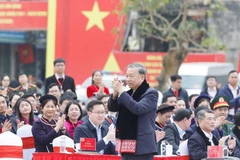
Party General Secretary To Lam at the meeting with representatives of ethnic communities in Cao Bang on January 28 (Photo: VNA)

Party chief urges unity for Cao Bang’s steady progress

The Vietnamese Party and the State will forever remember and deeply appreciate the immense yet silent sacrifices and contributions made by Cao Bang’s ethnic groups to the Party, President Ho Chi Minh, and the Vietnamese revolution as a whole, said Party leader To Lam..

☕ Afternoon briefing on January 28

☕ Afternoon briefing on January 28

PM Pham Minh Chinh's inspection of APEC-related projects in Phu Quoc, a military aircraft incident in Dak Lak, and the Ministry of Health's request for intensifying preventive and control measures against Nipah virus are among news highlights on January 28.

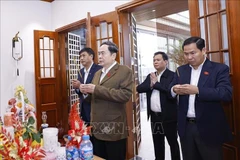
National Assembly Chairman Tran Thanh Man and his entourage offer incense in tribute to late Party General Secretary Nguyen Phu Trong, who was Chairman of the National Assembly in 11th and 12th tenures. (Photo: VNA)

NA Chairman pays tribute to late Party, State leaders

NA Chairman Tran Thanh Man respectfully expressed profound gratitude to late Party chief Nguyen Phu Trong – an exceptionally outstanding leader, a steadfast communist with great prestige among the Party, the State and the people, who fully embodied the qualities, intellect and mettle of Vietnam’s leadership generation in the renewal period.

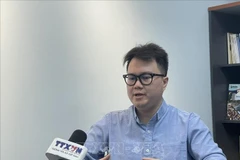
Enzo Sim Hong Jun, a Malaysia-based Southeast Asian history and defence researcher (Photo: VNA)

Unity in will, vision sustain Vietnam’s future growth: Researcher

The 14th National Party Congress was not only a milestone in personnel work but also a marker of strategic thinking. With firm political stability and a strong reform roadmap, Vietnam is moving closer to its goal of becoming a developed and prosperous nation, while assuming greater responsibility for peace and stability in the region and the world.

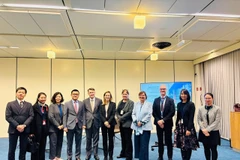
The Vietnamese inter-agency delegation from the Ministry of Foreign Affairs and the Ministry of Public Security in a group photo with representatives from the IPU, INTERPOL and UNODC. (Photo: VNA)

Vietnam calls on countries to soon sign, ratify Hanoi Convention

Ambassador Vu Le Thai Hoang emphasised that beyond signing and ratification, it is crucial to implement the convention in a practical manner through the improvement of national legal frameworks, strengthening institutional capacity, and enhancing sustained international cooperation.

Collins Chong Yew Keat, an analyst on foreign, security, and strategic affairs at University of Malaya (UM) in an interview with the Vietnam News Agency. Photo: VNA

Vietnam serves as ASEAN’s pillar of stability, connectivity: Malaysian expert

The presence of a resilient, innovative, and responsible Vietnam not only ensures national prosperity but also strengthens ASEAN’s legitimacy and relevance in an era of fragmentation and power reconfiguration. This is the historic role Vietnam is assuming - contributing to a peaceful, stable, and deeply connected region in the decades ahead.

☀️ Morning digest on January 28

☀️ Morning digest on January 28

Party General Secretary To Lam and Prime Minister Pham Minh Chinh's working visit to Quang Ninh, activities of Party General Secretary and President of Laos Thongloun Sisoulith during his state visit to Vietnam, and a meeting to brief foreign diplomatic missions and international organisations on the 14th National Party Congress's outcomes are among news highlights on January 27 evening.

Collins Chong Yew Keat (left), an analyst on foreign, security, and strategic affairs at University of Malaya, in an interview granted to the Vietnam News Agency (Photo: VNA)

Vietnam poised to drive regional growth: Malaysian expert

A Malaysian expert said Vietnam’s high and sustainable growth hinges on a productivity boost, stronger domestic value creation, and a robust innovation and R&D ecosystem, with successful reforms key to achieving these ambitious targets.

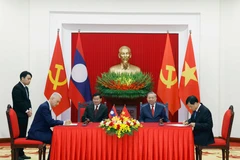
General Secretary of the Communist Party of Vietnam (CPV) Central Committee To Lam (second from right) and General Secretary of the Lao People’s Revolutionary Party (LPRP) Central Committee and President of Laos Thongloun Sisoulith witness the signing of cooperation documents between the two countries (Photo: VNA)

Top Lao leader leaves Hanoi, concluding state visit to Vietnam

The state visit to Vietnam by the top Lao leader was a resounding success, reaffirming that the great friendship, special solidarity, comprehensive cooperation and strategic cohesion between the two countries will continue to grow further. This relationship will be preserved as a priceless shared asset of the two nations and passed on to future generations.

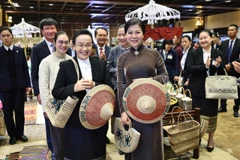
Ngo Phuong Ly (R), spouse of the Vietnamese Party General Secretary, and visiting Naly Sisoulith, spouse of the Lao Party General Secretary and President, take part in an exchange with outstanding artisans from several traditional craft villages of Ninh Binh province on January 27. (Photo: VNA)

Spouses of Vietnamese, Lao Party leaders visit Ninh Binh

The delegation visited and offered incense at the temple of Princess Nhoi Hoa in Thai Son hamlet, Tay Hoa Lu ward, a provincial-level historical and cultural relic associated with the long-standing friendship between Vietnam and Laos.

The 14th-tenure Party Central Committee makes its debut at the 14th National Congress of the Communist Party of Vietnam (Photo: VNA)

Cuban scholar highlights turning point in Vietnam’s development process

The 14th National Party Congress reflects Vietnam's determination to move into a new stage of development amid a complex and unstable international environment. Through this event, the country reaffirmed the importance of continuous transformation and the necessary pragmatism not only in its foreign relations strategy but also in governance, management, and national leadership.

Politburo member and standing member of the Party Central Committee’s Secretariat Tran Cam Tu (R) bids farewell to Lao Party General Secretary and President Thongloun Sisoulith. Photo: VNA

Senior Party official bids farewell to top Lao leader

Lao Party General Secretary and President Thongloun Sisoulith said that the visit was highly successful, affirming that the great friendship, special solidarity, comprehensive cooperation, and strategic cohesion between Vietnam and Laos will continue to grow stronger. He emphasised that this relationship would be preserved as a shared and invaluable asset of the two nations and passed on to future generations.

General Secretary of the Lao People’s Revolutionary Party (LPRP) and President of Laos Thongloun Sisoulith and Nong Duc Manh (R), former General Secretary of the Central Committee of the Communist Party of Vietnam. (Photo: baochinhphu.vn)

Top Lao leader visits former Party General Secretary in Hanoi

The special Vietnam-Laos relationship, diligently nurtured by Vietnamese President Ho Chi Minh and Lao Presidents Kaysone Phomvihane and Souphanouvong, is an invaluable common asset and a vital factor for the existence and development of both nations.