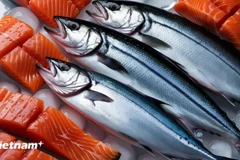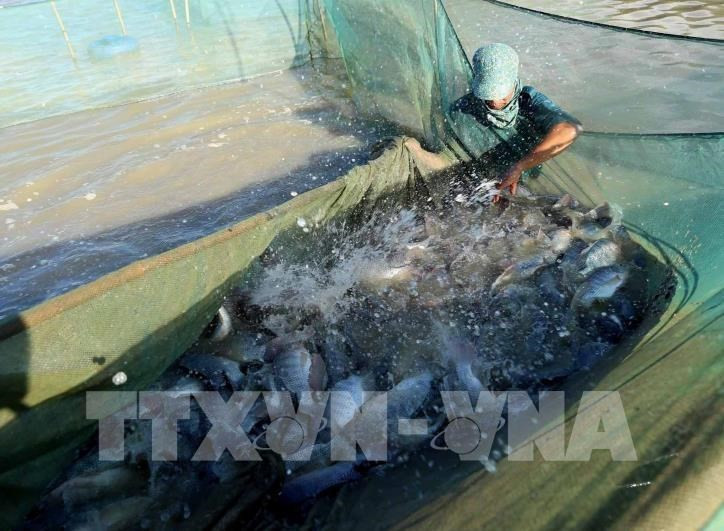
Hanoi (VNA) – Prime Minister Pham Minh Chinh’s visit to Brazil in July has opened the door for Vietnam’s seafood industry, particularly tilapia exports.
After a temporary suspension due to concerns over the TiLV virus, the Brazilian market is now showing signs of reopening. With global demand for tilapia continuing to rise, the resumption of shipments to the South American nation is seen as a significant boost for Vietnam’s tilapia on the world map.
According to the Vietnam Association of Seafood Exporters and Producers (VASEP), the global tilapia market was valued at 10.6 billion USD in 2024 and is projected to reach 14.5 billion USD by 2033, representing an annual growth rate of 3.52%. The US remains the largest market, importing around 200,000 tonnes each year. Additionally, China’s supply showing signs of decline due to trade barriers and tariffs, opportunities for other suppliers are widening.
Alongside free trade agreements, Vietnam’s seafood sector is restructuring production to seize this momentum. In 2024, tilapia exports reached 41 million USD, up 138% from the previous year. The US was the biggest growth driver, with turnover soaring nearly seven-fold to 19 million USD. In the first quarter of 2025, exports continued to perform well, hitting almost 14 million USD, with the US accounting for 46% of shipments, followed by Russia, the Middle East, Japan, and Belgium.
VASEP General Secretary Nguyen Hoai Nam attributed the strong growth to a strategic shift towards species with high adaptability, short life cycles, low costs, and suitability for modern consumption trends. The use of pond-liner technology has helped increase productivity and reduce disease risks.
Tilapia is considered highly competitive in export markets thanks to its affordability, ease of processing, and appeal across both high-end and mass-market segments. Nam noted that with rising demand and shifting global supply chains, Vietnam could strengthen its position by investing in breeding, farming, processing, and market development.
Vietnam’s tropical climate, stable at 27–32°C, and abundant surface water, particularly in the Mekong Delta, allow year-round production. Tran Dinh Luan, Director General of the Department of Fisheries under the Ministry of Agriculture and Environment, said tilapia can reach commercial weight of 600–800g in just five to six months, enabling quick turnover. The current 30,000ha farming area yields 300,000 tonnes annually, with targets set to expand to 40,000ha and 400,000 tonnes by 2030, while improving seed quality and increasing the share of high-value exports.
Overcoming bottlenecks to unlock full potential
Vietnam’s tilapia industry faces hurdles including inconsistent seed quality, inbreeding, and low fillet yields, alongside disease threats like TiLV. High costs, reliance on imported feed, and fragmented infrastructure hinder growth, while the US and EU demand strict safety, traceability, and sustainability standards.
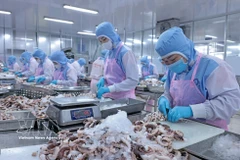
Vietnam has about 510 facilities eligible to export tilapia, but Nam said more investment is needed in high-quality, disease-resistant breeds, automated fillet lines, and value-added products. Farms should meet international standards, ensure supply chain transparency with blockchain, and develop domestic feed to cut costs by 15%.
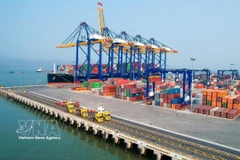
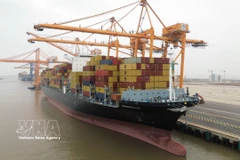
On the market side, stronger trade promotion is essential, including participation in industry fairs in the US, Japan, the EU, and the Middle East. Vietnam should also fully leverage its free trade agreements, including the EVFTA, RCEP, and ASEAN–China FTA, to reduce tariffs and expand market share.
Meanwhile, Luan stressed that diversifying species and farming methods in line with Vietnam’s natural advantages is vital to improving the competitiveness and efficiency of the seafood sector. Tilapia, which has ideal conditions for growth in Vietnam, offers strong potential as both domestic and global demand rises. Integrated or rotational tilapia–brackish water shrimp farming not only produces high-quality fish but also helps control shrimp diseases – a clear advantage amid climate change, rising sea levels, and increased salinity.
He added that organising production around partnerships between enterprises, farmers, and research institutions will create a solid foundation for tilapia to become not just a promising export, but also a new pillar of Vietnam’s seafood industry in the years ahead./.