Financial infrastructure - a critical enabler of sustainable cross-border e-commerce

Vietnam’s fast-growing e-commerce sector is increasingly viewed as a potential contributor to export growth. As the ecosystem matures, the focus is shifting from simply selling across borders to building the operational capacity required to run global businesses at scale.

Illustrative image (Photo: Payoneer_

Ho Chi Minh City (VNS/VNA) - Financial infrastructure is emerging as a critical enabler of sustainable cross-border e-commerce growth, experts have said.

Vietnam’s fast-growing e-commerce sector is increasingly viewed as a potential contributor to export growth. As the ecosystem matures, the focus is shifting from simply selling across borders to building the operational capacity required to run global businesses at scale.

According to the Ministry of Industry and Trade, Vietnam’s e-commerce market reached 31 billion USD in 2025, growing more than 25% year-on-year and accounting for roughly 10% of total retail sales.

While domestic consumption continues to drive overall volume, cross-border e-commerce is becoming a more meaningful source of value for small and medium-sized businesses (SMBs), particularly those seeking to diversify markets and build more resilient revenue streams.

At the same time, Vietnam is positioning itself more deeply within regional and global digital trade frameworks. Efforts to strengthen e-commerce provisions within ASEAN and other international trade arrangements point to a longer-term shift: cross-border e-commerce is emerging as a strategic growth engine, underpinned by Vietnam’s young, digitally savvy population, competitive manufacturing base, and rising integration into global supply chains.

For businesses, this evolution signals a growing opportunity as well as rising expectations around operational readiness.
Financial infrastructure as an execution enabler

As cross-border e-commerce evolves into always-on, multi-market operations, Vietnamese sellers are under increasing pressure to manage the demands of scaling globally.

Payments, cash flow, compliance, and logistics are no longer secondary considerations, but core functions that shape day-to-day operations.

Rather than simply facilitating transactions, modern payment and financial systems are expected to support operational complexity across markets.

Centralised account structures allow businesses to consolidate revenues from different countries and platforms, improving financial visibility and control. This supports more effective and clearer forecasting, and smoother coordination with suppliers and partners.

For SMBs operating internationally, it also reduces reliance on fragmented local banking arrangements and manual reconciliation processes.

Efficient cross-border payment flows are equally important. A smooth and predictable flow allows businesses to maintain healthier cash cycles and slow reinvestment into inventory, marketing, or expansion.

“As cross-border e-commerce matures in Southeast Asia, the focus will increasingly shift from market entry to execution,” said Nagesh Devata, SVP of APAC at Payoneer. “The businesses that succeed will be those that can manage cash flow, compliance, and financial operations consistently across markets.”

His company has developed a global financial infrastructure that streamlines international payments and helps businesses respond more quickly to changing market demand.

Regulated, scalable financial infrastructure plays a role in supporting compliance as sellers expand into new markets, according to Devata.

As a global financial infrastructure operating across more than 190 countries and territories, Payoneer supports this complexity by offering consistent financial access across markets while aligning with local regulatory requirements.

At this stage of ecosystem development, closer alignment between global marketplaces and financial infrastructure providers is becoming increasingly relevant.

Vietnamese SMBs are increasingly focused on sustainable operations as they expand globally. Many of them are prioritising structured financial management by choosing trusted cross-border payment and financial service providers to reduce cash-flow pressure, mitigate risk, and navigate increasingly complex international requirements.

Looking ahead, Vietnam’s next phase of cross-border e-commerce growth is likely to be defined less by expansion alone and more by operational resilience, as rising logistics costs, compliance requirements, and competitive pressures place greater demands on execution.

While competition intensifies and international operations grow more complex, businesses that can manage cash flow, compliance, and financial visibility effectively will be better positioned to grow sustainably./.

VNA
See more

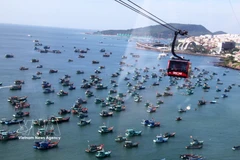
The world’s longest over-sea cable car to Hon Thom Island in the Phu Quoc special zone, An Giang province. (Photo: VNA)

An Giang steps up tourism development ahead of APEC 2027

Tourism in the province has recorded strong growth, affirming its position as one of the region’s leading destinations. Phu Quoc Island continues to attract the majority of international travellers, receiving more than 817,660 visitors, accounting for over 98.5% of total foreign arrivals to the province.

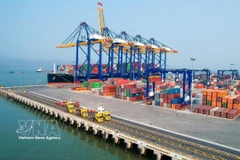
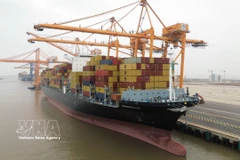
Import-export activities at Lach Huyen international port in Hai Phong (Photo: VNA)

Reducing risks, removing logistics bottlenecks amid Middle East volatility

According to Truong Xuan Trung, Trade Counsellor of Vietnam in the UAE, the Middle East serves not only as a consumption market but also as a key global transhipment hub, meaning instability in the region creates ripple effects across intercontinental transport networks. Shipping route adjustments and airspace restrictions have lengthened transit times, increased costs and disrupted delivery schedules, with some Vietnamese shipments forced to reroute or seek alternative markets.

Cargo is handled at container terminals No. 3 and No. 4 of Hai Phong International Gateway Port. (Photo: VNA)

Businesses seek “survival momentum” amid global geopolitical turbulence

This is an urgent move as the challenges of 2026 differ markedly from previous ones, shaped by overlapping external shocks ranging from geopolitical tensions disrupting supply chains to surging logistics and raw material costs, exchange-rate pressures, and increasingly complex tariff barriers in global markets.

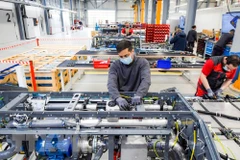
At the 2025 trade connectivity week for mechanical, electrical and digital industries. (Photo: VNA)

Ho Chi Minh City gives boost to supporting industry firms

Supporting industry firms in Ho Chi Minh City are scrambling to embed themselves more deeply into both global and domestic supply chains, backed by a suite of local incentives that are speeding up their tech upgrades and market access.

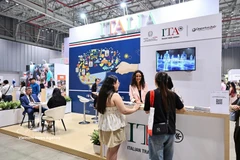
Italy's national pavilion at the ongoing Food & Hospitality Vietnam 2026 exhibition at Ho Chi Minh City's Saigon Exhibition and Convention Centre (SECC) draws visitors for hands-on experiences. (Photo: IVNA)

Italian food firms eye opportunities in Vietnam

Italy’s exports of food and beverages to Vietnam reached 105.1 million EUR in 2025, up 4% year-on-year, positioning the country among the leading EU suppliers to the Vietnamese market.

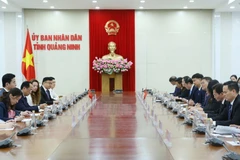
An overview of the working session (Photo: baoquangninh.vn)

Quang Ninh promotes all-round cooperation with Guangxi Zhuang Autonomous Region

Quang Ninh encourages Guangxi enterprises to invest in high-tech marine aquaculture and expand aquatic product exports in China. At the same time, the province aims to develop livestock farming in line with international standards and attract investment in deep-processing plants for agricultural products such as cinnamon, star anise and tea, linked with traceability systems at border gates.

Illustrative image (Source: VNA)

Vietnam becomes fastest growing market for Norwegian salmon in Southeast Asia

The Norwegian Seafood Council (NSC) reported at the “Norwegian seafood industry in Vietnam market 2026” event held in Ho Chi Minh City on March 25 that fresh Norwegian salmon exports to Vietnam jumped 16% in volume in the first two months of 2026 compared with a year earlier, while frozen salmon shipments surged about 37%.

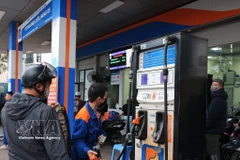
At a petrol station (Photo: VNA)

Energy giants work hard to roll out E10 RON95 sale ahead of schedule

Petrolimex and PVOIL, are in a strong position to accelerate the transition toward cleaner fuels. These companies have been actively preparing infrastructure, upgrading blending systems, and coordinating supply chains to ensure the availability of E10 RON95 across their nationwide retail systems.

Deputy Prime Minister Nguyen Chi Dung visits Bosch Industrial in Stuttgart, Germany. (Photo: VNA)

Vietnam, Germany boost innovation, startup ecosystem connectivity

Deputy PM Nguyen Chi Dung highly valued CfE’s reputation and pioneering role in building Germany’s innovation-driven startup ecosystem, and called for stronger cooperation with NIC to support Vietnamese universities, research institutes and organisations in training and scientific research.

The FTA Index 2024 provides a panorama of the FTA implementation outcomes across the country. (Photo: VNA)

ASEAN opens new export momentum for Vietnam

As competition in ASEAN is intensifying, Vietnamese enterprises are advised to strengthen distribution networks, enhance product innovation and closely monitor policy changes and trade-defence measures in importing markets to sustain and expand their market share.