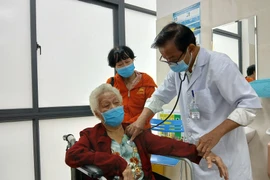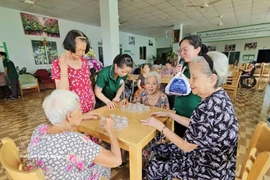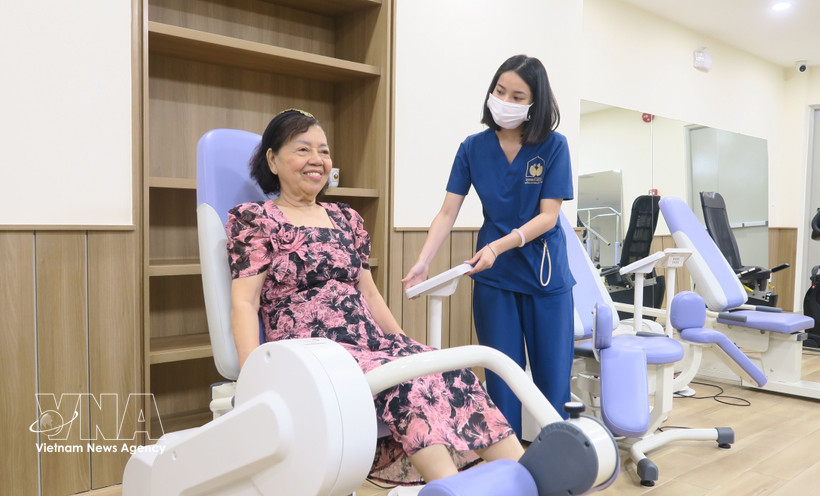
Hanoi (VNA) – Vietnam’s senior housing and healthcare real estate segment is expected to see strong growth in the coming years, driven by rapid population ageing and rising demand for long-term care services, according to industry experts.
Major developers such as Vingroup, Sun Group and Tran Anh Group have already announced plans to enter the segment, signalling increasing investor interest in what is widely seen as an underdeveloped but promising market.
Untapped potential amid rapid ageing
Vietnam is entering a period of accelerated population ageing, according to the United Nations Population Fund (UNFPA). Data show that the number of people aged 60 and above rose from 6.1 million in 2009, accounting for 8.1% of the population, to 11.41 million in 2019, or 11.86%. This figure is projected to continue rising sharply, with nearly one in five Vietnamese expected to be over 60 during 2035–2038.
Estimates by the National Statistics Office suggest that by 2038, the elderly population, aged 60 and above, will exceed 21 million, accounting for 20% of the total population. By 2039, the number of older people is forecast to surpass that of children while the working-age population begins to decline—posing significant socio-economic challenges.
Notably, demographic distribution is also shifting. While older people previously lived mainly in rural areas, urbanisation is driving a growing share of elderly residents into cities. By 2069, the UNFPA expects the proportion of elderly people in urban and rural areas will be nearly equal.
Against this backdrop, the UNFPA said the senior care market is increasingly seen as a considerable opportunity for real estate developers. Vietnam currently faces a shortage of healthcare and long-term care services for the elderly while demand continues to rise.
Statistics of The Data Bridge indicate that Vietnam’s healthcare sector will grow at an annual rate of around 7% between 2020 and 2027. Growth is being fuelled by population ageing, rising incidence of chronic diseases, and greater awareness of healthcare needs among older people.
However, challenges remain. A report by the Asia Advisers Network said high service costs and a shortage of skilled workers continue to constrain the development of elderly care services, particularly for those with severe health conditions.
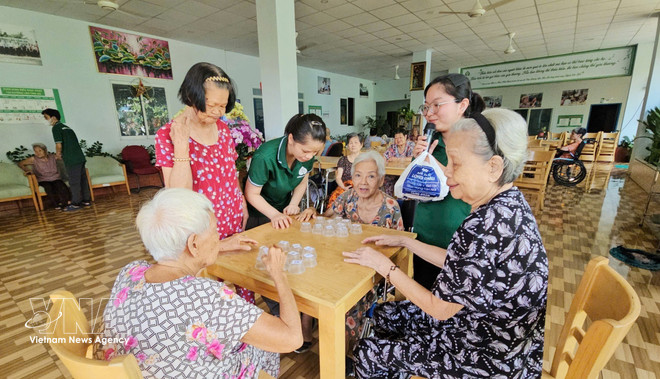
Demand rising, supply still limited
Senior Director of Living Services for Asia-Pacific at Savills Emily Fell said Vietnam’s “silver economy” holds significant potential, especially among financially capable seniors seeking quality healthcare and lifestyle services.
Despite this, he noted, the sector remains small in scale. Research by Savills Vietnam estimates that the elderly care market could grow from 2.3 billion USD in 2024 to 3.6 billion USD by 2032, reflecting a compound annual growth rate of 5.81%.
Le Hoang Chau, Chairman of the Ho Chi Minh City Real Estate Association, said developers should adopt integrated “lifestyle” models that combine residential areas with healthcare, recreational and social services.
He suggested that such projects should be located in suburban areas of major cities like Hanoi and Ho Chi Minh City, or in coastal resort destinations. Rather than standalone developments, successful senior housing projects will require comprehensive ecosystems tailored to the needs and psychology of modern elderly residents.
Government strategies to respond to population ageing are also encouraging the development of elderly care models, providing further momentum for the segment.
Developers move in, but legal hurdles persist
The segment’s potential has already drawn several developers into early-stage projects.
Tran Anh Long An Group, for instance, has planned a high-end nursing home project since 2018 within its 100-hectare Phuoc An City urban area in Tay Ninh province, allocating 20 hectares for elderly care facilities.
Tran Duc Vinh, the company’s general director, noted Vietnam currently has a limited number of nursing homes for the elderly, most of which are either charity-run or state-funded. High-quality private services remain scarce.
The group plans to develop a fully integrated model including townhouses, villas, sports facilities, parks and a hospital providing healthcare and elderly care services. Residents will also have access to recreational activities such as chess and dancing while multi-generational family living will be encouraged, he said.
Meanwhile, Vingroup has launched Vin New Horizon, a chain of high-end healthcare and senior living projects built to international standards. The initiative marks a strategic expansion into elderly care within its broader ecosystem.
Other developers are also exploring the segment. Sun Group is developing a elderly healthcare model in its Tam Dao eco-urban project while Novaland has proposed retirement resort developments in cooperation with foreign partners in Phan Thiet, Lam Dong province.
However, despite strong potential, market development remains cautious.
Nguyen Van Dinh, Vice Chairman of the Vietnam Real Estate Association, noted that an incomplete legal framework remains a key barrier, discouraging large-scale investment.
As policies are gradually refined, experts believe Vietnam’s senior housing real estate market is poised to become a major growth segment in the years ahead./.