Vietnam considers nursing homes as new driver for “silver economy”

Vietnam is expected to formally become an ageing society by 2036, when those aged 65 and above will account for 14% of the population. This trend will place significant pressure on the social security system, but also create opportunities for the "silver economy".

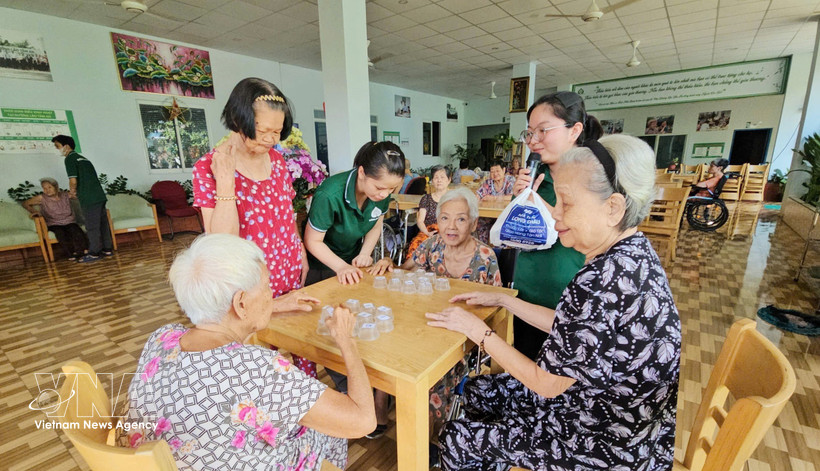
Elderly people receives care at the Tam An nursing home in Ho Chi Minh City. (Photo: VNA)

Hanoi (VNA) – In the growing “silver economy” in many countries, including Vietnam, nursing homes are becoming a key model for providing comprehensive care for the elderly while creating new opportunities for socio-economic growth.

Ageing population backdrop

The country is ageing faster than many of its regional peers, with official figures showing the elderly population hitting 14.2 million in 2024 and expected to double to 28 million by 2050.

Vietnam is expected to formally become an ageing society by 2036, when those aged 65 and above will account for 14% of the population. This trend will place significant pressure on the social security system, but also create opportunities for the "silver economy".

Experts noted that the nation has several favourable conditions for developing nursing home models.

Social demand is rising rapidly as the number of senior citizens grows. Traditional multi-generational family structures are shrinking, while urbanisation and industrialisation have accelerated lifestyles, limiting families’ capacity to care for older members at home. At the same time, a large young workforce, if properly trained and supported by appropriate policies, could form a strong foundation for a sustainable elder-care system.

Care for the group has consistently received attention from the Party and the State. The Politburo's Resolution No. 72-NQ/TW on breakthrough measures to strengthen public health protection, care and improvement calls for the development of elder-care facilities. Various policies and action programmes have been introduced to support and empower this demographic, laying the groundwork for new care models, including nursing homes.

Challenges and development solutions

At present, Vietnam has a relatively small number of elder-care facilities. Surveys show there are just over 400 nursing homes nationwide, with almost half charitable or state-funded. Most of these places are clustered in big cities, leaving other areas with fewer options.

State-run homes primarily serve policy beneficiaries, war veterans and disadvantaged elderly people, offering low-cost or free basic care but on a limited scale. Charitable homes play an important role in supporting seniors without family support, yet often face financial and infrastructure constraints. Private nursing homes, meanwhile, tend to offer higher-end, diversified services, but their costs restrict access to only a small segment of the population.
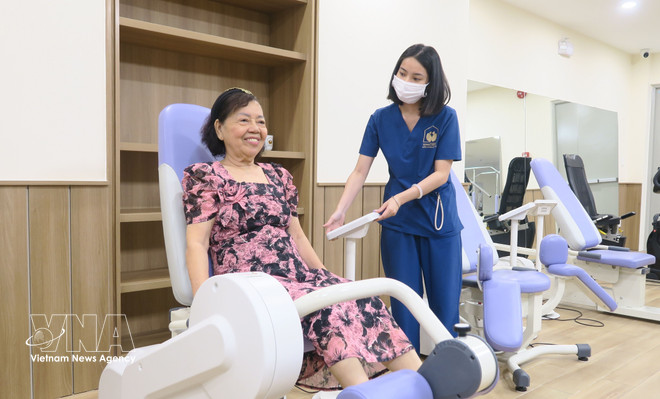
vnanet-genki-house.jpg
An elderly woman receives healthcare services at Genki House, a senior activity and care centre. (Photo: VNA)

Experts said the sector faces several significant obstacles such as high initial investment and operating costs, while most of the targeted group have limited financial capacity. Monthly fees at many private facilities range from 10 - 18 million VND (380 – 684 USD), considerably higher than the average pension level.

Another major challenge is the shortage of specialised personnel, particularly nurses, caregivers and medical support staff. Cultural and social factors also pose barriers. Traditional values emphasise filial duty, with family members expected to care for elderly parents at home. Many families worry that placing relatives in nursing homes may conflict with these norms, leading to hesitation and reluctance to adopt the model. Limited information and concerns about service quality further contribute to public caution.

Nguyen Trang Nhung, a master’s degree holder from the Academy of Finance, stressed that developing nursing home models effectively requires a comprehensive, long-term approach. Priority should be given to improving service quality and diversification, ensuring holistic physical and mental care that accommodates varying needs and financial capacities.

She also highlighted the importance of standardising and expanding the elder-care workforce through specialised training programmes and appropriate remuneration policies. The State should establish clear operational standards, supervisory mechanisms and legal responsibilities, while introducing tax incentives, credit support and public-private partnership frameworks to mobilise broader social resources for the sector./.

VNA

See more

Rajesh Achanta, former vice president of Asia-Pacific supply chain operations at P&G, speaks at the SME Forum 2026 held in Ho Chi Minh City on March 20. (Photo courtesy of the organiser)

Execution gap holds back Vietnam’s SMEs

Vietnamese small and medium-sized enterprises (SMEs) may not lack strategy or ambition, but many struggle to turn plans into results, business leaders and experts said at SME Forum 2026 in Ho Chi Minh City on March 20.

Training sessions and dialogues have improved fishermen’s understanding of regulations and the risks associated with IUU fishing. (Photo: VNA)

Quang Tri strengthens fleet oversight to curb IUU fishing

Quang Tri province currently has about 4,600 fishing vessels measuring 6 metres or longer. All have met requirements on registration, inspection and licensing, and have installed vessel monitoring systems (VMS), a key tool to enhance oversight of offshore activities.

In Vietnam, silver bullion prices even touched 111 million VND (4,200 USD) per kilogramme, reflecting growing interest among individuals and investors. (Photo: vietnamnet.vn)

Vietnam considers listing silver bullion on commodity exchange

Under the proposal, the rollout would take place in two phases. The first would involve a pilot listing in the domestic market with physical transactions. In the second phase, after operations stabilise, the exchange could be linked with regional and international commodity exchanges.

Head of the Vietnam Trade Office in Australia Tran Thi Thanh My (Photo: VNA)

Vietnam rises as key market for Australian capital: official

Australian firms and investors are showing particularly strong interest in Vietnam, drawn by its large market, consistent high growth, youthful demographics, and rapidly expanding middle class, said a representative of the Vietnam Trade Office in Australia.

Deputy Minister of Finance Tran Quoc Phuong (left) and Japanese Ambassador to Vietnam Ito Naoki sign the exchange of notes on behalf of the governments of the two countries. (Photo: VNA)

Vietnam, Japan sign exchange of notes for ODA loans to support green transition

The funding, totaling approximately 90 billion JPY (around 609 million USD), will be allocated to three key projects, namely budget support for green growth and climate adaptation, disaster-resilient rural development, and climate-adaptive infrastructure to support production in northern mountainous regions, particularly for ethnic minority communities.

The third “Vietnamese Goods Vitality” programme themed “Vietnamese youth proud of Vietnamese goods”. (Photo: VNA)

Vitality of Vietnamese Goods programme opens

The event, organised by the Agency for Domestic Market Surveillance and Development in coordination with the Hoan Kiem ward People’s Committee, TikTok Shop and the National Payment Corporation of Vietnam, aims to support enterprises in promoting and selling products while expanding digital distribution channels. It also forms part of activities marking the 95th anniversary of the Ho Chi Minh Communist Youth Union (March 26, 1931–2026).

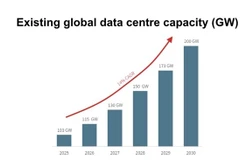
Global data centre capacity. (Photo Courtesy of JLL)

JLL: Vietnam data centres poised for growth

Hanoi and Ho Chi Minh City have a combined operational capacity of around 60 MW. While this is currently lower than regional hubs such as Jakarta, Kuala Lumpur, Bangkok, and Manila (74 MW), it demonstrates strong potential for future scaling.

Vietjet operates a modern, fuel-efficient fleet and continues to expand its international network, offering year-round promotions across destinations. (Photo: Vietjet)

Vietjet recognised among world’s best low-cost airlines with two international awards in 2026

The awards focus on in-flight product and passenger experience, using measurable onboard criteria. AirlineRatings experts highlighted Vietjet’s highly competitive fares, innovative approach, and products tailored to customer needs. The airline has maintained its title as the World’s Best Ultra Low-Cost Carrier since 2018 and has consistently ranked among the world’s leading low-cost airlines.

Noi Bai International Airport ranks 71st among the world’s 100 best airports. (Photo: VNA)

Noi Bai jumps to 71st in world’s top 100 airports: Skytrax

The airport climbed eight positions from 79th in 2025, marking one of its strongest performances to date. This is also the eighth consecutive year that Noi Bai, the capital’s main aviation gateway, has been named among the world’s top 100 airports.

Media analysis shows increased attention to new projects and product launches, accounting for 22.3% of discussions. (Photo: VNA)

Vietnam Report announces Top reputable real estate companies in 2026

The Top 10 reputable developers include Vinhomes, Nam Long Investment Corporation, Khang Dien House Trading and Investment JSC, Ecopark Group, Van Phu Invest, Taseco Land Investment JSC, Phat Dat Real Estate Development Corporation, DIC Corporation, BIM Land, and Phu Long Real Estate Corporation.