PM holds dialogue with Japanese businesses to deepen economic ties

PM Chinh emphasised that the dialogue reflected the Vietnamese Government’s high regard for cooperation with Japan and for the success of Japanese enterprises in Vietnam, which contribute to prosperity in both countries.

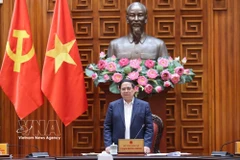
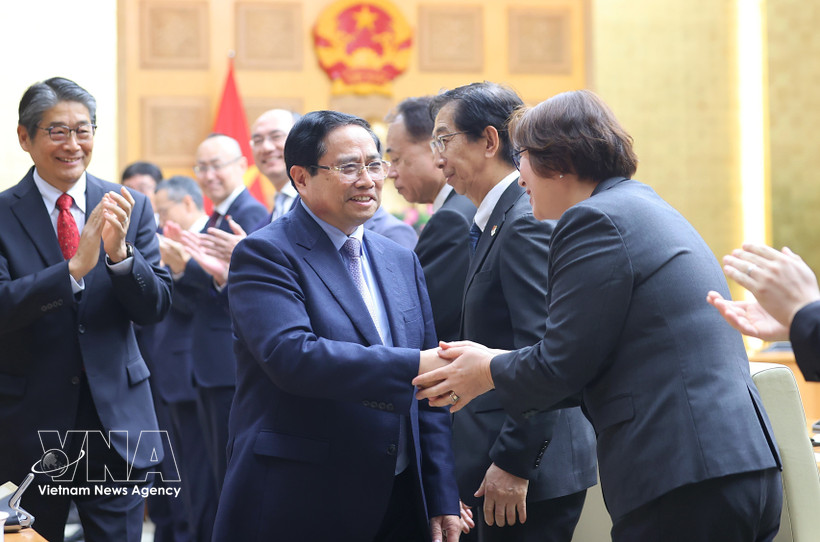
Prime Minister Pham Minh Chinh meets with leaders of Japanese businesses. (Photo: VNA)

Hanoi (VNA) – Prime Minister Pham Minh Chinh called on Japanese businesses to continue placing their trust in Vietnam while chairing a dialogue with Japanese enterprises in Hanoi on March 21.

PM Chinh emphasised that the dialogue reflected the Vietnamese Government’s high regard for cooperation with Japan and for the success of Japanese enterprises in Vietnam, which contribute to prosperity in both countries.

He reaffirmed that the Vietnam–Japan Comprehensive Strategic Partnership for Peace and Prosperity in Asia and the World has continued to develop strongly, with economic, trade, and investment cooperation remaining a key pillar. Japan remained one of Vietnam’s leading economic partners, ranking first in cooperation in official development assistance (ODA) and labour, third in investment, and fourth in trade and tourism.

On behalf of the Government, PM Chinh showed his high appreciation and sincere gratitude for the practical and effective contributions made by Japanese enterprises to Vietnam’s development and the friendship between the two countries.

He expressed his hope that Japanese enterprises, with their experiences, resources and strong reputation, will support Vietnam in accessing shifting investment flows and sustainable green finance, including initiatives such as the Asia Zero Emission Community (AZEC), as well as funding for science, technology and innovation, and ODA for key infrastructure projects such as the construction of Hanoi’s Metro Line No. 2.

Vietnam prioritises attracting investment projects that emphasise quality, efficiency, advanced technology and environmental protection, particularly in sectors such as the green, digital, circular and knowledge-based economy; science and technology, innovation, electronic components and electric vehicles; semiconductor manufacturing, new energy such as hydrogen, and renewable energy.
vnanet-phamminhchinh4.jpg
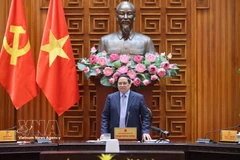
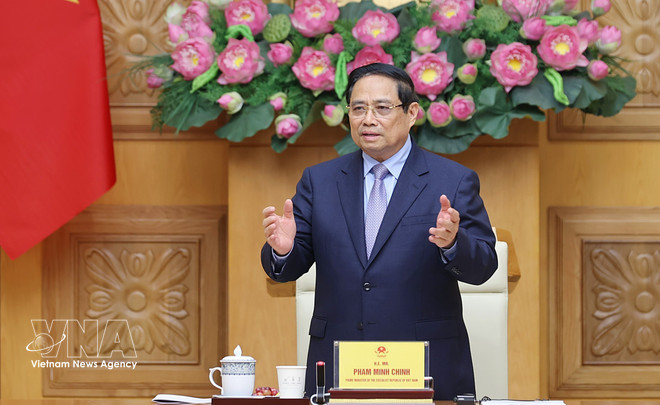
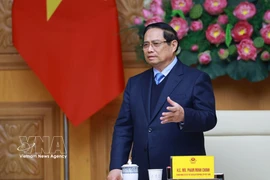
Prime Minister Pham Minh Chinh speaks at the dialogue with Japanese firms. (Photo: VNA)

The PM called on both sides to further strengthen cooperation in order to consolidate supply chains, develop supporting industries, and build a highly skilled workforce, thereby ensuring stable production activities for mutual benefit in a diversified, transparent and sustainable manner.

He urged the Japanese Government and business community to continue paying attention to and accelerating the implementation of key cooperation projects, particularly in high technology, and address longstanding bottlenecks, including the restructuring of the Nghi Son Refinery and the diversification of crude oil supply sources in the current context.

Japanese investors were also encouraged to further support and create favourable conditions for Vietnamese enterprises to integrate more deeply and substantively into global supply chains.

The Vietnamese Government, he said, remains committed to ensuring political stability, social order and safety; safeguarding investors’ legitimate rights and interests; maintaining a transparent and favourable policy environment; and promoting a spirit of shared vision, shared action, and shared benefits.

Stressing the importance of the “harmonising interests, sharing risks” spirit, PM Chinh encouraged Japanese firms to continue contributing to the shared prosperity of both nations as well as to the Vietnam–Japan Comprehensive Strategic Partnership for Peace and Prosperity in Asia and the World.
vnanet-phamminhchinh5.jpg
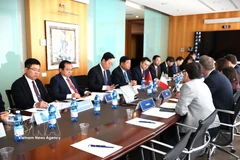
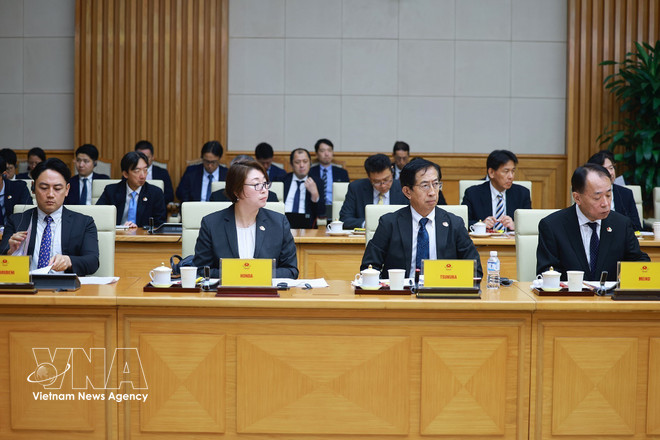
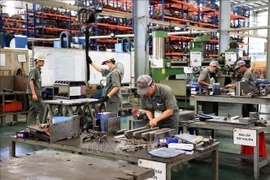
Representatives of Japanese enterprises attend the dialogue. (Photo: VNA)

At the dialogue, Japanese Ambassador to Vietnam Ito Naoki and Japanese enterprises highly appreciated the outcomes of two similar dialogues held in 2025, noting that they had helped address bottlenecks in a timely manner.

The diplomat affirmed that the Japanese Government supports Vietnam’s reform efforts, while businesses hold strong expectations for further progress and are keen to expand cooperation, contributing to shaping the country’s new growth model.

Wakabayashi Koichi, President of the Japan Business Association in Vietnam, highlighted growing interest among Japanese firms in the Vietnamese market, pointing to the country’s robust economic growth and improved administrative efficiency. Despite increasing global uncertainties, including tensions in the Middle East and energy price volatility, he assessed that Vietnam’s stable investment environment and reform momentum will stand out as competitive advantages.

Japanese enterprises increasingly view Vietnam not only as a manufacturing base but also as a partner in higher value-added sectors, he added./.
VNA

See more

A customer is making payment via QR code at a coffee shop. The Ministry of Finance has proposed new regulations on taxable revenue thresholds for household businesses. (Photo: VNA)

Finance ministry eyes flexible tax thresholds

In a draft law amending several articles of the laws on personal income tax, corporate income tax and value-added tax, Vietnam's finance ministry proposed scrapping the fixed revenue threshold of 500 million VND. Instead, it suggested the threshold be set by the Government based on prevailing economic conditions.

Part of the Vung Ang II Thermal Power Plant. (Photo: VNA)

Vung Ang II thermal power plant inaugurated in Ha Tinh

With a total investment of 2.2 billion USD, the Vung Ang II Thermal Power Plant is developed under a build-operate-transfer (BOT) model and has a designed capacity of 1,200 MW, comprising two turbines. The plant is expected to play a key role in ensuring stable electricity supply for the central region and neighbouring areas, thereby facilitating the development of industries, agriculture and services.

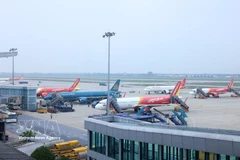
Aircraft at the Noi Bai International Airport in Hanoi. (Photo: VNA)

Vietnam seeks stable jet fuel supplies from China amid Middle East disruptions

On the basis of the long-standing friendship and cooperation between Vietnam and China, as well as close ties between their aviation authorities, the Civil Aviation Authority of Vietnam has asked the Civil Aviation Administration of China to direct relevant fuel suppliers to ensure sufficient and stable supplies for Vietnam.

Illustrative photo (Photo: Xinua/VNA)

Remittances to Ho Chi Minh City decline in Q1 amid global headwinds

Data from the State Bank of Vietnam (SBV)'s Region 2 branch showed that remittances transferred through credit institutions and economic organisations in Ho Chi Minh City exceeded 2 billion USD in the January–March period, down 15.6% from the previous quarter and 16.9% year-on-year.

The shipments are unloaded at the airport. (Photo: VNA broadcasts)

Nearly 100 tonnes of Vietnamese fruits, vegetables airlifted to UAE

Vietnamese fresh produce and processed foods are increasingly recognised for their quality, with items such as cashew nuts, coffee and spices gaining popularity among Middle East consumers. In 2025, Vietnam’s farm produce exports to the UAE exceeded 445 million USD, up nearly 24% year-on-year.

The World Coffee Heritage Forum officially opens at the World Coffee Museum in Dak Lak province, with eyes on UNESCO recognition for Vietnamese coffee culture. (Photo: VNA)

World Coffee Heritage Forum opens in Dak Lak

Dak Lak is known as the 'capital' of Vietnamese coffee, with rich, fertile basalt red soil ideal for agriculture. The coffee provides livelihoods for thousands of locals and has developed a unique cultural space, closely tied to the socioeconomic life, customs and identity of local communities.

Chili peppers are on the list of essential goods in Indonesia (Photo: VNA)

Indonesia reduces imports of strategic food commodities

In 2026, Indonesia is expected to have approximately 12 million tonnes of rice carried over from the previous year, supported by annual production of around 34.7 million tonnes. With projected consumption of 31.1 million tonnes, national rice reserves could reach approximately 16 million tonnes by the end of the year.

Hanoi’s roadmap to implement low-emission zones from July is providing a strong boost to the electric two-wheeler market (Photo: VNA)

Low-emission zone roadmap drives electric two-wheeler boom in Hanoi

From July 1, Hanoi will introduce time-based or area-based restrictions on petrol-powered motorcycles within Ring Road 1, with plans to expand coverage across the entire zone by 2028 and extend to areas within Ring Road 3 by 2030. The policy is expected to reshape travel habits for millions of urban residents.

Delegates at the opening ceremony of the Made in Da Nang Expo 2026 (Photo: VNA)

Nearly 300 firms join Made in Da Nang Expo 2026

Speaking at the opening ceremony, Vice Chairman of the Da Nang People’s Committee Tran Chi Cuong said the exhibition is a large-scale trade promotion event aimed at showcasing products, connecting markets, and helping businesses enhance competitiveness while expanding domestic and export markets.