Hanoi (VNS/VNA) - Rising tensions in the Middle East are pushing up global fertiliser prices and raising concerns about input costs for farmers, as disruptions to key shipping routes threaten supplies of critical raw materials.
For an agriculture-based economy such as Vietnam, the volatility highlights the need to secure fertiliser supply and contain input costs to protect farm production from external shocks.
Domestic fertiliser prices often move in tandem with international trends. When global prices surge, local producers tend to adjust their selling prices to align with market levels and take advantage of export opportunities.
Market observations have shown that several wholesale warehouses and distributors have announced new price increases.
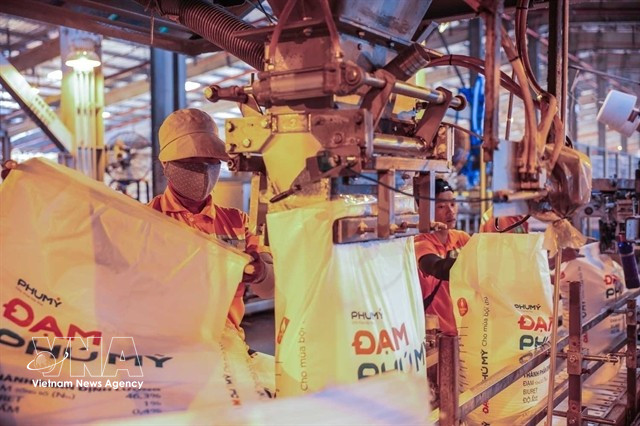
At the retail level, urea prices in many areas range between 610,000 - 650,000 VND per 50-kilogram bag for products from the PetroVietnam Ca Mau Fertiliser Joint Stock Company, while urea from the PetroVietnam Fertiliser and Chemicals Corporation (Phú Mỹ) is priced at around 610,000 – 660,000 VND per bag.
Other fertilisers also remain at relatively high levels. DAP Hong Ha is sold at around 1.25–1.3 million VND per bag, granular potassium fertiliser at about 500,000 – 530,000 VND and NPK 16-16-8 at roughly 600,000 – 750,000 VND depending on region and distributor.
Compared with late February, several common fertilisers, including urea from Ca Mau and Phu My, NPK 16-16-8 and powdered potassium, have increased by about 10,000 VND per 50kg bag, indicating that the domestic market has begun reacting to the global price rally.
Shipping risks
According to Phung Ha, Chairman of the Vietnam Fertiliser Association, disruptions around the Strait of Hormuz are a major factor behind the surge in fertiliser prices, as the waterway is a critical route for global fertiliser shipments.
Different fertilisers rely on different raw materials. Urea production depends largely on natural gas or coal, while phosphate-based fertilisers such as DAP require apatite ore. If the strait were disrupted, shipments of sulphur, urea and ammonia, key inputs for nitrogen fertilisers, could be significantly affected.
Each month, around 1.2–1.5 million tonnes of urea, 1.5–1.8 million tonnes of sulphur and 400,000–500,000 tonnes of ammonia are transported through the route. Ammonia is a key input for nitrogen fertilisers such as urea, MAP, DAP and SA, while sulphur is used to produce sulphuric acid, an essential material for fertilisers including DAP, SSP and SOP.
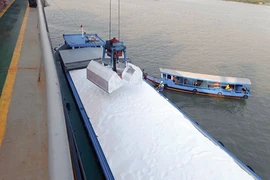
Logistics costs could also surge if shipping routes are disrupted, as most ammonia carriers and bulk vessels transporting sulphur cannot easily reroute. Without an alternative maritime route out of the Gulf that bypasses the strait, shipping expenses such as container rates, insurance premiums, fuel and labour costs may rise sharply.
In addition, geopolitical tensions have forced some fertiliser plants in Iran to suspend production of urea and ammonia. Facilities in Egypt and Jordan have also been affected due to disruptions in natural gas supplies from Israel.
Domestic cushion
These global factors could influence fertiliser prices in Vietnam in the coming period, particularly as the country remains a major importer.
Data from the General Department of Customs show that in 2025 Vietnam imported about 6.2 million tonnes of fertilisers worth roughly 2.2 billion USD. Potassium fertiliser accounted for the largest share at around 1.2 million tonnes, valued at 437 million USD. Imports of SA fertiliser reached about 1.2 million tonnes worth 193 million USD.
Despite having domestic production facilities, Vietnam still imported around 576,000 tonnes of urea worth 226.4 million USD in 2025. Imports of NPK fertiliser reached about 867,000 tonnes, while DAP imports totalled roughly 575,000 tonnes, valued at 414.6 million USD and 415.1 million USD respectively.
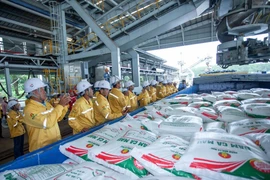
However, experts believe the situation remains manageable thanks to Vietnam’s relatively strong domestic fertiliser industry. Major plants such as those operated by the PetroVietnam Fertiliser and Chemicals Corporation, the PetroVietnam Ca Mau Fertiliser Joint Stock Company, the Ha Bac Nitrogenous Fertiliser and Chemicals Company and the Ninh Binh Nitrogenous Fertiliser Company help ensure stable urea supply for the domestic market.
According to the Vietnam Fertiliser Association, the country consumes around 10–10.5 million tonnes of inorganic fertiliser annually through a combination of domestic production and imports.
Vietnam is capable of producing most major fertiliser types, including urea, DAP, SSP, FMP, SOP and various NPK blends and even exports moderate volumes of some products such as SSP, DAP and NPK.
According to Nguyen Thi Hien, Deputy General Director of the PetroVietnam Ca Mau Fertiliser Joint Stock Company, the company’s plant continues to operate steadily, producing its two core products: urea and NPK fertilisers.
She noted that global urea prices had been rising sharply, largely due to higher freight costs and that domestic prices could follow suit as the farming season approaches. Whether the increase would be sustained would depend on further developments in the global market.
Meanwhile, representatives from the PetroVietnam Fertiliser and Chemicals Corporation have said international urea prices are currently influenced by market sentiment amid geopolitical risks, though domestic plants are operating normally and local supply remains secure.
Managing volatility
Despite relatively stable supply conditions, experts warn that Vietnam’s fertiliser market is not immune to global volatility. As global commodity markets become increasingly interconnected, geopolitical tensions in distant regions can still ripple through supply chains and affect prices.
Closely monitoring developments in global energy and logistics markets will therefore be crucial for both businesses and regulators in responding to potential price fluctuations.
Vietnamese fertiliser producers have already developed strategies to cope with such shocks. These include diversifying supply sources, maintaining stable production, cutting intermediate costs, developing substitute products and investing in advanced technologies to improve efficiency and reduce production costs.
Industry experts also recommend that producers prioritise domestic supply, reduce energy and raw material consumption and accelerate research into enhanced efficiency fertilisers.
For farmers, applying fertilisers according to the four rights principle — using the right type, right quantity, at the right time and in the right way — can help optimise fertiliser use and mitigate the impact of price fluctuations./.
See more
Fuel cost surge pushes airfares up
A rapid survey conducted by the CAAV on March 20, covering nearly 40 international and regional airlines operating routes to Vietnam, found that over 60% have already implemented, are in the process of implementing, or plan to introduce fuel surcharges or fare adjustments starting in mid-March.
Vietnam, Russia expand room for, elevate trade cooperation
According to the Department of Foreign Market Development under the Ministry of Industry and Trade (MoIT), Russia remains one of Vietnam’s key economic partners, particularly in industry and energy. Despite global economic and geopolitical uncertainties, bilateral trade has maintained a positive growth trend.
Middle East conflict tests resilience of Vietnam’s agriculture sector
Associations are encouraged to proactively gather and promptly report difficulties faced by businesses related to mechanisms, policies, administrative procedures, credit, taxation, logistics, and insurance.
Ho Chi Minh City firms adjust markets to maintain jobs amid global shipping disruptions
Escalating geopolitical tensions in the Middle East are driving up shipping costs and disrupting global logistics, placing additional pressure on supply chains and export activities.
Gov't leader orders sufficient energy supplies for production, business, consumption
A range of fuel price support measures has been applied, including the use of the petrol price stabilisation fund and adjustments to taxes and fees. As a result, domestic fuel prices are currently lower than in most countries in the region, a significant effort under present conditions.
PM holds dialogue with Japanese businesses to deepen economic ties
PM Chinh emphasised that the dialogue reflected the Vietnamese Government’s high regard for cooperation with Japan and for the success of Japanese enterprises in Vietnam, which contribute to prosperity in both countries.
Sun Group, Changi Airports International sign strategic partnership to operate Phu Quoc Airport
With this partnership, Phu Quoc International Airport will become one of the first airports in Vietnam to be operated by an international partner under “Changi standards” – a benchmark associated with the pioneering “airport destination” model.
Structured, favourable conditions sought for Vietnam–Italy business cooperation: Deputy PM
Dung called for stronger connectivity between Vietnamese and Italian businesses, while also raising the possibility of developing industrial clusters as part of bilateral economic cooperation. Such collaboration should aim to build value chains based on sharing, complementarity and mutual support, with the backing of both governments.
Execution gap holds back Vietnam’s SMEs
Vietnamese small and medium-sized enterprises (SMEs) may not lack strategy or ambition, but many struggle to turn plans into results, business leaders and experts said at SME Forum 2026 in Ho Chi Minh City on March 20.
Vietnam considers nursing homes as new driver for “silver economy”
Vietnam is expected to formally become an ageing society by 2036, when those aged 65 and above will account for 14% of the population. This trend will place significant pressure on the social security system, but also create opportunities for the "silver economy".
Quang Tri strengthens fleet oversight to curb IUU fishing
Quang Tri province currently has about 4,600 fishing vessels measuring 6 metres or longer. All have met requirements on registration, inspection and licensing, and have installed vessel monitoring systems (VMS), a key tool to enhance oversight of offshore activities.
Vietnam considers listing silver bullion on commodity exchange
Under the proposal, the rollout would take place in two phases. The first would involve a pilot listing in the domestic market with physical transactions. In the second phase, after operations stabilise, the exchange could be linked with regional and international commodity exchanges.
Belavia Belarusian Airlines launches Minsk – Nha Trang service
The route is the longest in Belavia’s network, covering nearly 9,300km with an estimated flight duration of around 11 hours.
Vietnam, Italy deepen economic diplomacy to boost trade, investment
Deputy Prime Minister Nguyen Chi Dung encouraged Italian businesses to scale up investment in Vietnam, particularly in high-potential sectors such as manufacturing, high technology, industrial infrastructure, innovation and clean energy.
Vietnam rises as key market for Australian capital: official
Australian firms and investors are showing particularly strong interest in Vietnam, drawn by its large market, consistent high growth, youthful demographics, and rapidly expanding middle class, said a representative of the Vietnam Trade Office in Australia.
Vietnam, Japan sign exchange of notes for ODA loans to support green transition
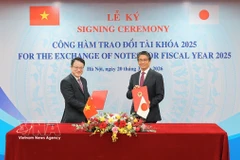
The funding, totaling approximately 90 billion JPY (around 609 million USD), will be allocated to three key projects, namely budget support for green growth and climate adaptation, disaster-resilient rural development, and climate-adaptive infrastructure to support production in northern mountainous regions, particularly for ethnic minority communities.
Vitality of Vietnamese Goods programme opens
The event, organised by the Agency for Domestic Market Surveillance and Development in coordination with the Hoan Kiem ward People’s Committee, TikTok Shop and the National Payment Corporation of Vietnam, aims to support enterprises in promoting and selling products while expanding digital distribution channels. It also forms part of activities marking the 95th anniversary of the Ho Chi Minh Communist Youth Union (March 26, 1931–2026).
PM gives green light to advance from state budget for fuel price stabilisation fund
PM Chinh stressed that the top priority is to ensure no shortages of energy or fuel in any circumstances; minimise negative impacts from the energy crisis on macroeconomic management; and prevent disruptions to supply chains, production, business activities, and people’s consumption.
JLL: Vietnam data centres poised for growth
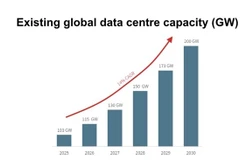
Hanoi and Ho Chi Minh City have a combined operational capacity of around 60 MW. While this is currently lower than regional hubs such as Jakarta, Kuala Lumpur, Bangkok, and Manila (74 MW), it demonstrates strong potential for future scaling.
Vietjet recognised among world’s best low-cost airlines with two international awards in 2026
The awards focus on in-flight product and passenger experience, using measurable onboard criteria. AirlineRatings experts highlighted Vietjet’s highly competitive fares, innovative approach, and products tailored to customer needs. The airline has maintained its title as the World’s Best Ultra Low-Cost Carrier since 2018 and has consistently ranked among the world’s leading low-cost airlines.