Middle East conflict tests resilience of Vietnam’s agriculture sector

Associations are encouraged to proactively gather and promptly report difficulties faced by businesses related to mechanisms, policies, administrative procedures, credit, taxation, logistics, and insurance.

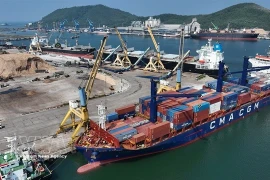
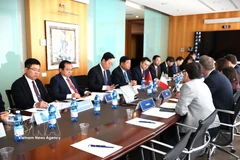
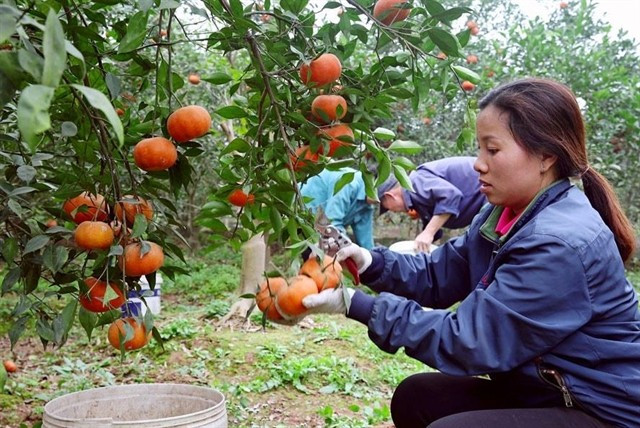
Escalating tensions in the Middle East are having negative impacts on the global economy, including Vietnam. (Photo: thuonghieusanpham.vn)

Hanoi (VNS/VNA) - The challenges posed by the Middle East conflict are not only a shared difficulty but also a test of the resilience and adaptability of Vietnam’s agriculture and environment sector.

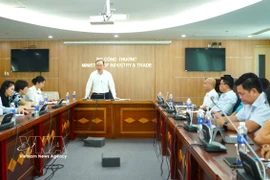
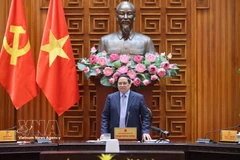
This view was expressed by Minister of Agriculture and Environment Tran Duc Thang in an open letter to the business community and industry associations in the sector, calling for proactive responses to global volatility to ensure this year’s growth targets are met.

Escalating tensions in the Middle East are negatively affecting the global economy, including Vietnam, Thang said.

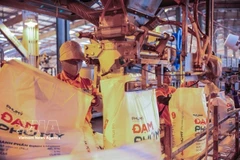
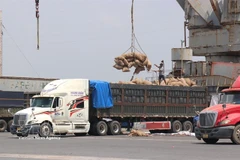
The most immediate consequences include risks of supply chain disruptions, rising logistics costs, and increasing prices of input materials.

These factors directly affect production costs, business efficiency, and the competitiveness of Vietnam’s agricultural products in international markets.

In this context, the Ministry of Agriculture and Environment (MAE) has identified key priorities, including stabilising production, ensuring the supply of inputs, reducing costs, and strengthening self-reliance. At the same time, the sector must maintain export chains and make effective use of natural resources such as land and minerals.

To respond proactively to these challenges, the minister called on businesses and industry associations to adapt flexibly to market fluctuations and share difficulties with producers, based on the principle of harmonised interests and shared risks.

A key solution highlighted is the stabilisation of input prices. The minister urged suppliers of agricultural inputs such as fertilisers, animal feed and plant protection products, along with logistics companies, to maintain or reduce prices while maximising capacity to ensure supply and support production.

At the same time, maintaining stable purchasing of agricultural products is considered crucial to protecting farmers. The minister encouraged businesses to increase purchasing, storage and processing during peak harvest periods to avoid the familiar scenario of “bumper crops but falling prices”, thereby boosting farmers’ confidence in production.

Another key direction is strengthening value chain linkages in agriculture. Thang called on businesses, cooperatives and farmers to enhance co-operation across the entire chain, from production to consumption, with a focus on sustainable contract farming models.

Amid ongoing challenges in international logistics, the domestic market continues to be seen as an important pillar. The ministry recommended that businesses boost domestic consumption, support the campaign “Vietnamese people prioritise using Vietnamese goods”, and flexibly adjust export plans to adapt to changing conditions.

Alongside consolidating the domestic market, the minister also emphasised the need to diversify export markets.

Businesses are encouraged to expand their presence in potential regions such as East Asia, South Asia, Europe, Africa and Latin America to reduce dependence on traditional markets and offset disruptions caused by conflict.

Effectively utilising free trade agreements, strengthening trade promotion, participating in trade fairs, and developing cross-border e-commerce are also identified as key measures to expand market access.

In addition, green transformation is seen as an inevitable trend. The Ministry of Agriculture and Environment encourages businesses to adopt circular economy and low-carbon models, while meeting international standards to enhance the value and competitiveness of Vietnamese agricultural products.

In particular, adapting to new international regulations such as the EU Deforestation Regulation is highlighted as a way to strengthen the global positioning of Vietnam’s agricultural brands.

In his letter, the minister also underlined the role of industry associations in connecting businesses with regulators.

Associations are encouraged to proactively gather and promptly report difficulties faced by businesses related to mechanisms, policies, administrative procedures, credit, taxation, logistics and insurance.

On that basis, MAE pledged to listen, address issues, and advise the Government on timely solutions, thereby creating more favourable conditions for business development./.

VNA
See more

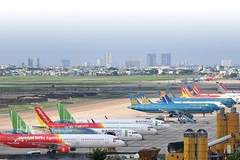
Fuel surcharge adjustments are seen as a short-term solution to cope with cost volatility. (Photo: VNA)

Fuel cost surge pushes airfares up

A rapid survey conducted by the CAAV on March 20, covering nearly 40 international and regional airlines operating routes to Vietnam, found that over 60% have already implemented, are in the process of implementing, or plan to introduce fuel surcharges or fare adjustments starting in mid-March.

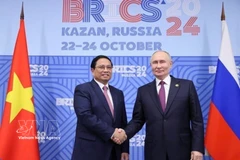
Prime Minister Pham Minh Chinh (L) and Russian President Vladimir Putin, Chair of BRICS in 2024, meets on October 24, 2024, on the sidelines of the expanded BRICS Leaders’ Summit in Kazan. (Photo: VNA)

Vietnam, Russia expand room for, elevate trade cooperation

According to the Department of Foreign Market Development under the Ministry of Industry and Trade (MoIT), Russia remains one of Vietnam’s key economic partners, particularly in industry and energy. Despite global economic and geopolitical uncertainties, bilateral trade has maintained a positive growth trend.

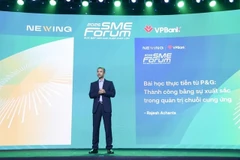
Rajesh Achanta, former vice president of Asia-Pacific supply chain operations at P&G, speaks at the SME Forum 2026 held in Ho Chi Minh City on March 20. (Photo courtesy of the organiser)

Execution gap holds back Vietnam’s SMEs

Vietnamese small and medium-sized enterprises (SMEs) may not lack strategy or ambition, but many struggle to turn plans into results, business leaders and experts said at SME Forum 2026 in Ho Chi Minh City on March 20.

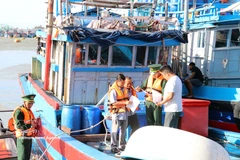
Training sessions and dialogues have improved fishermen’s understanding of regulations and the risks associated with IUU fishing. (Photo: VNA)

Quang Tri strengthens fleet oversight to curb IUU fishing

Quang Tri province currently has about 4,600 fishing vessels measuring 6 metres or longer. All have met requirements on registration, inspection and licensing, and have installed vessel monitoring systems (VMS), a key tool to enhance oversight of offshore activities.

In Vietnam, silver bullion prices even touched 111 million VND (4,200 USD) per kilogramme, reflecting growing interest among individuals and investors. (Photo: vietnamnet.vn)

Vietnam considers listing silver bullion on commodity exchange

Under the proposal, the rollout would take place in two phases. The first would involve a pilot listing in the domestic market with physical transactions. In the second phase, after operations stabilise, the exchange could be linked with regional and international commodity exchanges.

Head of the Vietnam Trade Office in Australia Tran Thi Thanh My (Photo: VNA)

Vietnam rises as key market for Australian capital: official

Australian firms and investors are showing particularly strong interest in Vietnam, drawn by its large market, consistent high growth, youthful demographics, and rapidly expanding middle class, said a representative of the Vietnam Trade Office in Australia.

Deputy Minister of Finance Tran Quoc Phuong (left) and Japanese Ambassador to Vietnam Ito Naoki sign the exchange of notes on behalf of the governments of the two countries. (Photo: VNA)

Vietnam, Japan sign exchange of notes for ODA loans to support green transition

The funding, totaling approximately 90 billion JPY (around 609 million USD), will be allocated to three key projects, namely budget support for green growth and climate adaptation, disaster-resilient rural development, and climate-adaptive infrastructure to support production in northern mountainous regions, particularly for ethnic minority communities.

The third “Vietnamese Goods Vitality” programme themed “Vietnamese youth proud of Vietnamese goods”. (Photo: VNA)

Vitality of Vietnamese Goods programme opens

The event, organised by the Agency for Domestic Market Surveillance and Development in coordination with the Hoan Kiem ward People’s Committee, TikTok Shop and the National Payment Corporation of Vietnam, aims to support enterprises in promoting and selling products while expanding digital distribution channels. It also forms part of activities marking the 95th anniversary of the Ho Chi Minh Communist Youth Union (March 26, 1931–2026).

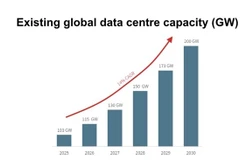
Global data centre capacity. (Photo Courtesy of JLL)

JLL: Vietnam data centres poised for growth

Hanoi and Ho Chi Minh City have a combined operational capacity of around 60 MW. While this is currently lower than regional hubs such as Jakarta, Kuala Lumpur, Bangkok, and Manila (74 MW), it demonstrates strong potential for future scaling.