JLL: Vietnam data centres poised for growth

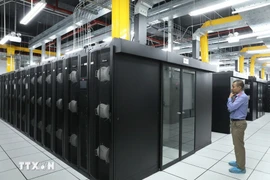
Hanoi and Ho Chi Minh City have a combined operational capacity of around 60 MW. While this is currently lower than regional hubs such as Jakarta, Kuala Lumpur, Bangkok, and Manila (74 MW), it demonstrates strong potential for future scaling.

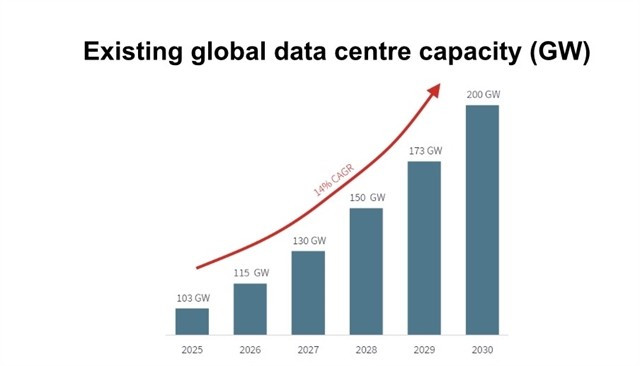
Global data centre capacity. (Photo Courtesy of JLL)


Ho Chi Minh City (VNS/VNA) — Vietnam’s data centre market is on a growth trajectory, offering ample opportunities for expansion, experts said.

The country’s data centre market is developing alongside rising data processing needs, the spread of artificial intelligence and enterprise digital transformation.

Research from JLL indicates global installed capacity could increase from roughly 103 GW to 200 GW by 2030, supporting an estimated 3 trillion USD of infrastructure investment over the next five years.

They added that Hanoi and Ho Chi Minh City have a combined operational capacity of around 60 MW. While this is currently lower than regional hubs such as Jakarta, Kuala Lumpur, Bangkok, and Manila (74 MW), it demonstrates strong potential for future scaling.

Currently, the majority of supply is provided by key operators, including VNPT, Viettel IDC, FPT Telecom, CMC Telecom, HTC (ECODC), and QTSC, all of whom maintain data centres to Tier III/Tier III+ standards. This ensures readiness, security, and service continuity, laying a solid foundation for the market’s future growth as businesses increasingly seek reliable, outsourced infrastructure and cloud solutions.

Across Southeast Asia, capacity is scaling quickly. Between 2023 and 2028, indicative growth trajectories show compound annual growth rates ranging from the low‑20s to high‑30s percent depending on the market.

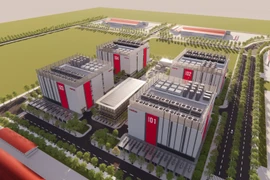
Vietnam is expected to follow a similar path, lifting total capacity and diversifying services as enabling conditions improve. The market has already seen a number of new developments announced or underway, including Viettel IDC’s data centre in Ho Chi Minh City with a designed capacity of up to 140 MW. Kinh Bac City has also partnered with AIC and VietinBank to develop a nearly 2 billion USD data centre in Tan Phu Trung Industrial Park, targeting up to 200 MW of IT Load. Meanwhile, the CMC Hyperscale Data Centre is being developed with an investment of more than 250 million USD, offering an initial capacity of 30 MW and expandable to 120 MW.
Trang Le, country head of JLL Vietnam, said: “Artificial intelligence has become infrastructure. Power, data and execution speed will separate leaders, and Vietnam has the momentum to join them.”

Demand fundamentals are supported by a young, digitally engaged population, high smartphone usage and heavy data consumption across social media, on‑demand video, e‑commerce and online gaming. Enterprises in finance, technology and services are accelerating digitisation, increasing needs for big‑data processing, internet‑of‑things connectivity and a move from on‑premise systems to outsourced models.

On the supply side, Vietnam offers competitive commercial electricity pricing in the regional context and a meaningful share of renewable energy from hydropower, wind and solar.

Power Development Plan VIII was approved in May 2023, with an implementation roadmap released in April 2024, targeting around 155 GW of national generation capacity, diversifying away from coal and progressing toward direct power purchase agreements for large users. International connectivity is improving through subsea cable landings and plans for two to four additional systems in the next five years.

In land markets, industrial and high‑tech parks near major cities are preferred; data centre‑ready sites often carry a 30–50% premium over standard industrial plots due to infill locations, dedicated substation requirements and fibre readiness.

The regulatory framework is moving in a favourable direction, JLL said.

The Telecommunications Law 2023 took effect on July 1, 2024, with provisions on data centre and cloud services effective from January 1, 2025, allowing 100% foreign ownership in data centre services under a lighter‑touch regime than traditional telecom. The Land Law 2024 (effective January 1, 2025) clarifies land categorisation for postal‑telecom‑IT works and allows foreign‑invested enterprises to acquire land‑use rights transfers within industrial parks and high‑tech zones under specified conditions.

Execution risks include power availability, transmission capacity, grid‑connection timelines, supply chains, and talent. Northern Vietnam has experienced periodic power tightness in recent dry seasons, underscoring the importance of transmission upgrades and diversified generation. Globally, grid‑connection queues exceeding four years and equipment lead times of about 33 weeks have prompted interim solutions such as battery energy storage and, in some markets, on‑site power. Vietnam will also need to scale a workforce trained to international standards in design, construction, and operations through targeted programmes and industry–university partnerships.

The outlook to 2030 is constructive but contingent on progress across power, land, subsea capacity, procedures, and talent. Commercially, high‑density AI workloads are poised to lead pricing dynamics, while retail co-location remains a bridge for enterprises transitioning from on‑premise to cloud, the company said./.

VNA
See more

The third “Vietnamese Goods Vitality” programme themed “Vietnamese youth proud of Vietnamese goods”. (Photo: VNA)

Vitality of Vietnamese Goods programme opens

The event, organised by the Agency for Domestic Market Surveillance and Development in coordination with the Hoan Kiem ward People’s Committee, TikTok Shop and the National Payment Corporation of Vietnam, aims to support enterprises in promoting and selling products while expanding digital distribution channels. It also forms part of activities marking the 95th anniversary of the Ho Chi Minh Communist Youth Union (March 26, 1931–2026).

Vietjet operates a modern, fuel-efficient fleet and continues to expand its international network, offering year-round promotions across destinations. (Photo: Vietjet)

Vietjet recognised among world’s best low-cost airlines with two international awards in 2026

The awards focus on in-flight product and passenger experience, using measurable onboard criteria. AirlineRatings experts highlighted Vietjet’s highly competitive fares, innovative approach, and products tailored to customer needs. The airline has maintained its title as the World’s Best Ultra Low-Cost Carrier since 2018 and has consistently ranked among the world’s leading low-cost airlines.

Noi Bai International Airport ranks 71st among the world’s 100 best airports. (Photo: VNA)

Noi Bai jumps to 71st in world’s top 100 airports: Skytrax

The airport climbed eight positions from 79th in 2025, marking one of its strongest performances to date. This is also the eighth consecutive year that Noi Bai, the capital’s main aviation gateway, has been named among the world’s top 100 airports.

Media analysis shows increased attention to new projects and product launches, accounting for 22.3% of discussions. (Photo: VNA)

Vietnam Report announces Top reputable real estate companies in 2026

The Top 10 reputable developers include Vinhomes, Nam Long Investment Corporation, Khang Dien House Trading and Investment JSC, Ecopark Group, Van Phu Invest, Taseco Land Investment JSC, Phat Dat Real Estate Development Corporation, DIC Corporation, BIM Land, and Phu Long Real Estate Corporation.

Tuna are purchased by traders at Tam Quan fishing port (Gia Lai). (Photo: VNA)

Flexible shifts made to sustain growth momentum in tuna export

According to data from the Vietnam Association of Seafood Exporters and Producers, total tuna export value in the period reached 129 million USD, equivalent to the same period last year. Although overall growth stood at 0%, the export landscape has undergone significant structural shifts in market distribution.

Business representatives attend the seminar. (Photo: VNA)

Karnataka emerges as new destination for Vietnamese businesses in India

Vietnamese enterprises are also shifting from trade to direct investment in India, with notable projects already underway in Tamil Nadu and Telangana. The Vietnam Trade Office pledged continued support and connectivity for Vietnamese investors exploring opportunities in Karnataka and the wider Indian market.

Shan Saeed, Global Chief Economist at Malaysia-based international real estate firm IQI Juwai. (Photo: VNA)

Vietnam remains resilient amid volatility of global energy market: Malaysian expert

Vietnam’s economy has nevertheless maintained strong macroeconomic fundamentals and resilience among emerging Asian economies. Supporting indicators included GDP growth of 8.02% in 2025, inflation at 3.31%, trade turnover exceeding 930 billion USD, a trade surplus of about 20 billion USD, and foreign exchange reserves reaching 85.4 billion USD.

Stepping up communication efforts and enforcement against IUU violations in Ca Mau. (Photo: VNA)

Ca Mau intensifies vessel management to prevent IUU fishing

The provincial People’s Committee has directed departments, sectors and localities to strengthen coordination among the Department of Agriculture and Environment, border guards, fisheries surveillance and public security forces to detect and handle violations early and from afar.

Delegates at the workshop to introduce a "Programme Loan for Green Transformation towards Green Growth and Climate Resilience”. (Photo: VNA)

New-generation ODA supports green transition: JICA

Kobayashi said that “new-generation ODA” represents a shift from the traditional focus on funding individual infrastructure projects towards a broader, more strategic approach that integrates policy support, market creation and technology connectivity.

Robots automatically transport materials from the warehouse to the production line at Maxport Limited Vietnam (Photo: VNA)

Ho Chi Minh City’s industrial sector draws wave of technology investment

Ho Chi Minh City targets a 10.5% increase in the Index of Industrial Production (IIP) in 2026. To this end, the sector will roll out measures such as promoting industrial trade in overseas markets, strengthening supply-demand linkages, supporting supporting industries to raise localisation rates, and organising supplier-matching events.