Authorities act to curb fuel cost impact on transport, construction

The top priority is to ensure uninterrupted transport services, in line with the Prime Minister’s directive to prevent fuel shortages from disrupting operations—especially in aviation, maritime, inland waterway and road transport, an official has said.

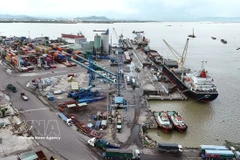
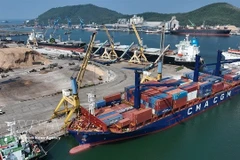
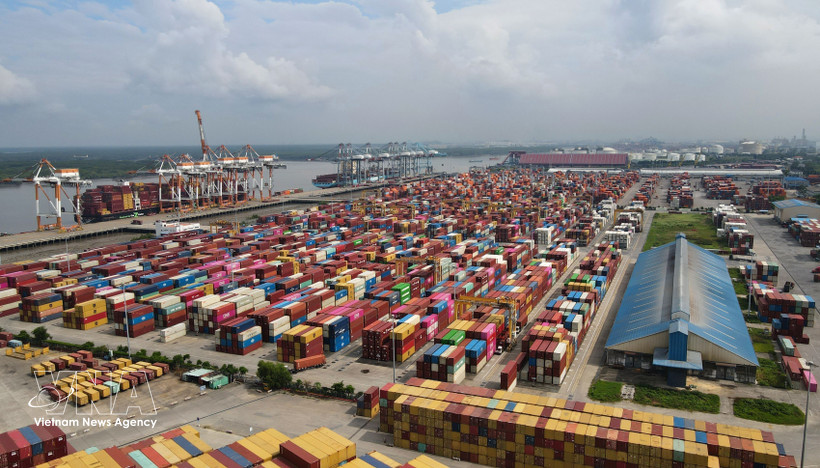
A view of Cai Mep - Thi Vai Port in Ho Chi Minh City (Photo: VNA)

Hanoi (VNA) – Vietnam’s construction and transport authorities are rolling out a range of measures to cushion the impact of rising global fuel prices, aiming to stabilise operations, contain cost increases and prevent supply chain disruptions, Deputy Minister of Construction Nguyen Xuan Sang has said.

In an interview granted to the Vietnam News Agency, the official outlined policy responses as fuel price volatility—fuelled by tensions in the Middle East—places mounting pressure on key economic sectors, particularly transport and construction, where fuel accounts for a significant share of operating costs.

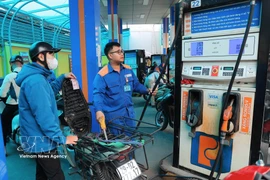
Sang noted that fuel typically makes up 15–35% of total transport costs and constitutes a major portion of expenses for machinery and equipment at construction sites. As prices rise and supply access becomes more uncertain, businesses are facing escalating costs, forcing many to raise service charges to offset the fuel price hikes.

Prolonged volatility could have even more gearter impacts, he added.

Among transport segments, aviation has been hit hardest, followed by maritime services. Aviation fuel prices have risen faster than those of other fuel types, putting airlines under financial strain. However, enterprises are making efforts to optimise operations and cut costs in order to limit fare increases and share the common burden.

Meanwhile, at major construction projects, although fuel prices have climbed, supply has been maintained thanks to priority allocation from suppliers. Current cost hikes are still within contingency budgets, allowing projects to proceed largely as planned, the official said.
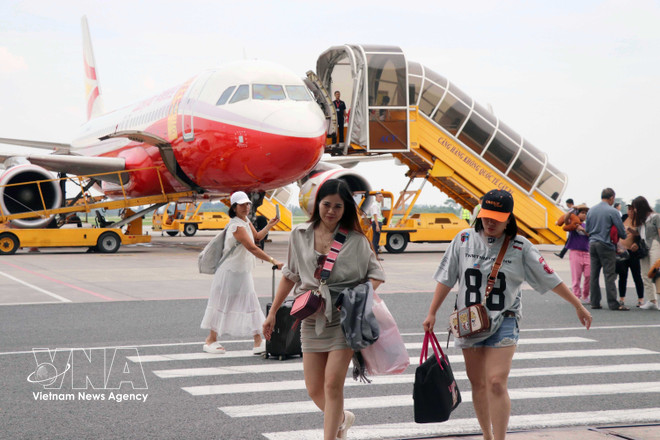
Passengers at Cat Bi International Airport in Hai Phong city (Photo: VNA)

Passengers at Cat Bi International Airport in Hai Phong city (Photo: VNA)

The Deputy Minister noted that to curb rising costs in aviation, the Ministry of Construction has instructed the Civil Aviation Authority of Vietnam (CAAV) to review cost structures and propose adjustments to the pricing framework. This framework will be flexibly updated in line with fluctuations in fuel prices, helping airlines adapt to changing market conditions.

Sang stressed that the top priority is to ensure uninterrupted transport services, in line with the Prime Minister’s directive to prevent fuel shortages from disrupting operations—especially in aviation, maritime, inland waterway and road transport.

The ministry has also directed relevant units to diversify fuel supply sources and develop appropriate stockpiling plans. At the same time, businesses are being urged to enhance fuel efficiency, cut unnecessary expenses and optimise operations to control overall costs.

In the transport sector, companies are striving to limit fare hikes. For services less affected by fuel costs, the ministry has encouraged operators to reduce prices to minimum levels where possible, helping ease pressure on more fuel-dependent segments, Sang noted.

He went on to say that under the direction of the Government and Prime Minister, decisive and flexible moves have been made in governing fuel prices. This has contributed to balancing supply and demand, stabilising fuel prices and managing transport costs.

He added transport operators, project management boards and contractors have actively implemented the Government’s directives, helping maintain stable operations across both transport and construction sectors. Overall, the situation remains under control, with transport fares largely kept in check.

While maritime freight rates have edged up, increases remain modest. Inland waterway transport costs have yet to rise. Although some localities have reported higher road transport expenses, businesses are making efforts to keep increases to a minimum while maintaining operations.

Regulatory agencies have also stepped up market monitoring and supervision to ensure stability in transport services, Sang said./.
VNA

See more

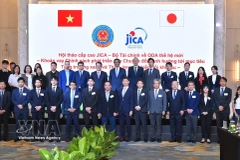
Delegates at the workshop to introduce a "Programme Loan for Green Transformation towards Green Growth and Climate Resilience”. (Photo: VNA)

New-generation ODA supports green transition: JICA

Kobayashi said that “new-generation ODA” represents a shift from the traditional focus on funding individual infrastructure projects towards a broader, more strategic approach that integrates policy support, market creation and technology connectivity.

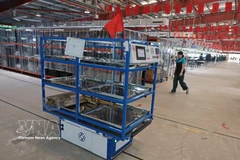
Robots automatically transport materials from the warehouse to the production line at Maxport Limited Vietnam (Photo: VNA)

Ho Chi Minh City’s industrial sector draws wave of technology investment

Ho Chi Minh City targets a 10.5% increase in the Index of Industrial Production (IIP) in 2026. To this end, the sector will roll out measures such as promoting industrial trade in overseas markets, strengthening supply-demand linkages, supporting supporting industries to raise localisation rates, and organising supplier-matching events.

At the tourism promotion conference for the Mekong Delta held in Malaysia on March 18. Photo: VNA)

Mekong Delta tourism targets Malaysian market

To truly attract Malaysian visitors, tourism services in the Mekong Delta must pay close attention to cuisine. Malaysian tourists, particularly Muslims, are highly concerned about the availability of Halal food. This is considered a “key” for Mekong Delta provinces to effectively welcome Muslim travellers.

FrieslandCampina’s plant – one of Asia's pioneering facilities in adopting a green production model. (Photo: VNA)

Green exports reshape rules of global trade

Vietnam is gradually recalibrating its overseas market development strategy to align export expansion with sustainable development goals. Market development should not only sustain export growth but also help unlock new growth spaces while strengthening the long-term sustainability of exports.

Overseas remittances are viewed as an important resource for socio-economic development. (Photo: VNA)

Ho Chi Minh City steers remittances into technology, innovation

Ho Chi Minh City targets mobilising at least 500 billion VND from remittances and social resources by 2026, while supporting at least 100 enterprises in accessing preferential credit. By 2027, the figure is expected to reach at least 1 trillion VND, with the number of supported firms doubling, including at least 30% of projects in green technology, energy efficiency, and emissions reduction.

A key highlight of the new social housing framework is a range of incentives designed to attract private sector participation. (Photo: VNA)

New policy framework boosts social housing development

The adjusted decree provides detailed and synchronised regulations covering the entire lifecycle of social housing projects, from project preparation and investor selection to incentive mechanisms, as well as procedures for sale, lease-purchase and operational management. It also applies to worker accommodation and housing for armed forces personnel.

The domestic market, with over 100 million people, holds great potential for Vietnamese businesses. (Photo: VNA)

“Vietnamese Goods Vitality” event boosts domestic consumption, digital outreach

The event is among a series of initiatives planned for 2026 to stimulate the consumption of locally made products. Beyond serving as a showcase for goods, it is designed as a platform connecting businesses, consumers and key opinion leaders (KOLs), thereby enhancing the visibility of Vietnamese brands amid rapid digital transformation.