Hanoi (VNA) – The semiconductor industry is identified as a strategic one capable of driving economic breakthrough and helping Vietnam achieve double-digit growth in the coming years; and recent policies, investment and manpower development efforts are showing the country's determination to engage more deeply in this sector's global value chain.
The sector has received strong attention from the Government, ministries, sectors and enterprises following the Politburo’s Resolution No. 57-NQ/TW on making breakthroughs in science – technology development, innovation and national digital transformation, as well as its inclusion in the lists of strategic technologies and strategic technology products under a decision issued by the Prime Minister in June 2025.
Gradual integration into value chain but bottlenecks remain
At the first meeting of the National Steering Committee for Semiconductor Industry Development this year, Deputy Prime Minister Nguyen Chi Dung said Vietnam is on the right track and has established initial foundations though the field remains highly challenging that requires strong, coordinated and long-term measures to secure sustainable development.
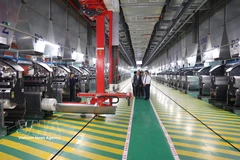
Vietnam has gradually joined the global semiconductor value chain, covering design, manufacturing, and packaging and testing. The country is now home to more than 50 chip design firms employing about 7,000 engineers while total foreign direct investment (FDI) in the sector has exceeded 14.2 billion USD across 241 projects.
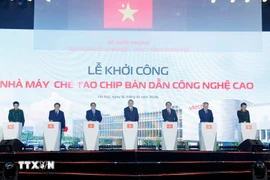
The packaging and testing segment has seen notable progress with several large-scale projects, and domestic firms are improving their design and engineering capabilities. In early 2026, Vietnam broke ground on its first high-tech semiconductor fabrication plant, marking a step towards mastering core technologies.
Vietnam also has over 240 universities training around 134,000 engineering students annually, including roughly 6,000 microchip design engineers.
However, the industry still faces major bottlenecks, including a shortage of high-quality human resources, limited research and development capacity, inadequate infrastructure, and an underdeveloped industrial ecosystem. While domestic firms’ participation remains modest, the sector continues to rely heavily on FDI due to high investment costs and risks, according to the Deputy PM.
Vietnam aims to achieve more than 25 billion USD in semiconductor revenue by 2030 and raise the domestic value-added rate to 10–15%, posing significant pressure on development progress and quality.
Amid rapid advances in artificial intelligence and digital technologies, global demand for semiconductors is soaring, creating both opportunities and competition pressure.
Policy push to unlock growth
Minister of Science and Technology Nguyen Manh Hung described the semiconductor industry as a cornerstone of the digital economy and key to enhancing technological self-reliance, adding that to obtain fast and sustainable development, Vietnam must master core technologies, of which the semiconductor industry has a particularly important role to play.
Deputy PM Dung stressed the sector's 2026 action motto of “Decisive implementation – Concerted coordination – Focused priorities – Tangible results”, with ministries, sectors and localities already rolling out measures.
Efforts are underway to improve the legal framework and introduce incentives in taxation, finance and investment to attract high-tech projects. Policies such as long-term tax incentives, land rent exemptions and support for workforce development are being implemented.
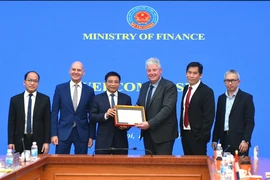
The Ministry of Science and Technology is coordinating strategy implementation, promoting the research and development of core technologies, and boost linkages among businesses, research institutes and universities. Meanwhile, the Ministry of Finance is working to ensure resources and perfect financial policies, the Ministry of Industry and Trade developing the electronics industry and energy infrastructure, the Ministry of Foreign Affairs fostering cooperation with international partners, and the Ministry of Education and Training stepping up high-quality manpower development.
Localities are urged to ready infrastructure, including semiconductor industry centres, and improve the investment climate. In addition, domestic firms are encouraged to strengthen their technological capacity, invest more in research and development, and engage more deeply in the value chain, with large enterprises holding the key role in guiding the ecosystem
Priority will be given to the steps Vietnam is strong at such as chip design and packaging – testing, with gradual progress towards mastering fabrication. Expanding the domestic market by increasing the use of locally designed and produced chips is also seen as critical to ensuring stable demand.
In terms of human resources, it is suggested that training models should be strongly reformed, links among State agencies, training institutions and enterprises tighened, and attractive policies devised to draw international and overseas Vietnamese experts.
As global technology competition intensifies, developing the semiconductor industry will require sustained efforts as well as close alignment between the institutional framework and the market to help Vietnam become a key link in the global value chain./.
VNA