Resolution 57 charts directions for Vietnam’s technology ecosystem

Vietnam's sci-tech sector must evolve from a manufacturing base toward mastering technologies and ultimately developing original products independently, which requires shifting away from outsourcing and assembly models to one where domestic scientists lead in design, development and ownership of core technologies.

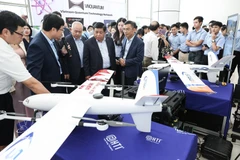
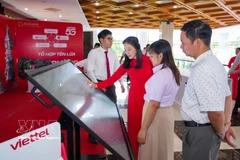
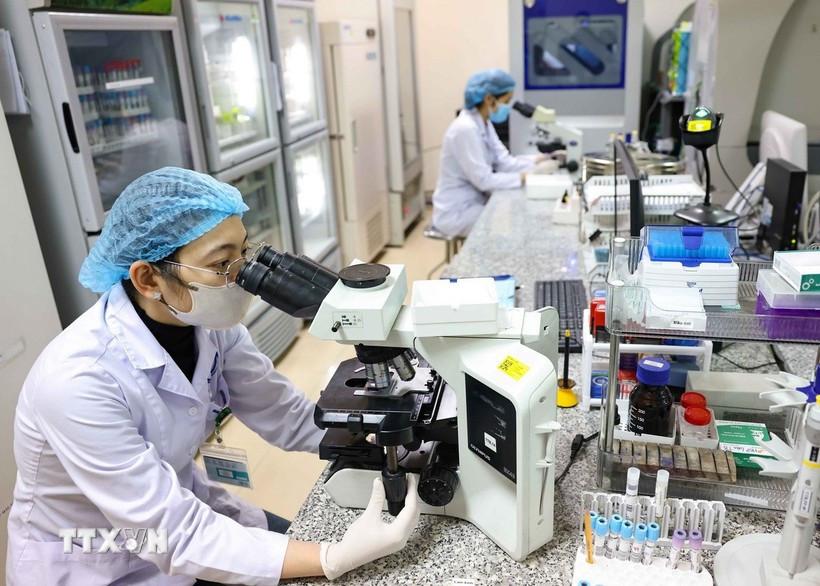
Illustrative image (Photo: VNA)

Hanoi (VNA) – The Politburo’s Resolution No. 57-NQ/TW, issued on December 22, 2024, on breakthroughs in science – technology development, innovation and national digital transformation is charting key directions for Vietnam’s emerging sci-tech ecosystem.

Research foundation for technology ecosystem

Prof. Dr Nguyen Van Noi, scientific advisor to the key lab for advanced materials in green development and former Rector of the University of Science under the Vietnam National University, Hanoi, said the resolution sets sci-tech development goals while creating momentum for research facilities to boost innovation capabilities and gradually lay technological groundwork for digital transformation and broader socio-economic progress.

Guided by these orientations, the University of Science has been steadily building a relatively strong research ecosystem, with key laboratories serving as focal points for research, technology development and quality talent training.

Noi pointed to concrete gains: The university published 647 international scientific papers last year. On the intellectual property (IP) front, it secured 10 patents and saw 64 valid IP applications accepted over the same period.

Vietnam's sci-tech sector must evolve from a manufacturing base toward mastering technologies and ultimately developing original products independently, he said. That requires shifting away from outsourcing and assembly models to one where domestic scientists lead in design, development and ownership of core technologies.

Achieving this demands that flagship laboratories and university research groups should sustain their focus on foundational technology while deepening ties with top global research centres and scientists, the expert opined.

In recent years, he went on, research groups at the University of Science, including the key lab for advanced materials in green development, have delivered notable results. Beyond fundamental research, the lab is advancing applied technologies with real-world relevance, especially in those related to green and sustainable development.

A critical next step is repositioning key laboratories as connectors among scientists, businesses and policymakers. Tighter integration would accelerate the transfer of research outputs into production, closing the persistent divide between laboratory findings and commercial application.

At the policy level, the ongoing refinement of strategic technology policies is creating supportive conditions for university research. Prior to the issuance of new orientations, the PM signed several decisions pinpointing priority technology sectors. Decision No. 1131, in particular, identifies 11 strategic technology groups and 35 strategic technology product groups, giving universities and labs a basis to build long-term research plans and concentrate resources on high-potential areas.

These advances are opening up opportunities for technology companies to engage more intensively in applying and commercialising scientific outputs, thus shaping technological platforms that underpin governance and economic expansion, Noi said.

Technology firms help with shaping digital infrastructure

Pham Van Tho, Chairman of the Vietnam Anti-Counterfeiting Technology JSC (ACTIV), said Resolution 57 clearly maps Vietnam's technological path ahead. By 2030, the country targets modern digital infrastructure and progressive mastery of core technologies, including artificial intelligence, Internet of Things, big data, cloud computing, blockchain, semiconductors and electronics.

ACTIV has rolled out its TrueData traceability solution, paired with a product authentication system that manages data end-to-end across supply chains. The platform rests on three pillars: RFID chips for product identification and data storage, AI for supply chain data collection and analysis, and blockchain to guarantee tamper-resistant, transparent traceability records.

Designed as an open platform, it can integrate with the National Traceability Portal, enabling regulators, companies and consumers to verify product details seamlessly once connectivity is in place, according to Tho.

Looking forward, wider rollout of traceability technologies is considered vital, especially in agriculture, food and export sectors facing rising global requirements for transparency.

To make it effective, he noted, stronger cooperation in digital infrastructure between the State and enterprises is needed. The State can focus on building standards and regulatory frameworks while enterprises deliver technology solutions and services based on these foundations.

Standardising data and technical standards is equally critical to ensure interoperability among technological systems. With unified standards in place, domestic firms will gain stronger footing to build solutions compatible with the national digital infrastructure, Tho said./.

VNA

See more

Professor Geert Angenon of Vrije Universiteit Brussel (Photo: VNA)

European experts highlight potential for AI cooperation with Vietnam

Experts believe that as demand for technological innovation grows and international partnerships expand, Vietnam has big opportunities to deepen cooperation with European partners in high-tech agriculture, healthcare, digital transformation and artificial intelligence.

A seminar on AI use hosted by the Vietnam Intellectual Association in the UK and Ireland in February 2026. (Photo: VNA)

AI – unmissable opportunity for Vietnam: Experts

AI also emerges as a key enabler for Vietnam's ambition to build financial and technology hubs. Applications can boost efficiency, automate workflows, cut costs, and sharpen data analytics, which are essential pillars of a modern financial system.

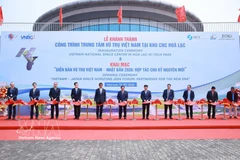
Prime Minister Pham Minh Chinh (C) and delegates cut a ribbon to innaugurate the Vietnam National Space Centre (VNSC) at Hoa Lac Hi-Tech Park in Hanoi on March 13 (Photo: VNA)

PM calls for accelerated space technology development in Vietnam

Vietnam aims by 2030 to achieve a mid-level position in space science and technology development within Southeast Asia, and after 2030 to build national capabilities to independently develop satellite technologies and apply space data to address global challenges and national security needs.

Students control robots at the FPT Schools AI & Robotics Challenge (Photo: VNA)

National AI ethics framework issued to guide safe, responsible rollout

According to the circular taking effect on March 10, the framework imposes specific obligations on entities and individuals involved in AI activities. In particular, the AI use must ensure safety, reliability, while preventing harm to human life, health, dignity, honour, and mental well-being.

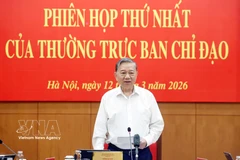
Party General Secretary To Lam speaks at the first meeting in 2026 of the Central Steering Committee for the Development of Science, Technology, Innovation and Digital Transformation on March 12. (Photo: VNA)

Party chief urges stronger, result-oriented implementation of Resolution 57

Turning science, technology, innovation and digital transformation into the main drivers of a new growth model requires substantial efforts. In the coming period, the focus must shift from merely carrying out tasks to delivering tangible and measurable outcomes, while concentrating resources on addressing strategic national challenges, said Party General Secretary To Lam.

Vietnamese Ambassador to the US Nguyen Quoc Dung addresses the forum. (Photo: VNA)

High-level forum advances Vietnam–US technological cooperation

The ambassador highlighted that Vietnam and the US are highly complementary. Vietnam offers a dynamic economy, a young and increasingly skilled workforce and rapidly growing innovation ecosystem, while the US offers frontier technologies, world class research institutions, capital and leading global companies.

Participants at the first meeting of the National Steering Committee on Semiconductor Industry Development in 2026 (Photo: VNA)

Vietnam becomes vital player in global semiconductor value chain: Deputy PM

Vietnamese companies have also gradually joined the global value chain by improving their capabilities in chip design, production and related services. Notably, a semiconductor chip manufacturing plant project developed by the Viettel Military Industry and Telecoms Group (Viettel) has already commenced.

Young voters in Ho Chi Minh City scan an QR code to participate in an online quiz about the Election Law. (Photo: VNA)

Digital technology helps enhance transparency, trust in elections

The use of technology in this election is not merely a short-term measure but reflects Ho Chi Minh City’s broader commitment to comprehensive digital transformation and smart urban governance, reinforcing public trust in the democratic process and administration.

Information about candidates for the Khanh Hoa provincial People's Council for the 2026-2031 term is published on digital information channels, making it convenient for voters to explore. (Photo: VNA)

Technology breakthrough ensures voters' access, rights

Digital platforms such as the national population database and the VNeID application have been widely applied to streamline election management and improve accuracy in voter registration, helping citizens exercise their civic rights more conveniently.

Mang But commune area in Quang Ngai province. (Photo: VNA)

3.9-magnitude earthquake recorded in Mang But, Quang Ngai

According to the Vietnam Earthquake Information and Tsunami Warning Centre under the Institute of Earth Sciences, the tremor occurred at 11:35:06 (Hanoi time) with coordinates of 14.864 degrees North latitude and 108.210 degrees East longitude, at a depth of about 8.1 km. The event was assessed as having a level-0 disaster risk.