AI – unmissable opportunity for Vietnam: Experts

AI also emerges as a key enabler for Vietnam's ambition to build financial and technology hubs. Applications can boost efficiency, automate workflows, cut costs, and sharpen data analytics, which are essential pillars of a modern financial system.

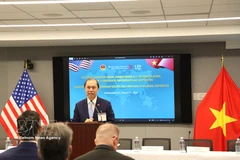
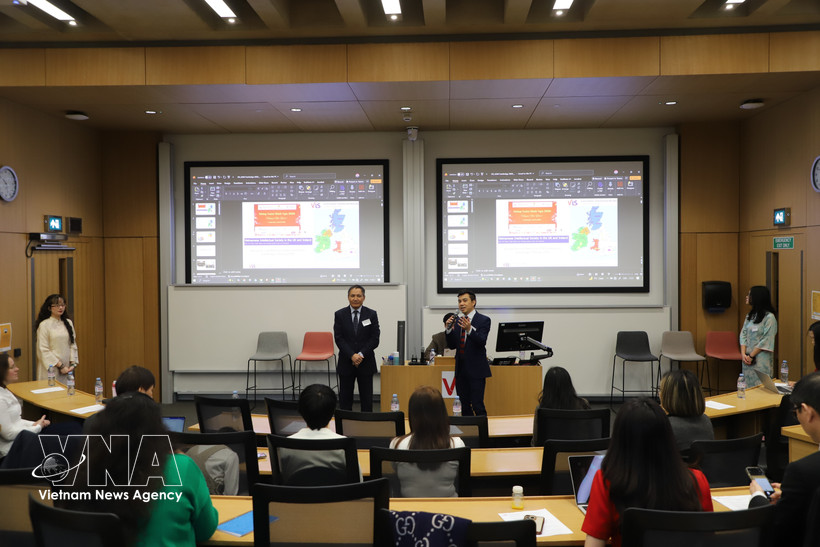
A seminar on AI use hosted by the Vietnam Intellectual Association in the UK and Ireland in February 2026. (Photo: VNA)

London (VNA) – With the Law on Artificial Intelligence entering into force on March 1, 2026, the debate has moved beyond whether to embrace the technology to how best to develop and deploy it in a systematic, effective manner tailored to national circumstances.

Technology experts from the UK, Ireland, and Denmark see Vietnam as well-positioned to advance AI, provided it acts decisively and crafts a suitable strategy.

Peter Bom, CEO of Denmark-based SMT Data, told the Vietnam News Agency’s reporters in London that the UK benefits from deep collaboration between universities and academia, producing a wealth of research that extends beyond current capabilities to projections five to ten years ahead. Vietnam stands to gain considerably by engaging proactively and adapting these insights to its local context.

Beyond research, AI use is prevalent in European corporate sectors where both triumphs and setbacks offer valuable lessons. According to Bom, there are numerous examples of companies that have successfully applied AI, experiences from which Vietnam can certainly learn.

According to experts, effective AI adoption requires a well-defined strategy, especially around data governance and identification of goals. Bom underscored the need to embrace AI while enabling firms to leverage it fully, backed by explicit policies. This starts with pinpointing precise goals and the value AI can deliver, alongside tight coordination to ensure data consistency, reliability, and verification from diverse sources.

Prof. Long Tran-Thanh from the University of Warwick noted Vietnam's solid progress relative to Southeast Asia, though a distance remains from global tech leaders

In Vietnam’s current AI landscape, the finance and banking sector leads in effective application. Yet substantial untapped potential exists in health care, education, and agriculture, which are tied to practical challenges in developing countries.

Long lauded the UK as a premier global AI research centre and a strong potential partner of Vietnam, particularly in AI training and foundational studies.

On resources for AI growth, Assoc. Prof. Dr Harry Nguyen from Ireland’s University College Cork described Vietnam as one of the proactive nations ready to capitalise on the AI surge, with notable strengths in workforce scale and quality.

Recent years have seen Vietnam establish numerous universities and AI research centres, cultivating a new cohort of young researchers and launching new projects. Specialised conferences and journals are proliferating, deepening integration into global research networks.

Overseas Vietnamese intellectuals represent another vital asset, Nguyen said, adding they always look toward Vietnam with a keen interest in contributing to its tech and AI progress.

For AI strategy, Nguyen identified quality data as the cornerstone. Building, collecting, and managing data, paired with developing large and smaller language models attuned to Vietnamese culture, will enable effective rollout across private and public sectors.

AI also emerges as a key enabler for Vietnam's ambition to build financial and technology hubs. Applications can boost efficiency, automate workflows, cut costs, and sharpen data analytics, which are essential pillars of a modern financial system.

Against that backdrop, AI transcends a passing technological fad to serve as a powerful engine for innovation and sharper economic competitiveness in the years to come./.
VNA

See more

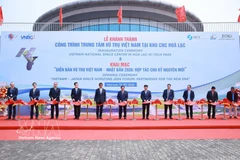
Prime Minister Pham Minh Chinh (C) and delegates cut a ribbon to innaugurate the Vietnam National Space Centre (VNSC) at Hoa Lac Hi-Tech Park in Hanoi on March 13 (Photo: VNA)

PM calls for accelerated space technology development in Vietnam

Vietnam aims by 2030 to achieve a mid-level position in space science and technology development within Southeast Asia, and after 2030 to build national capabilities to independently develop satellite technologies and apply space data to address global challenges and national security needs.

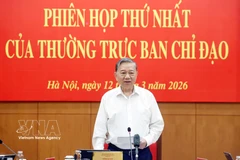
Party General Secretary To Lam speaks at the first meeting in 2026 of the Central Steering Committee for the Development of Science, Technology, Innovation and Digital Transformation on March 12. (Photo: VNA)

Party chief urges stronger, result-oriented implementation of Resolution 57

Turning science, technology, innovation and digital transformation into the main drivers of a new growth model requires substantial efforts. In the coming period, the focus must shift from merely carrying out tasks to delivering tangible and measurable outcomes, while concentrating resources on addressing strategic national challenges, said Party General Secretary To Lam.

Vietnamese Ambassador to the US Nguyen Quoc Dung addresses the forum. (Photo: VNA)

High-level forum advances Vietnam–US technological cooperation

The ambassador highlighted that Vietnam and the US are highly complementary. Vietnam offers a dynamic economy, a young and increasingly skilled workforce and rapidly growing innovation ecosystem, while the US offers frontier technologies, world class research institutions, capital and leading global companies.

Participants at the first meeting of the National Steering Committee on Semiconductor Industry Development in 2026 (Photo: VNA)

Vietnam becomes vital player in global semiconductor value chain: Deputy PM

Vietnamese companies have also gradually joined the global value chain by improving their capabilities in chip design, production and related services. Notably, a semiconductor chip manufacturing plant project developed by the Viettel Military Industry and Telecoms Group (Viettel) has already commenced.

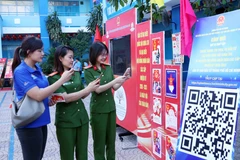
Young voters in Ho Chi Minh City scan an QR code to participate in an online quiz about the Election Law. (Photo: VNA)

Digital technology helps enhance transparency, trust in elections

The use of technology in this election is not merely a short-term measure but reflects Ho Chi Minh City’s broader commitment to comprehensive digital transformation and smart urban governance, reinforcing public trust in the democratic process and administration.

Information about candidates for the Khanh Hoa provincial People's Council for the 2026-2031 term is published on digital information channels, making it convenient for voters to explore. (Photo: VNA)

Technology breakthrough ensures voters' access, rights

Digital platforms such as the national population database and the VNeID application have been widely applied to streamline election management and improve accuracy in voter registration, helping citizens exercise their civic rights more conveniently.

Mang But commune area in Quang Ngai province. (Photo: VNA)

3.9-magnitude earthquake recorded in Mang But, Quang Ngai

According to the Vietnam Earthquake Information and Tsunami Warning Centre under the Institute of Earth Sciences, the tremor occurred at 11:35:06 (Hanoi time) with coordinates of 14.864 degrees North latitude and 108.210 degrees East longitude, at a depth of about 8.1 km. The event was assessed as having a level-0 disaster risk.

Illustrative photo: AFP

AI Law takes effect, anchors national governance framework

Taken together, the new AI Law and its implementation roadmap not only complete Vietnam’s legal architecture for AI, but also lay a structured foundation for risk management, innovation and ecosystem development, aiming to ensure coherent and effective enforcement in the years ahead.

Viettel Networks and Ericsson sign their cooperation agreement on the sidelines of the Mobile World Congress 2026. (MWC 2026)

Viettel Networks, Ericsson partner to advance autonomous telecom networks

Under a newly signed cooperation agreement, Ericsson will provide network automation platforms and artificial intelligence (AI) technologies while working with Viettel to conduct real-world trials. The collaboration marks a new step forward, combining Viettel’s large-scale network operation expertise with Ericsson’s strengths in automation solutions and advanced technologies.