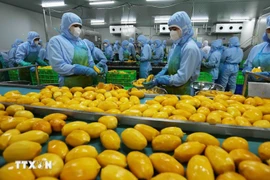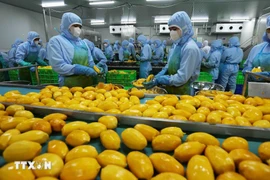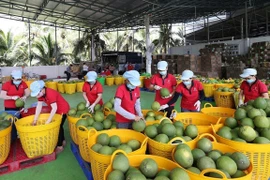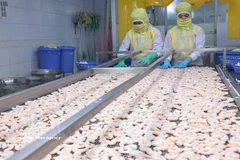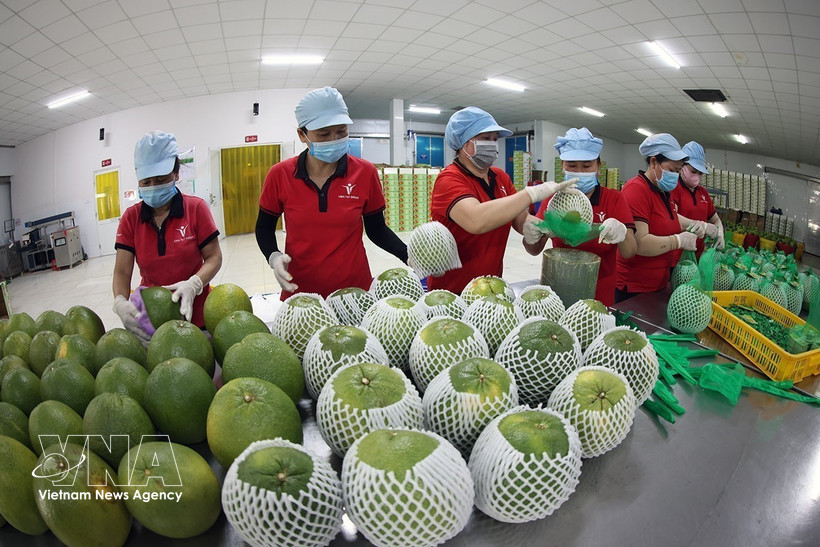
Hanoi (VNA) - Vietnam’s fruit and vegetable exports have entered 2026 on a strong growth trajectory. Alongside market expansion, the sector is reinforcing key foundations, including traceability, management of planting area codes, deep processing, and the development of raw material zones.
These efforts are expected to help the industry overcome increasingly stringent technical barriers and move closer to its export target of 10 billion USD.
According to the Ministry of Agriculture and Environment, export turnover of fruits and vegetables reached approximately 1.09 billion USD in the first two months of 2026, up 59.5% year-on-year. China remained the largest market, accounting for 58.3% of total exports, followed by the US and the Republic of Korea with shares of 7.5% and 3.9%, respectively.
Growth across major markets has been robust. In January alone, exports to China more than doubled compared to the same period last year, while shipments to the US rose by over 56% and to the RoK by nearly 36%. This underscores sustained global demand for Vietnamese produce despite ongoing fluctuations in international trade.
Dang Phuc Nguyen, Secretary General of the Vietnam Fruit and Vegetable Association, noted that beyond scale expansion, product quality and compliance with international standards have improved markedly. The management of planting area and packing facility codes is becoming more systematic, enhancing traceability and better meeting import market requirements.
As a result, the number of shipments flagged for pesticide residue violations in demanding markets such as China, the US and the RoK has declined significantly, reducing trade risks and strengthening the reputation of Vietnamese agricultural products.
Another positive trend is the growing share of processed fruit and vegetable products. Items such as dried fruits, frozen produce and juices have recorded growth of over 15% compared to 2021. Expanding deep processing helps reduce reliance on fresh exports while increasing added value and resilience to market volatility.
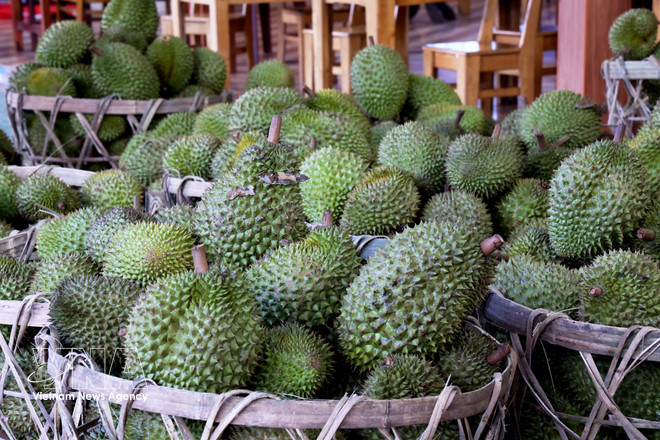
Durian continues to serve as a key growth driver. According to Nguyen, Vietnam’s durian output is expected to rise by 10–12% this year. Notably, enterprises are shifting their market approach by boosting exports of processed durian products, including frozen, segmented and pureed forms, to high-standard markets such as Japan and the US.
The ministry is currently piloting a national agricultural traceability system, initially focusing on durian. Though still in its early stages, the initiative is expected to establish a transparent data chain linking production, harvesting, processing, packaging and export.
Nguyen Manh Hung, General Director of Nafoods Group, emphasised that building complete value chains and advancing deep processing are key to enhancing competitiveness. He highlighted the success of Vietnam’s passion fruit industry, which has grown into a leading global production hub in the Central Highlands.
Meanwhile, Deputy Minister of Agriculture and Environment Tran Thanh Nam stressed that global agricultural markets are increasingly shaped by sustainability, emissions reduction and environmental standards. Compliance with traceability requirements and technical regulations will be essential for maintaining and expanding export markets.
He added that developing stable, high-quality raw material zones remains fundamental to advancing deep processing and ensuring sustainable export growth, calling for closer coordination between local authorities and businesses to secure long-term supply chains./.