Vietnam’s fruit, vegetable sector poised to hit 10 billion USD in exports

On the back of continuous double-digit growth for years, and as Vietnam now ranks among the world’s 25 largest trading nations, VINAFRUIT believes export revenue could reach 10 billion USD as early as 2026.

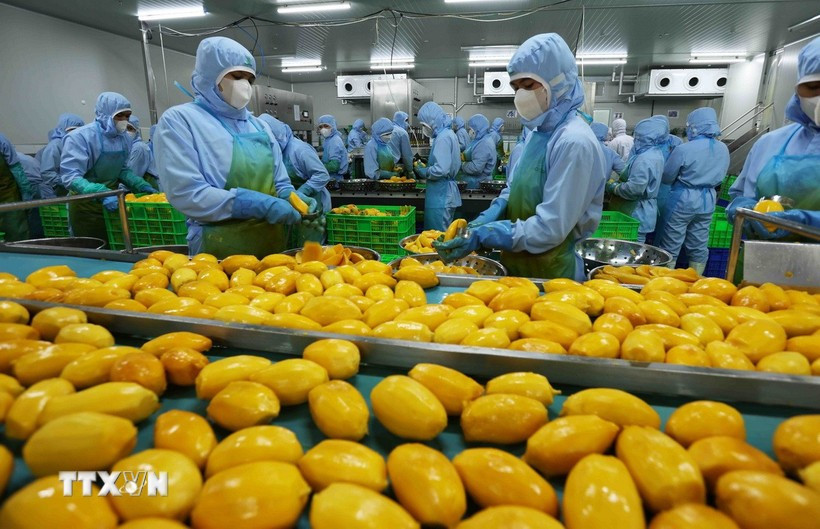
Workers process mango for export to the US, Europe, the Republic of Korea, and Japan at the An Giang Fruit-Vegetables & Foodstuff Joint Stock Company in Lam Dong province. (Photo: VNA)

Hanoi (VNA) – With export turnover continuing to rise sharply and far exceeding initial forecasts in 2025, Vietnam’s fruit and vegetable sector is expected to soon record 10 billion USD in overseas shipments if the current momentum is sustained and structural weaknesses addressed, experts said.

According to the Vietnam Fruit and Vegetable Association (VINAFRUIT), total export earnings for 2025 are estimated at 8–8.4 billion USD, up 1.3–1.4 billion USD from 2024, equivalent to growth of 18%. This is an impressive achievement amid continued volatility in global trade, indicating the improving competitiveness of Vietnamese farm produce in international markets.

The strong performance stems from a mix of favourable factors. Demand in major markets such as China, the US, the Republic of Korea, Japan and the EU has recovered significantly. At the same time, more Vietnamese fruits have been granted official export access to demanding markets, opening fresh room for growth.

Nguyen Thanh Binh, Chairman of VINAFRUIT, said export expansion in recent years has moved beyond seasonal surges to form a clear upward trend. A stronger focus on quality, traceability and compliance with market standards is helping Vietnamese produce secure a firmer foothold in global supply chains.

China remains the largest export market, accounting for a substantial share of total turnover. However, it also presents the most challenges to the industry, he noted.

Despite a strong rise in export value, shipments to China still face vulnerabilities. While domestic production – consumption links remain fragile, fragmented and small-scale farming driven by short-term market signals is still common. When the market fluctuates or import policies change, the supply chain is exposed to disruption.
sr.jpg
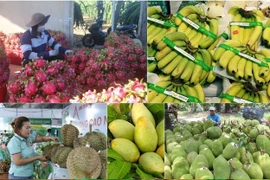
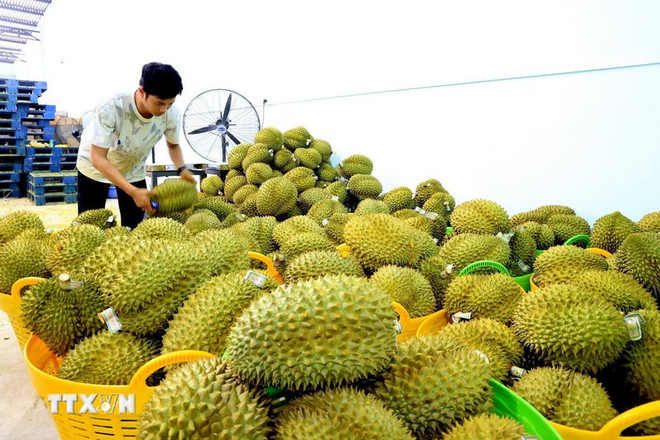
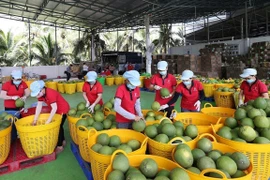
More Vietnamese fruits have been granted official export access to demanding markets, opening fresh room for growth. (Photo: VNA)

Dr Nguyen Dinh Bich, an agricultural economics expert, held that the sector’s biggest weakness lies in production organisation. While growth is rapid, it is not yet firmly rooted. Without stronger linkages from raw-material zones through processing to distribution, the industry will remain vulnerable if major markets tighten standards or amend regulations.

Lessons from past congestion at border gates therefore remain highly relevant, especially as importing countries continue to raise requirements on quarantine, food safety and sustainability.

Towards the 10-billion-USD target

Despite these challenges, the long-term outlook remains positive. On the back of continuous double-digit growth for years, and as Vietnam now ranks among the world’s 25 largest trading nations, VINAFRUIT believes export revenue could reach 10 billion USD as early as 2026.

Many enterprises consider this target feasible if existing bottlenecks are addressed. A representative of the Tien Giang Vegetables and Fruits Joint Stock Company (VEGETIGI) said there remains substantial potential, particularly for processed goods and premium fresh fruit. However, businesses need stable policies on raw-material zones, logistics and market access.

Logistics costs – particularly cold-chain logistics – still account for a large share of expenses, undermining competitiveness compared with regional peers.

Experts stressed the need for comprehensive and long-term solutions, including concentrated farming zones, standardised production unit codes and certified packing facilities aligned with market demand. Diversifying export markets and increasing the share of processed goods are also seen as essential.

Binh added that continued State support in market access, standards harmonisation and credit and logistics infrastructure will be key to ensuring sustainable growth. Crucially, the 10-billion-USD goal must be tied to the quality and resilience of growth since the sector remains vulnerable to climate, disease and market fluctuations./.
VNA

See more

Hai Phong continues to reap the benefits of LG’s industrial ecosystem and the VinFast complex, alongside its role as a leading logistics hub in northern Vietnam. (Photo: VNA)

GRDP growth gains momentum across provinces in 2025

Hanoi ranked 16th nationwide with GRDP growth of 8.16%, while HCM City placed 21st at 7.53%. Despite falling outside the top 10, these two major cities, together with Hai Phong, Dong Nai and Bac Ninh, continued to act as core pillars of the national economy, making the largest contributions to overall GDP growth. As the five largest local economies, they accounted for 55.4% of national growth in 2025.

Illustrative image (Photo: VNA)

Vietnam’s real estate M&As shift toward long-term strategies

While the headline values of announced deals have tended to remain modest, these figures do not fully reflect the scale of actual capital commitments as investor focus is increasingly shifting towards development opportunities and long-term, strategic partnerships.

At an auto factory in Thanh Hoa province (Photo: VNA)

Business capital surges 77.8% on new, reactivated firms in 2025

The report said 102,300 businesses roared back to life last year, up a robust 34.3% from the previous year. The total number of new and reactivated firms reached 297,500, up 27.4% year on year. That translates to roughly 24,800 firms entering or re-entering the market every month, with new ventures maintaining an average registered capital of 9.8 billion VND, steady from 2024.

Workers check products before packaging at Toyo Solar Co., Ltd., a 100% Japanese-owned solar panel manufacturer in Cam Khe Industrial Park, Phu Tho province. (Photo: VNA)

FDI inflows into Vietnam exceed 38 billion USD in 2025

The figures were released at a press conference on January 5, announcing Vietnam’s socio-economic statistics for the fourth quarter and the whole of 2025. Notably, disbursed FDI reached an estimated 27.62 billion USD, a year-on-year increase of 9% and the highest level recorded over the past five years.

Labour productivity across the entire economy is estimated to reach 245 million VND per worker in 2025. (Photo: VNA)

Vietnam posts 8.02% GDP growth in 2025 amid challenges

According to the NSO, agriculture, forestry and fisheries grew 3.78% in 2025, contributing 5.3% to overall growth. Industry and construction expanded 8.95%, accounting for 43.62%, while the services sector rose by 8.62%, contributing the largest share at 51.08%.

Vietnam's garment and textile exports enjoy growth of around 10% in 2025 to over 1.3 billion USD. (Photo: VNA)

Vietnam’s garment-textile sector makes strong inroads into Canadian market

At the international textile and apparel exhibition held in Toronto in 2025, products from two Vietnamese firms – Bao Minh Textile JSC and Viet Hong Textile Dyeing JSC – attracted considerable interest from Canadian and North American buyers. Viet Hong showcased its signature denim fabrics, while Bao Minh focused on mid- to high-end yarn and fabric products produced through a fully integrated manufacturing chain.

Containers of goods are handled at Nanning International Railway Port before being transported to Vietnam by cross-border trains. (Photo: VNA)

China – Vietnam freight train volume hits record

Cargo on this route currently accounts for 73% of the total volume exported to Vietnam by rail and 86% of the container volume shipped by this means of transport, up 5 percentage points and 2 percentage points from 2024, respectively.