Hanoi (VNS/VNA) – Fragrant rice exports are continuing to gain traction in the European market, with authorities certifying more than 380 tonnes of shipments eligible for preferential tariffs under the EU – Vietnam Free Trade Agreement (EVFTA).
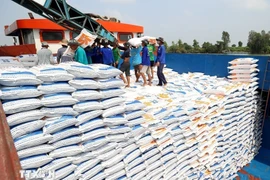
The Department of Crop Production and Plant Protection under the Ministry of Agriculture and Environment has issued certificates of authenticity for four batches of fragrant rice destined for the EU, totalling over 380 tonnes. The certification confirms that the rice varieties meet EU requirements and allows exporters to benefit from tariff preferences under the EVFTA.
The latest approvals underscore the growing presence of Vietnamese rice in one of the world’s most demanding markets.
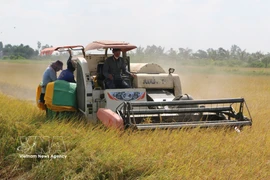
According to the department, three shipments – totaling 364.52 tonnes – were certified for the HCM City-based Ocean Blue Import-Export Co Ltd. The consignments consist of OM5451 fragrant rice with 5% broken grains, cultivated in An Giang province.
Of the total volume, 294 tonnes will be exported to the Czech Republic, while 20.52 tonnes are bound for Germany and 50 tonnes for France.
Meanwhile, Hoang Minh Nhat Joint Stock Company in Can Tho city received certification for a separate shipment of 23.95 tonnes of Jasmine 85 fragrant rice, also with 5% broken grains. The rice was grown in Bac Lieu province, now administratively part of Ca Mau province, and will be exported to Poland.
Under EU regulations, imported fragrant rice must be accompanied by a certificate verifying the variety to ensure that it belongs to the list approved by the European Commission. The requirement is a key condition for Vietnamese fragrant rice to qualify for tariff preferences under the EVFTA.
Vietnamese regulations also impose strict controls on the production chain. Under Government Decree No 103/2020/ND-CP, exporters must demonstrate clear documentation on seed origin, cultivation areas and production facilities while each shipment must undergo quality inspection before certification.
Currently, nine Vietnamese fragrant rice varieties are eligible for tariff preferences in the EU market. These include Jasmine 85, ST5, ST20, Nang Hoa 9, VD20, RVT, OM4900, OM5451 and Tai Nguyen Cho Dao.
Although the volume of individual shipments remains relatively modest, industry experts say the steady flow of exports reflects stable demand in the EU for high-quality rice.
Under EVFTA commitments, the EU grants Vietnam an annual quota of 80,000 tonnes of rice. This includes 30,000 tonnes of milled rice, 20,000 tonnes of unmilled rice and 30,000 tonnes of fragrant rice. Broken rice from Vietnam has been fully liberalised.
Nguyen Van Thanh, Director of Phuoc Thanh IV Production and Trading Co Ltd, said focusing on medium- and high-end rice segments is becoming an inevitable strategy for Vietnamese exporters seeking to compete with regional rivals such as Thailand and Cambodia.
Varieties such as OM5451 and Dai Thom 8 now account for a significant share of output, while ST25 has emerged as a standout product in the premium segment.
Beyond quality, sustainability requirements are also becoming increasingly important in global markets.
Nguyen Quoc Manh, Deputy Director of the Department of Crop Production and Plant Protection, said major markets, including the EU, the US and Japan, are tightening standards related to emissions reduction and traceability.
Building transparent, environmentally responsible rice production chains will therefore be crucial for enhancing the value of Vietnamese rice and expanding export opportunities in the years ahead./.
VNA