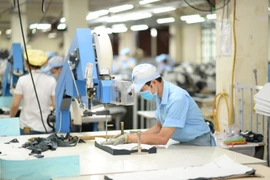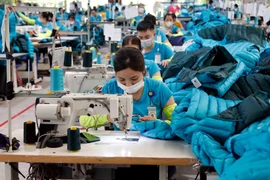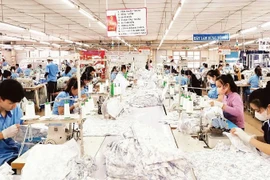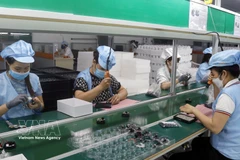
Hanoi (VNA) – As exports face mounting difficulties in major markets, expanding the domestic market is emerging as an open pathway and a crucial “buffer” to help enterprises maintain growth and achieve sustainable development.
Vu Duc Giang, Chairman of the Vietnam Textile and Apparel Association (Vitas), said the home market remains a largely untapped “gold mine”. Vietnamese consumers are increasingly inclined towards domestically made products that offer good quality, suitable designs and competitive prices. This, he noted, is the time for businesses to refocus on the home market rather than relying excessively on exports. According to Giang, concentrating on domestic demand not only stabilises businesses' sale but also enables consumers to access products manufactured by reputable companies that meet global standards.
With a population exceeding 100 million and a rapidly expanding middle class, Vietnam is regarded as a highly promising market for fashion, footwear and apparel. Local consumption of textile and garment products is estimated at around 5-5.5 billion USD annually, while footwear roughly 1 billion USD. In total, the market could reach some 6.5 billion USD, a highly lucrative opportunity if properly tapped.
International brands across both mass and premium segments have established a strong presence in the country through shopping centres, supermarkets and e-commerce platforms. By contrast, domestic products have yet to secure a firm foothold, despite advantages in pricing and familiarity with local consumer preferences.
Returning to the “home turf” also presents significant challenges. The most pressing constraint is heavy dependence on imported raw materials.
In the textile sector, despite substantial export turnover, localisation rates stand at only about 51-52%. In 2025, the industry spent approximately 17 billion USD importing fabrics alone, out of total export earnings of 46 billion USD. This reliance reduces value added and leaves businesses vulnerable to global supply chain disruptions and logistics cost volatility.
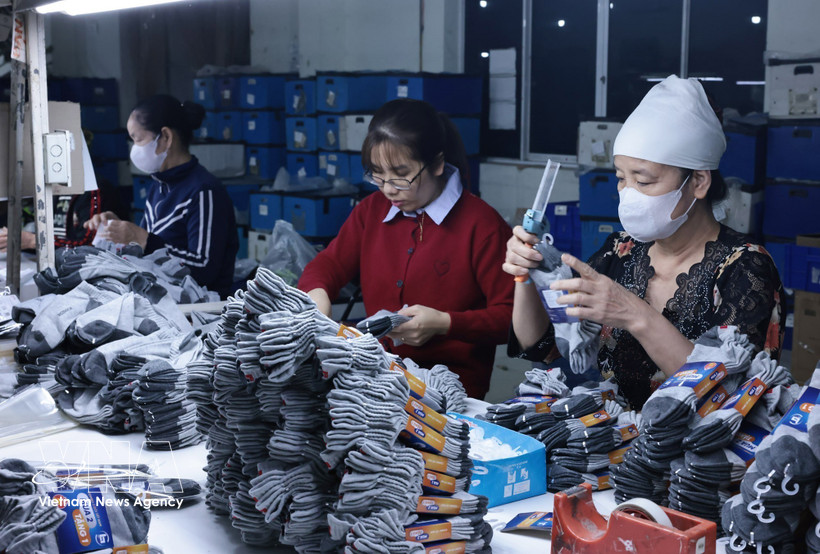
Similarly, the footwear industry faces major obstacles due to dependence on imported materials and a relatively weak retail system. Some domestically produced handicraft items remain more expensive than imported goods, making it difficult for local products to compete, particularly in rural areas.
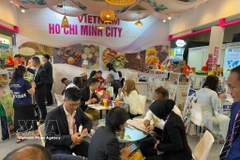
Phan Thi Thanh Xuan, Vice Chairwoman and Secretary General of the Vietnam Leather, Footwear and Handbag Association (Lefaso), said local enterprises currently hold about 40% of the market, mainly in the mid-range segment. The domestic market offers strong potential for those seeking stability amid global trade uncertainty. Many are diversifying distribution channels, strengthening brand credibility, expanding e-commerce presence and achieving effective revenue growth.
However, businesses still face several obstacles in developing their foothold at home. Quality standards and regulatory systems remain limited, and enforcement against substandard goods is weak, making it difficult to compete with cheap products of unclear origin.
Under the ASEAN-China Free Trade Area, fully assembled imported footwear enjoys zero import duty, while imported raw materials are subject to tariffs of 5-10%. This imbalance places Vietnamese manufacturers at a disadvantage compared with foreign-made products.
Tran Huu Linh, director general of market surveillance and development agency under the Ministry of Industry and Trade, said that despite numerous challenges, focusing on the home market is a necessary long-term strategy. Once Vietnamese textile and footwear enterprises build strong brands, a robust domestic production-consumption ecosystem could become a stable foundation for sustainable growth alongside exports.
Opportunities therefore come hand in hand with significant challenges: weak branding, dependence on imported inputs and fierce competition from foreign products. If businesses and stakeholders coordinate effectively through design innovation, brand enhancement, diversified distribution channels and higher localisation, the “home turf” could become a solid pillar alongside exports, enabling the industry to achieve stable and sustainable growth./.
See more
Higher marketplace fees weigh on online sellers
Analysts identify rising operational costs as the key factor behind the exodus. In 2025, platforms simultaneously rolled out fee hikes ranging from 10–15%, significantly increasing the financial burden on merchants.
Fragrant rice deepens EU market presence
Although the volume of individual shipments remains relatively modest, industry experts say the steady flow of exports reflects stable demand in the EU for high-quality rice.
Phu Tho, Thailand boost investment cooperation, business connectivity
Thai Ambassador Urawadee Sriphiromya praised Phu Tho’s development orientations, stating that stronger partnerships in investment, trade, tourism, and people-to-people exchanges are highly feasible.
Vietnam emerges as hub for high-quality FDI
Vietnam is gradually becoming a strategic destination for high-quality global FDI. Investment flows are increasingly directed toward sectors such as high-tech manufacturing, electronics, digital infrastructure, modern logistics, and industries that are closely linked to global supply chains.
Vietnam explores nuclear power cooperation with France's Assystem
Vietnam places top priority on the highest standards of nuclear safety and security, environmental protection, human resources development, and the establishment of a legal framework aligned with international practices.
Ericsson, VNPT partner to modernise airport connectivity in Vietnam
This collaboration marks the first engagement between Ericsson and VNPT in the airport industry, leveraging advanced cellular connectivity to enable greater agility and advance airport operations across the country.
Reference exchange rate kept unchanged on March 17
With the current trading band of +/- 5%, the ceiling rate applicable for commercial banks during the day is 26,321 VND/USD, and the floor rate 23,815 VND/USD.
VinFast sets records for revenue, EV deliveries in 2025
For the entire year, VinFast delivered 196,919 electric cars, a surge of 102% compared with 2024.
Fisheries sector proactively adjusts to emerging challenges
In addition to food safety regulations, the US continues to closely monitor the origin of imported seafood through the Seafood Import Monitoring Programme (SIMP) administered by the National Oceanic and Atmospheric Administration (NOAA). Requirements linked to the Marine Mammal Protection Act (MMPA) are also a major concern for businesses.
Fuel price governance must balance interests of State, businesses, people: PM
The PM stressed that fuel shortages must not occur under any circumstances while prices should follow market fluctuations with appropriate state regulation.
Vietnam, Switzerland push to accelerate Vietnam – EFTA FTA talks
The agreement is expected to significantly strengthen trade and investment links between Vietnam and Switzerland, as well as between Vietnam and EFTA members, while enhancing regional supply chains and promoting sustainable growth.
PM urges comprehensive review to promote development of key economic zones
The PM stressed that the goal is to transform these special economic zones into key growth engines for their respective localities, regions and the entire country.
Advancing reforms – Foundation for Vietnam’s new growth cycle: Analysts
Analysts say political stability and clearer reform orientations are laying the foundation for the country’s next growth phase while reinforcing investor confidence amid global uncertainty.
Gov't orders appraisal of revised investment policy for Ninh Thuan 1 nuclear power project
Under the resolution, the Ministry of Finance will continue to lead the appraisal process, with the Minister of Finance serving as chairman of the appraisal council for the pre-feasibility study report of the project’s adjusted investment policy, as assigned by the Prime Minister in Notice No. 21/TB-VPCP dated January 11, 2026.
Vietnam’s wood industry strives to enhance export value
The wood sector remains one of Vietnam’s key export industries in 2025, with export turnover of timber and wood products reaching about 17.2 billion USD.
Reference exchange rate continues to rise
The State Bank of Vietnam set the daily reference exchange rate at 25,068 VND/USD on March 16, up 3 VND from the March 13 session.
Cashew sector braces for challenges in 2026 amid global uncertainties
Vietnam’s cashew industry recorded export turnover of about 5.5 billion USD in 2025, the highest level ever. He noted that the result reflects the industry’s remarkable development, dynamism and timely adaptation to complex and unpredictable challenges both domestically and globally.
World-standard workforce crucial to building int’l financial centre
Without a management team knowledgeable about the international financial market, and without experts capable of designing products, operating trading infrastructure and monitoring risks, even advanced mechanisms and policies will be difficult to be carried out.
Measures sought to help Vietnamese firms expand investment in Indonesia
Vietnamese officials and businesses have explored measures to strengthen economic and trade ties with Indonesia and promote the Vietnam–Indonesia comprehensive strategic partnership, focusing on supporting Vietnamese companies to expand investment and operations in Indonesia.
Green industrial parks become new magnet for FDI
Statistics show that about 80% of FDI enterprises prioritise investing in industrial parks with green energy infrastructure, reflecting a growing shift in investment preferences amid tightening global environmental standards.