Vietnam explores nuclear power cooperation with France's Assystem

Vietnam places top priority on the highest standards of nuclear safety and security, environmental protection, human resources development, and the establishment of a legal framework aligned with international practices.

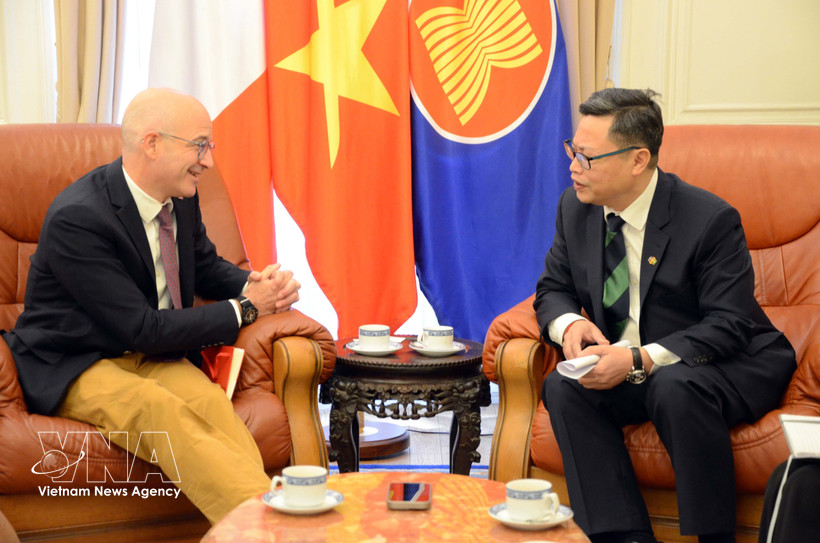
Vietnamese Ambassador to France Trinh Duc Hai (R) holds talks with Frédéric Cheneau, Vice President for International Business Development at Assystem, on March 16 to discuss cooperation in nuclear power. (Photo: VNA)

Paris (VNA) – Vietnamese Ambassador to France Trinh Duc Hai on March 16 held talks with Frédéric Cheneau, Vice President for International Business Development at Assystem, to discuss cooperation in nuclear power.

At the meeting, Hai outlined Vietnam’s energy development orientation, stressing the need to diversify energy sources while ensuring a balance between economic growth, energy security, and sustainable development goals.

He noted that Vietnam is formulating a long-term energy strategy with a multi-decade vision, in which nuclear power is seen as an important component to provide stable baseload electricity, reduce reliance on fossil fuels, and support the green energy transition.

The ambassador emphasised that Vietnam places top priority on the highest standards of nuclear safety and security, environmental protection, human resources development, and the establishment of a legal framework aligned with international practices. He underscored that any nuclear power development will be carried out cautiously and transparently, based on social consensus and the country’s long-term interests.
vnanet-phap.jpg
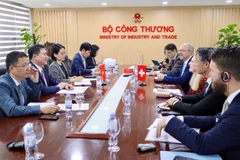
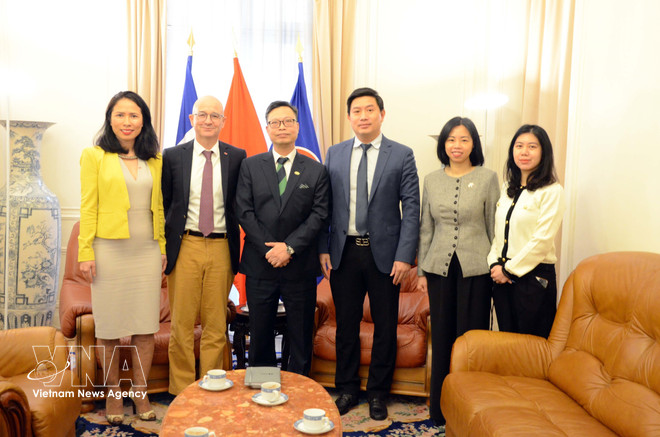
Vietnamese Ambassador to France Trinh Duc Hai (third from left), Vice President for International Business Development at Assystem Frédéric Cheneau (second from left), and other participants in the meeting (Photo: VNA)

Vietnam welcomes extensive and intensive international cooperation in the field of civil nuclear energy, particularly with experienced partners possessing advanced technologies, to enhance domestic capacity and ensure independence and self-reliance in energy development, he added.

For his part, Cheneau said Vietnam is facing long-term strategic decisions, noting that the selection of technology and deployment model for nuclear power will have far-reaching implications on economic development, energy security, and national sovereignty for decades to come. He highlighted that Assystem could assist Vietnam in negotiating contracts with technology suppliers, ensuring financial, technical, and legal terms align with national interests.

The Assystem executive proposed establishing a France–Vietnam joint technical organisation based in Vietnam to support the nuclear power programme over a period of 10–15 years. The initiative would bring together international experts and Vietnamese engineers working on-site, while also focusing on recruitment and training of domestic personnel, including through training programmes in France and participation in international projects.

He also announced plans to visit Vietnam next week for direct discussions with relevant ministries and agencies.

Both sides expressed their intention to continue in-depth exchanges to explore appropriate cooperation models, contributing to Vietnam’s long-term goal of building a safe, sustainable, and self-reliant energy strategy.

Assystem is one of leading independent nuclear engineering groups in Europe and the world, providing engineering, project management, and digital transformation solutions to support the energy transition. The company operates in nuclear and renewable energy, power grids, and transport infrastructure, with consulting experience in countries such as Russia, China, the Republic of Korea, Egypt, Kazakhstan, Uzbekistan, and the United Arab Emirates. It currently employs around 8,000 experts and operates in 13 countries across Europe, Asia, and the Middle East./.
VNA

See more

The latest approvals underscore the growing presence of Vietnamese rice in one of the world’s most demanding markets. (Photo: VNA)

Fragrant rice deepens EU market presence

Although the volume of individual shipments remains relatively modest, industry experts say the steady flow of exports reflects stable demand in the EU for high-quality rice.

Promoting stronger foreign direct investment (FDI) inflows is considered an important solution to help drive economic growth. (Photo: VNA)

Vietnam emerges as hub for high-quality FDI

Vietnam is gradually becoming a strategic destination for high-quality global FDI. Investment flows are increasingly directed toward sectors such as high-tech manufacturing, electronics, digital infrastructure, modern logistics, and industries that are closely linked to global supply chains.

Shrimp processing for export at Huy Nam company, An Giang province. (Photo: VNA)

Fisheries sector proactively adjusts to emerging challenges

In addition to food safety regulations, the US continues to closely monitor the origin of imported seafood through the Seafood Import Monitoring Programme (SIMP) administered by the National Oceanic and Atmospheric Administration (NOAA). Requirements linked to the Marine Mammal Protection Act (MMPA) are also a major concern for businesses.

Pham Van Cong, Chairman of the Vietnam Cashew Association, speaks in a conference reviewing the industry’s 2025 performance and deploying procurement plans for 2026 in HCM City on March 13. (Photo: VNA)

Cashew sector braces for challenges in 2026 amid global uncertainties

Vietnam’s cashew industry recorded export turnover of about 5.5 billion USD in 2025, the highest level ever. He noted that the result reflects the industry’s remarkable development, dynamism and timely adaptation to complex and unpredictable challenges both domestically and globally.

An Phát Complex Industrial Park in Hai Phong City is one of the eco-friendly industrial parks. (Photo: VNA)

Green industrial parks become new magnet for FDI

Statistics show that about 80% of FDI enterprises prioritise investing in industrial parks with green energy infrastructure, reflecting a growing shift in investment preferences amid tightening global environmental standards.

Wood panel production at the Thuan An Wood JSC in Ho Chi Minh City (Photo: VNA)

Vietnamese businesses ride wave of investment in green manufacturing

Recent developments in private investment show that as confidence in the private sector has grown and is a key driver of economic development, investors are strengthening support for enterprises not only through capital but also management expertise and market connectivity.

Officers and soldiers of Son Tra Border Guard Station, Da Nang City Border Guard Command tell local fishermen about IUU fishing. (Photo: VNA)

Fishing solidarity groups help Vietnam with IUU “yellow card” warning removal

Over the years, coastal authorities in Da Nang have intensified efforts to educate fishermen about regulations, particularly the need to avoid illegal fishing in foreign waters. Local administrations and competent forces have also strengthened vessel registration and inspection procedures, installed vessel monitoring systems and ensured transparent declarations of catches at ports.