Fishing solidarity groups help Vietnam with IUU “yellow card” warning removal

Over the years, coastal authorities in Da Nang have intensified efforts to educate fishermen about regulations, particularly the need to avoid illegal fishing in foreign waters. Local administrations and competent forces have also strengthened vessel registration and inspection procedures, installed vessel monitoring systems and ensured transparent declarations of catches at ports.

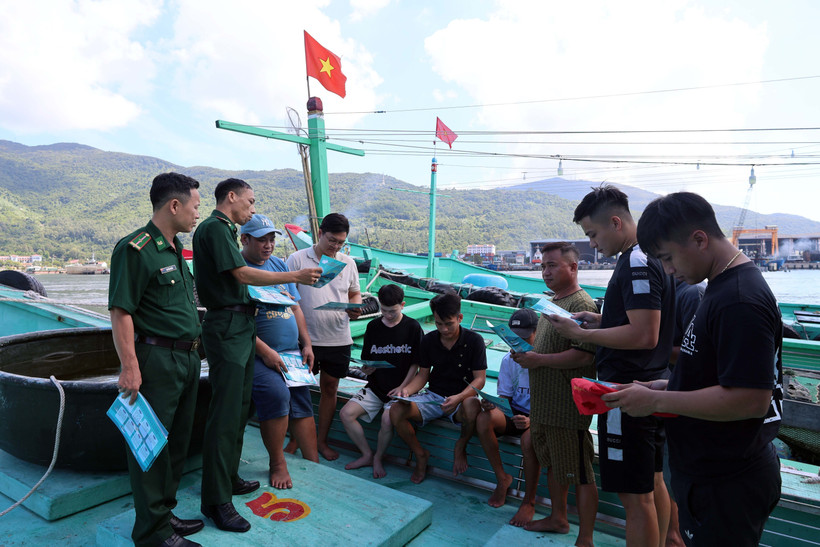
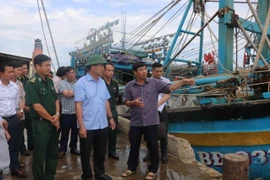
Officers and soldiers of Son Tra Border Guard Station, Da Nang City Border Guard Command tell local fishermen about IUU fishing. (Photo: VNA)

Da Nang (VNA) – Fishing solidarity groups operating offshore are playing an increasingly important role in supporting Vietnamese authorities’ efforts to have the “yellow card” warning imposed on the country’s seafood exports by the European Commission over illegal, unreported and unregulated (IUU) fishing lifted.

Alongside support, guidance and monitoring from maritime law enforcement forces, these groups of fishermen from the central city of Da Nang not only work together to exploit marine resources and assist each other during difficulties at sea but also contribute to safeguarding national sovereignty and security in maritime areas.

In the current stage when Vietnam is implementing comprehensive measures to address the warning, the groups are also helping promote responsible and sustainable fisheries development in line with the Government’s directions.

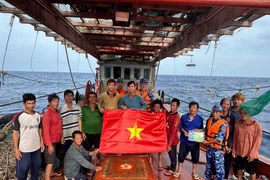
Tran Cong Hieu, owner and captain of fishing vessel QNa 95539 TS and a member of a fishing association in Thang An commune, regularly conducts long offshore trips to traditional fishing grounds around Hoang Sa and Truong Sa.

He said fishermen operating in these vast and often rough waters regularly receive support and reminders from maritime enforcement forces such as the coast guard, fisheries surveillance and border guard units to avoid violating foreign waters and to ensure legal and safe fishing practices.

"Although working in distant fishing grounds can be challenging, we always receive encouragement, guidance and support from law enforcement forces at sea,” Hieu said before departing on his first 2.5-month fishing trip of 2026.

“Fishermen are making every effort together with the State to help remove the IUU yellow card so that fishing activities can be more stable and seafood products can reach markets more easily.”

Over the years, coastal authorities in Da Nang have intensified efforts to educate fishermen about regulations, particularly the need to avoid illegal fishing in foreign waters. Local administrations and competent forces have also strengthened vessel registration and inspection procedures, installed vessel monitoring systems and ensured transparent declarations of catches at ports.

Pham Duoc, Chairman of the People’s Committee of Duy Nghia commune, said local authorities have visited fishing households and vessel owners directly to promote compliance with regulations and assist them in completing required licensing and registration procedures.

As a result, the locality has eliminated so-called “three-no” fishing vessels – those without registration, inspection or fishing licences. In 2025, no fishermen from the commune were administratively fined for violating fisheries regulations.

Meanwhile, the city is encouraging fishermen to gradually shift labour from nearshore fishing activities to post-harvest processing and value-added seafood production in order to improve economic efficiency and contribute to sustainable fisheries development.

With more than 100 fishing solidarity groups currently operating, fishermen in Da Nang regularly share fishing ground information, support each other in emergencies and cooperate in protecting national sovereignty at sea.

Colonel Tran Tien Hien, commander of the municipal Border Guard Command, said border guard stations along the coast have increased patrols and monitoring while coordinating with local authorities to raise awareness among fishermen about compliance with fisheries regulations.

Border guards also maintain round-the-clock surveillance of fishing vessels and strictly prevent those failing to meet regulatory requirements from leaving port.

According to Lieutenant Colonel Duong Minh Duc, political commissar of the Ky Ha port border guard station, authorities have also organised training sessions, distributed information materials and encouraged vessel owners to sign commitments not to violate IUU fishing rules.

Effective management of fishing fleets, stricter enforcement of regulations, improved traceability of seafood catches and the active role of fishing associations and solidarity groups are seen as key solutions to help Vietnam remove the IUU yellow card as soon as possible./.
VNA

See more

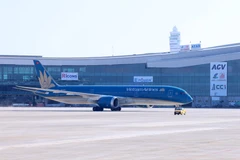
Aircraft at the Noi Bai International Airport in Hanoi. (Photo: VNA)

Vietnam seeks stable jet fuel supplies from China amid Middle East disruptions

On the basis of the long-standing friendship and cooperation between Vietnam and China, as well as close ties between their aviation authorities, the Civil Aviation Authority of Vietnam has asked the Civil Aviation Administration of China to direct relevant fuel suppliers to ensure sufficient and stable supplies for Vietnam.

Illustrative photo (Photo: Xinua/VNA)

Remittances to Ho Chi Minh City decline in Q1 amid global headwinds

Data from the State Bank of Vietnam (SBV)'s Region 2 branch showed that remittances transferred through credit institutions and economic organisations in Ho Chi Minh City exceeded 2 billion USD in the January–March period, down 15.6% from the previous quarter and 16.9% year-on-year.

The shipments are unloaded at the airport. (Photo: VNA broadcasts)

Nearly 100 tonnes of Vietnamese fruits, vegetables airlifted to UAE

Vietnamese fresh produce and processed foods are increasingly recognised for their quality, with items such as cashew nuts, coffee and spices gaining popularity among Middle East consumers. In 2025, Vietnam’s farm produce exports to the UAE exceeded 445 million USD, up nearly 24% year-on-year.

The World Coffee Heritage Forum officially opens at the World Coffee Museum in Dak Lak province, with eyes on UNESCO recognition for Vietnamese coffee culture. (Photo: VNA)

World Coffee Heritage Forum opens in Dak Lak

Dak Lak is known as the 'capital' of Vietnamese coffee, with rich, fertile basalt red soil ideal for agriculture. The coffee provides livelihoods for thousands of locals and has developed a unique cultural space, closely tied to the socioeconomic life, customs and identity of local communities.

Chili peppers are on the list of essential goods in Indonesia (Photo: VNA)

Indonesia reduces imports of strategic food commodities

In 2026, Indonesia is expected to have approximately 12 million tonnes of rice carried over from the previous year, supported by annual production of around 34.7 million tonnes. With projected consumption of 31.1 million tonnes, national rice reserves could reach approximately 16 million tonnes by the end of the year.

Hanoi’s roadmap to implement low-emission zones from July is providing a strong boost to the electric two-wheeler market (Photo: VNA)

Low-emission zone roadmap drives electric two-wheeler boom in Hanoi

From July 1, Hanoi will introduce time-based or area-based restrictions on petrol-powered motorcycles within Ring Road 1, with plans to expand coverage across the entire zone by 2028 and extend to areas within Ring Road 3 by 2030. The policy is expected to reshape travel habits for millions of urban residents.

Delegates at the opening ceremony of the Made in Da Nang Expo 2026 (Photo: VNA)

Nearly 300 firms join Made in Da Nang Expo 2026

Speaking at the opening ceremony, Vice Chairman of the Da Nang People’s Committee Tran Chi Cuong said the exhibition is a large-scale trade promotion event aimed at showcasing products, connecting markets, and helping businesses enhance competitiveness while expanding domestic and export markets.

 Green production, standardised value chains key to fruit, vegetable sector growth

Green production, standardised value chains key to fruit, vegetable sector growth

Facing mounting pressure from increasingly stringent domestic and international standards, Vietnam’s fruit and vegetable sector is accelerating its shift toward green, safe, and sustainable production models. Beyond changing farming practices, localities and businesses are stepping up efforts to standardise value chains and build brands to achieve growth targets for 2026.

Hiep Phuoc Industrial Park in Ho Chi Minh City. (Photo: VNA)

Southern industrial real estate enters strategic growth phase

Key industrial hubs in the south, including Ho Chi Minh City, Dong Nai and Tay Ninh, are transitioning from a period driven largely by supply expansion and rising land prices to a more refined growth model. This new phase is shaped by infrastructure upgrades, supply chain restructuring, product improvement and greater emphasis on operational performance.