An Giang (VNA) – As green and sustainable consumption standards tighten worldwide, the Mekong Delta province of An Giang is stepping up efforts to transform its export model, focusing on greener production, higher product quality, diversified markets and stronger logistics to help local businesses stay competitive in an evolving global marketplace.
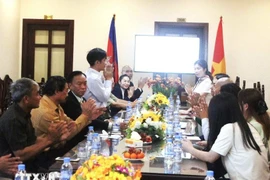
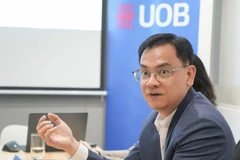
Quang Xuan Lua, Director of the An Giang Centre for Trade and Investment Promotion, said the province is supporting enterprises in connecting directly with overseas retail networks to promote local brands and products to international consumers. To enhance competitiveness, authorities are assisting businesses in obtaining globally recognised certifications such as GlobalG.A.P., Organic and HACCP, enabling key exports including rice, seafood and clean agricultural products to strengthen their position in global markets. At the same time, producers are being guided to meet increasingly strict requirements on carbon emissions, traceability and “green export” standards in markets such as the US, the EU and the Middle East.
An Giang is also capitalising on its border advantages and international border gates, including Vinh Xuong, Tinh Bien and Ha Tien, to boost cross-border trade. China remains a major market for key exports such as rice, seafood, bird’s nest and green agricultural products. Meanwhile, the province is expanding its presence in emerging markets in the Middle East and Africa, particularly with Halal-certified goods and supply chain links with partners such as the United Arab Emirates. In high-end markets including the US, the EU, Japan, the Republic of Korea and Australia, the focus is on clean agricultural products, premium rice and internationally certified seafood. Trade connections with Singapore, France and the US are also being strengthened through direct business matching programmes.
Lua noted that prioritising trade promotion in “gateway” markets enables local goods to access larger and more diverse consumer bases while reducing reliance on traditional markets. Entering demanding markets such as Europe or North America also requires enterprises to improve production standards, services and overall credibility, helping raise their global competitiveness. Beyond boosting exports, trade promotion activities also open opportunities for investment cooperation, technology transfer and management learning from developed economies, aligning the province with global development trends.
An Giang also sees the hosting of the APEC 2027 Economic Leaders’ Meeting in Phu Quoc as a major opportunity to introduce its products to international audiences. The year 2026 is expected to be a key period for infrastructure investment and preparations for the event. The province plans to leverage the Phu Quoc special zone to promote its image and organise high-level trade promotion programmes aimed at attracting strategic investors to its priority sectors. Tourism and trade promotion initiatives are also expected to showcase An Giang’s flagship and OCOP products to high-level business leaders and international visitors.
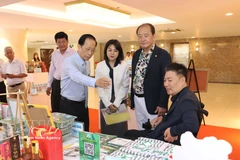
Local exporters have also called for stronger provincial support, including the establishment of shared booths at major international trade fairs and assistance in accessing potential markets such as the Middle East, the US and the EU. They also urged authorities to help address challenges related to taxation, labour, technical infrastructure and land access to ensure stable production and business operations.
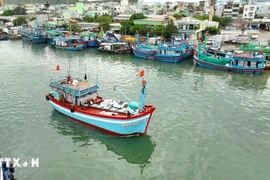
Nguyen Thong Nhat, Director of the provincial Department of Industry and Trade, said An Giang has strong advantages in agricultural, seafood and processed products. The province is therefore diversifying export destinations while investing in logistics infrastructure such as cold storage systems, ports and transport connectivity to reduce costs and accelerate goods circulation. Efforts are also being made to improve product quality to meet international standards and overcome technical barriers in export markets.
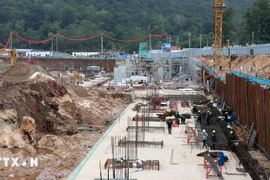
High logistics costs remain one of the biggest challenges for exporters. To tackle this, the province is investing in strategic transport routes, modern cold storage facilities and greater use of inland waterways to connect production areas with major seaports. At the same time, An Giang is shifting from exporting raw materials to value-added processing and brand building, while promoting digital transformation in supply chain management and cross-border e-commerce to help agricultural and OCOP products reach global consumers more directly.
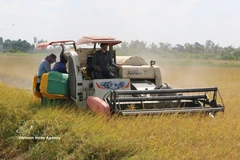
The province is also seeking investment in large-scale agricultural processing linked to rice and seafood production zones, while encouraging businesses to adopt advanced processing technologies. These efforts include developing high-value rice products, processed foods from pangasius, shrimp and squid, as well as convenience foods for international markets. Authorities are also working to strengthen branding for key local products associated with geographical indications and traceability. As global markets place increasing emphasis on quality, food safety and sustainability, improving product standards will help An Giang’s exports integrate more deeply into global value chains./.