Vietnamese firms step up cooperation with international distribution chains

Connecting Vietnamese businesses with international distribution networks has been a key component of government-led trade promotion programmes for many years, which are designed to help domestic companies place goods directly into global retail systems rather than exporting solely through intermediaries.

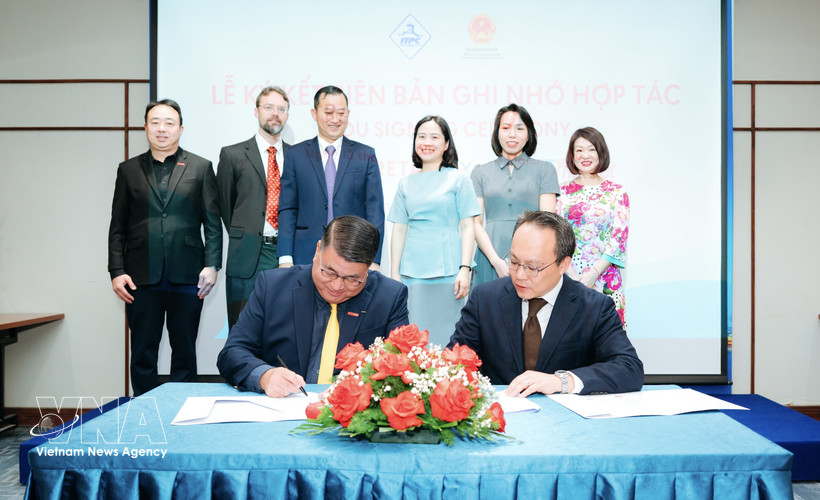
Representatives of Central Retail Vietnam and Lotte Plaza Market sign a distribution cooperation agreement at the networking event in Ho Chi Minh City on March 13. (Photo: VNA)

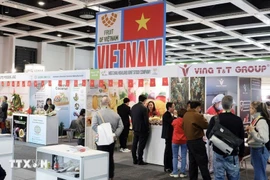
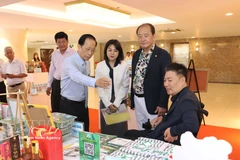
Ho Chi Minh City (VNA) – A business networking programme linking more than 50 Vietnamese companies with international importers, including Lotte Plaza Market from the US and HomePlus from the Republic of Korea, took place in Ho Chi Minh City on March 13, aiming to create a bridge for domestic firms to directly access global distribution systems and expand opportunities to bring Vietnamese products to the world market.

Hosted by the Ho Chi Minh City Investment and Trade Promotion Centre (ITPC) and Central Retail Vietnam, the event brought together companies producing some of Vietnam’s top export commodities, including coffee, chocolate, spices, fish sauce, noodles, rice-based items, confectionery, dried fruit, and aquatic products. Most of the showcased products met international standards like GlobalGAP, HACCP, ISO, and other strict requirements of global markets.

Nguyen Thao Hien, Deputy Director of the Department of Foreign Market Development under the Ministry of Industry and Trade (MoIT), said that connecting Vietnamese businesses with international distribution networks has been a key component of government-led trade promotion programmes for many years. These initiatives are designed to help domestic companies place goods directly into global retail systems rather than exporting solely through intermediaries.

She added that such programmes have received strong support from a wide range of organisations, including domestic trade promotion agencies, international retail groups operating in Vietnam, and overseas distribution systems. Through these activities, Vietnamese firms gain opportunities to understand market requirements, engage directly with importers, and learn how to integrate products into global supply chains.

Paul Le, Vice President of Central Retail Vietnam, said the firm consistently prioritises activities that support Vietnamese enterprises in market development.

At the event, Central Retail Vietnam and Lotte Plaza Market signed a memorandum of understanding to promote the introduction of Vietnamese products into the latter’s retail network in the US. The agreement is expected to open up more opportunities for Vietnamese companies to access retail distribution in one of the world’s largest consumer markets.

Alvin Lee, CEO of Lotte Plaza Market, said the Asian food sector in the US is currently valued at between 60 billion USD and 80 billion USD. He noted that this represents a favourable moment for Vietnamese goods to expand their presence in the market.

According to Lee, one effective approach is to build promotional strategies around signature national dishes. In Vietnam’s case, pho is already widely recognised by US consumers. Businesses could therefore leverage this advantage not only to export rice noodles but also to develop related products such as seasonings, broths and other Vietnamese culinary items.

Representatives of the MoIT introduced this year’s Vietnam International Sourcing Expo, scheduled to take place in Ho Chi Minh City from September 3 to 5. The series will include conferences, seminars, and exhibitions designed to enable Vietnamese enterprises to meet directly with global distribution networks, buyers and procurement centres. It is also expected to help firms strengthen production capacity, improve quality standards, and develop product strategies suited to increasingly competitive international trade conditions./.

VNA
See more

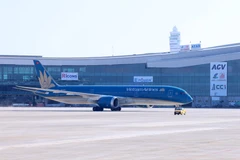
Aircraft at the Noi Bai International Airport in Hanoi. (Photo: VNA)

Vietnam seeks stable jet fuel supplies from China amid Middle East disruptions

On the basis of the long-standing friendship and cooperation between Vietnam and China, as well as close ties between their aviation authorities, the Civil Aviation Authority of Vietnam has asked the Civil Aviation Administration of China to direct relevant fuel suppliers to ensure sufficient and stable supplies for Vietnam.

Illustrative photo (Photo: Xinua/VNA)

Remittances to Ho Chi Minh City decline in Q1 amid global headwinds

Data from the State Bank of Vietnam (SBV)'s Region 2 branch showed that remittances transferred through credit institutions and economic organisations in Ho Chi Minh City exceeded 2 billion USD in the January–March period, down 15.6% from the previous quarter and 16.9% year-on-year.

The shipments are unloaded at the airport. (Photo: VNA broadcasts)

Nearly 100 tonnes of Vietnamese fruits, vegetables airlifted to UAE

Vietnamese fresh produce and processed foods are increasingly recognised for their quality, with items such as cashew nuts, coffee and spices gaining popularity among Middle East consumers. In 2025, Vietnam’s farm produce exports to the UAE exceeded 445 million USD, up nearly 24% year-on-year.

The World Coffee Heritage Forum officially opens at the World Coffee Museum in Dak Lak province, with eyes on UNESCO recognition for Vietnamese coffee culture. (Photo: VNA)

World Coffee Heritage Forum opens in Dak Lak

Dak Lak is known as the 'capital' of Vietnamese coffee, with rich, fertile basalt red soil ideal for agriculture. The coffee provides livelihoods for thousands of locals and has developed a unique cultural space, closely tied to the socioeconomic life, customs and identity of local communities.

Chili peppers are on the list of essential goods in Indonesia (Photo: VNA)

Indonesia reduces imports of strategic food commodities

In 2026, Indonesia is expected to have approximately 12 million tonnes of rice carried over from the previous year, supported by annual production of around 34.7 million tonnes. With projected consumption of 31.1 million tonnes, national rice reserves could reach approximately 16 million tonnes by the end of the year.

Hanoi’s roadmap to implement low-emission zones from July is providing a strong boost to the electric two-wheeler market (Photo: VNA)

Low-emission zone roadmap drives electric two-wheeler boom in Hanoi

From July 1, Hanoi will introduce time-based or area-based restrictions on petrol-powered motorcycles within Ring Road 1, with plans to expand coverage across the entire zone by 2028 and extend to areas within Ring Road 3 by 2030. The policy is expected to reshape travel habits for millions of urban residents.

Delegates at the opening ceremony of the Made in Da Nang Expo 2026 (Photo: VNA)

Nearly 300 firms join Made in Da Nang Expo 2026

Speaking at the opening ceremony, Vice Chairman of the Da Nang People’s Committee Tran Chi Cuong said the exhibition is a large-scale trade promotion event aimed at showcasing products, connecting markets, and helping businesses enhance competitiveness while expanding domestic and export markets.

 Green production, standardised value chains key to fruit, vegetable sector growth

Green production, standardised value chains key to fruit, vegetable sector growth

Facing mounting pressure from increasingly stringent domestic and international standards, Vietnam’s fruit and vegetable sector is accelerating its shift toward green, safe, and sustainable production models. Beyond changing farming practices, localities and businesses are stepping up efforts to standardise value chains and build brands to achieve growth targets for 2026.

Hiep Phuoc Industrial Park in Ho Chi Minh City. (Photo: VNA)

Southern industrial real estate enters strategic growth phase

Key industrial hubs in the south, including Ho Chi Minh City, Dong Nai and Tay Ninh, are transitioning from a period driven largely by supply expansion and rising land prices to a more refined growth model. This new phase is shaped by infrastructure upgrades, supply chain restructuring, product improvement and greater emphasis on operational performance.