Hanoi (VNA) - The return of a billion-dollar high-tech project demonstrates that Vietnam’s strategy of selectively attracting foreign direct investment (FDI) - prioritising advanced technology and high value-added projects - is a sound policy that is delivering tangible results.
Return of billion-dollar investment
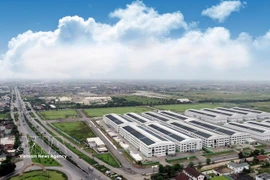
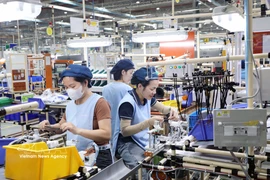
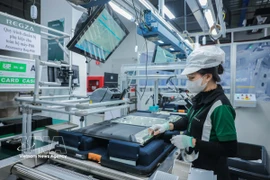
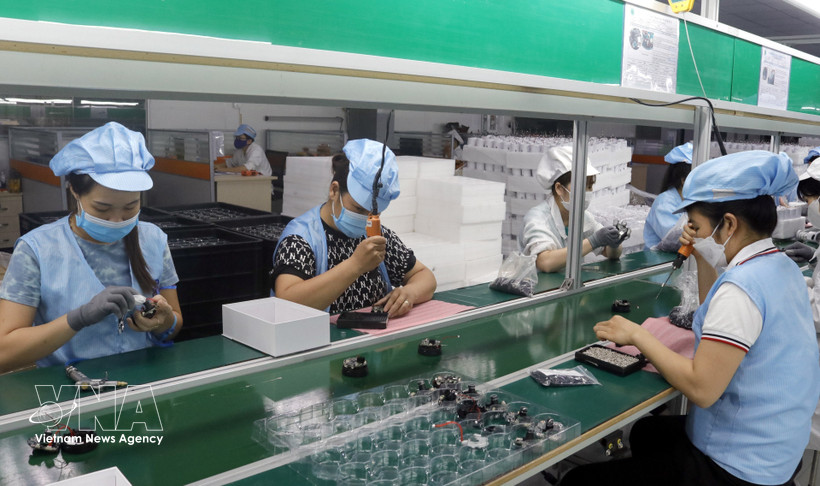
A notable development in Vietnam’s FDI landscape during the first two months of 2026 is the reappearance of a billion-dollar project. A high-tech manufacturing project specialising in advanced electronic circuit boards has been granted an investment registration certificate with total capital of 1.2 billion USD.
According to the Foreign Investment Agency under the Ministry of Finance, the project represents a bright spot in Vietnam’s efforts to attract large-scale high-tech investments. Its implementation reflects the country’s strategy of selectively attracting FDI that incorporates advanced technologies, generates higher added value and strengthens linkages with domestic enterprises.
Thanks in part to this project, Vietnam recorded more than 6 billion USD in newly registered FDI in the first two months of 2026. Although the figure declined 12.6% year-on-year, it remains a positive result given the current global uncertainties, including geopolitical tensions in the Middle East and fluctuations in trade and tariff policies in several major economies.
Many multinational corporations are therefore adjusting their investment strategies, prioritising supply chain optimisation and reassessing overseas expansion plans. Nevertheless, the ongoing restructuring of supply chains in the Asia-Pacific region continues to create opportunities for Vietnam, which remains an attractive destination due to its political stability, extensive network of free trade agreements and favourable position within regional production networks.
FDI inflows also showed signs of improvement in February, when newly registered capital reached 3.43 billion USD, up 34% from January. Meanwhile, disbursed FDI maintained positive growth momentum, estimated at more than 3.2 billion USD, an increase of 8.8% year-on-year.
The disbursed figure of 3.2 billion USD, the highest disbursed in the first two months in the past five years, indicates that investment commitments are being translated into actual capital flows, reflecting sustained confidence among foreign investors in Vietnam’s business environment, said economists.
However, some indicators still suggest challenges. Investment through capital contributions and share purchases declined 5.7% year-on-year to 499.4 million USD, while additional investment capital dropped 52.3% to 1.9 billion USD. The scale of most newly registered projects also remains relatively modest, suggesting that many investors are adopting a cautious approach and expanding investment gradually.
Strong prospects ahead
Despite these challenges, Vietnam’s prospects for attracting high-quality FDI remain promising. Increasing disbursement levels and a growing number of new projects indicate that foreign investors continue to maintain long-term confidence in the country’s investment environment.
Recent developments have reinforced this outlook. US-based energy group GE Vernova has chosen Vietnam as the first Asian country to host its annual energy conference, bringing together more than 100 leaders from global energy corporations. The event is expected to open a new phase of cooperation between the company and Vietnam.
Meanwhile, Cooler Master Group from China has proposed expanding its investment in Bac Ninh province, with potential capital reaching around 3 billion USD.
Other developments are also encouraging. Starlink has received approval to deploy low-Earth-orbit satellite internet services in Vietnam, while the UAE’s G42 has partnered with domestic investors to develop data centre infrastructure with a projected investment of about 2 billion USD.
These developments show that Vietnam is gradually becoming a strategic destination for high-quality global FDI. Investment flows are increasingly directed toward sectors such as high-tech manufacturing, electronics, digital infrastructure, modern logistics, and industries that are closely linked to global supply chains.
As Vietnam continues to strengthen investment promotion and improve its business environment, attracting large-scale, technology-driven FDI projects is expected to create new growth momentum for the economy./.