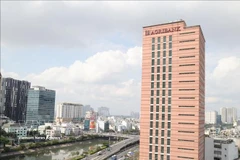
Ho Chi Minh City (VNA) – The completion of leadership restructuring following the 14th National Party Congress and the election of the 16th National Assembly marks the start of a new policy cycle in Vietnam. Analysts say political stability and clearer reform orientations are laying the foundation for the country’s next growth phase while reinforcing investor confidence amid global uncertainty.
Shaping a new policy cycle
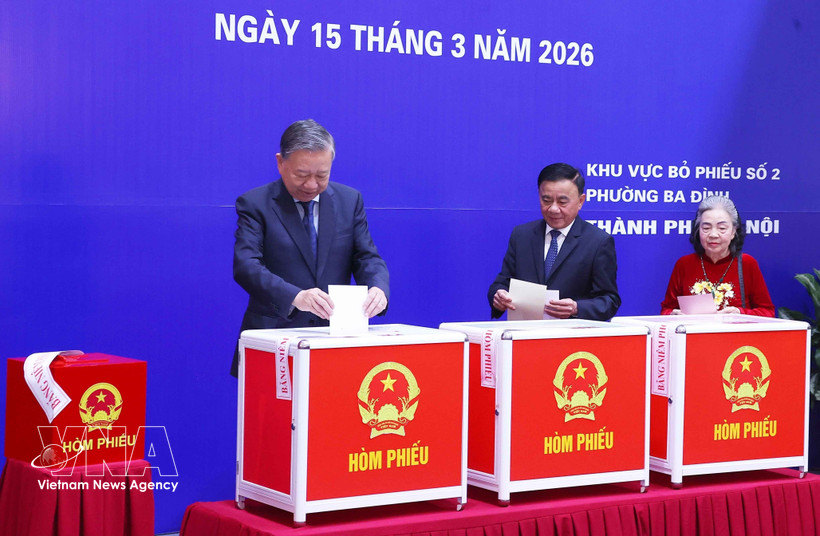
On March 15, nearly 79 million voters cast their ballots to elect deputies to the 16th National Assembly and People’s Councils at all levels for the 2026–2031 term, completing the consolidation of the leadership apparatus shortly after the 14th National Party Congress.
Analysts noted that the close timing of these milestones helped quickly stabilise governance structures and clarify policy direction at the beginning of the new development cycle. Continuity in governance is viewed as a key factor supporting investor confidence, with international organisations expecting Vietnam to maintain its economic reform trajectory.
Policies aimed at removing economic bottlenecks and fostering new growth drivers, including infrastructure investment, institutional reform and capital market development, are expected to be implemented consistently to support both short-term recovery and long-term expansion.
A series of Politburo resolutions, notably Resolutions No. 68 on private sector development and No. 79 on improving state economic efficiency, are shaping a more synchronised policy framework toward a transparent and competitive economic ecosystem. While the State sector retains a leading role, the private sector is encouraged to become a stronger growth engine, supporting Vietnam’s goal of achieving upper-middle-income status by 2030 and high-income status by 2045.
The Government is also addressing bottlenecks in the real estate sector to help restore market confidence and sustain growth momentum.
Global volatility, stable outlook for Vietnam
Geopolitical tensions in the Middle East have driven oil price volatility and global market fluctuations, while trade faces pressures from strategic competition and protectionism. Nevertheless, international institutions believe Vietnam remains well positioned to expand exports and attract foreign direct investment (FDI), supported by competitive costs, supply chain integration and policy stability.
Experts view current geopolitical shocks as cyclical rather than long-term risks. Manufacturing activity is improving, exports are recovering, and FDI disbursement remains stable.
At the Gateway to Vietnam programme organised by SSI Securities Corporation, Barry Weisblatt said international investors largely see geopolitical risks as global in nature and continue seeking portfolio opportunities rather than withdrawing capital.
Singapore-based UOB Bank maintains a positive outlook, projecting Vietnam’s GDP growth at 7.5% in 2026 after expansion of 8.02% in 2025, driven by infrastructure investment, export-oriented manufacturing and sustained FDI inflows.
The Republic of Korea’s firm KIM Vietnam Fund Management also assessed that direct impacts from Middle East tensions are limited, as trade exposure to the region remains modest. Long-term growth drivers continue to come from public investment, production expansion, exports and recovering domestic consumption.
Analysts cautioned that external risks, including potential global tariffs and energy price volatility, require monitoring. However, political stability and a clear reform agenda remain key anchors for investor confidence.
Following the election and completion of the two-tier local governance structure, investors expect policy priorities to focus on improving the investment environment, strengthening implementation efficiency and accelerating institutional reforms. Greater transparency, administrative simplification and consistent policy enforcement are seen as essential to sustaining Vietnam’s attractiveness in the new growth cycle./.
See more
Fisheries sector proactively adjusts to emerging challenges
In addition to food safety regulations, the US continues to closely monitor the origin of imported seafood through the Seafood Import Monitoring Programme (SIMP) administered by the National Oceanic and Atmospheric Administration (NOAA). Requirements linked to the Marine Mammal Protection Act (MMPA) are also a major concern for businesses.
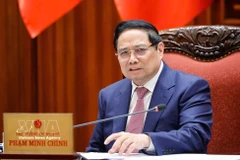
Fuel price governance must balance interests of State, businesses, people: PM
The PM stressed that fuel shortages must not occur under any circumstances while prices should follow market fluctuations with appropriate state regulation.
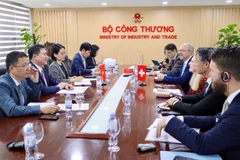
Vietnam, Switzerland push to accelerate Vietnam – EFTA FTA talks
The agreement is expected to significantly strengthen trade and investment links between Vietnam and Switzerland, as well as between Vietnam and EFTA members, while enhancing regional supply chains and promoting sustainable growth.
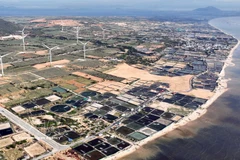
PM urges comprehensive review to promote development of key economic zones
The PM stressed that the goal is to transform these special economic zones into key growth engines for their respective localities, regions and the entire country.
Gov't orders appraisal of revised investment policy for Ninh Thuan 1 nuclear power project
Under the resolution, the Ministry of Finance will continue to lead the appraisal process, with the Minister of Finance serving as chairman of the appraisal council for the pre-feasibility study report of the project’s adjusted investment policy, as assigned by the Prime Minister in Notice No. 21/TB-VPCP dated January 11, 2026.
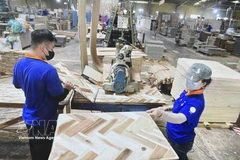
Vietnam’s wood industry strives to enhance export value
The wood sector remains one of Vietnam’s key export industries in 2025, with export turnover of timber and wood products reaching about 17.2 billion USD.
Reference exchange rate continues to rise
The State Bank of Vietnam set the daily reference exchange rate at 25,068 VND/USD on March 16, up 3 VND from the March 13 session.
Cashew sector braces for challenges in 2026 amid global uncertainties
Vietnam’s cashew industry recorded export turnover of about 5.5 billion USD in 2025, the highest level ever. He noted that the result reflects the industry’s remarkable development, dynamism and timely adaptation to complex and unpredictable challenges both domestically and globally.
World-standard workforce crucial to building int’l financial centre
Without a management team knowledgeable about the international financial market, and without experts capable of designing products, operating trading infrastructure and monitoring risks, even advanced mechanisms and policies will be difficult to be carried out.
Measures sought to help Vietnamese firms expand investment in Indonesia
Vietnamese officials and businesses have explored measures to strengthen economic and trade ties with Indonesia and promote the Vietnam–Indonesia comprehensive strategic partnership, focusing on supporting Vietnamese companies to expand investment and operations in Indonesia.
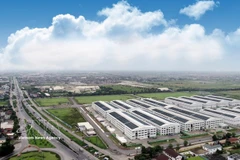
Green industrial parks become new magnet for FDI
Statistics show that about 80% of FDI enterprises prioritise investing in industrial parks with green energy infrastructure, reflecting a growing shift in investment preferences amid tightening global environmental standards.
Vietnamese businesses ride wave of investment in green manufacturing
Recent developments in private investment show that as confidence in the private sector has grown and is a key driver of economic development, investors are strengthening support for enterprises not only through capital but also management expertise and market connectivity.
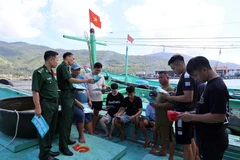
Fishing solidarity groups help Vietnam with IUU “yellow card” warning removal
Over the years, coastal authorities in Da Nang have intensified efforts to educate fishermen about regulations, particularly the need to avoid illegal fishing in foreign waters. Local administrations and competent forces have also strengthened vessel registration and inspection procedures, installed vessel monitoring systems and ensured transparent declarations of catches at ports.
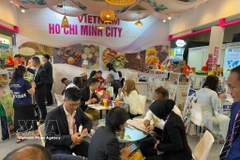
Vietnamese firms step up cooperation with international distribution chains
Connecting Vietnamese businesses with international distribution networks has been a key component of government-led trade promotion programmes for many years, which are designed to help domestic companies place goods directly into global retail systems rather than exporting solely through intermediaries.
Viettel tops global telecom rankings in brand strength
Viettel achieved a Brand Strength Index (BSI) score of 89.9 out of 100 and was awarded the highest possible AAA+ rating.
Vietnam Airlines to launch direct Hanoi–Amsterdam service on June 16
Under the plan, the Hanoi–Amsterdam route will commence operations on June 16, 2026, with an expected frequency of three return flights per week using modern wide-body Airbus A350 aircraft. This will be the first direct air link between Vietnam and the Netherlands, helping to shorten travel time and enhance connectivity between Vietnam and one of Europe’s key economic, logistics and aviation transit hubs.
An Giang accelerates export shift to meet green consumption trends
To enhance competitiveness, authorities are assisting businesses in obtaining globally recognised certifications such as GlobalG.A.P., Organic and HACCP, enabling key exports including rice, seafood and clean agricultural products to strengthen their position in global markets, according to Quang Xuan Lua, Director of the An Giang Centre for Trade and Investment Promotion.
E5 RON92 biofuel price falls in latest adjustment
Since the beginning of this year, domestic fuel prices have undergone 14 adjustments, including five decreases and nine increases for RON95 and six declines and eight hikes for E5 RON92. Meanwhile, diesel price has fallen three times and risen 11 times.
Reference exchange rate goes up on March 13
With the current trading band of +/- 5%, the ceiling rate applicable for commercial banks during the day is 26,318 VND/USD, and the floor rate 23,812 VND/USD.
Vietnamese agricultural products boost global brand recognition
Vietnam aims to achieve about 74 billion USD in agro-forestry-fishery export turnover this year. Expanding value-added products, improving quality standards and strengthening brand building, especially through international supermarket systems, will be key to enhancing the competitiveness and global recognition of Vietnamese agricultural products.