NA, People’s Council election to create legal foundation for Vietnam’s new development era

Dr. Oleg Ghermanovich Rumyantsev from the Russian Federal Bar Association, who is also head of the working group in charge of drafting Russia's Constitution, said the elections mark a new step forward in Vietnam’s institutional development.

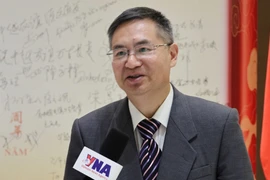
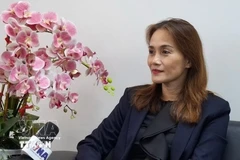
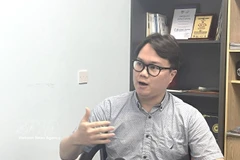
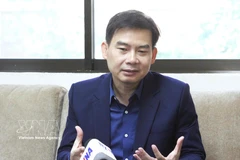
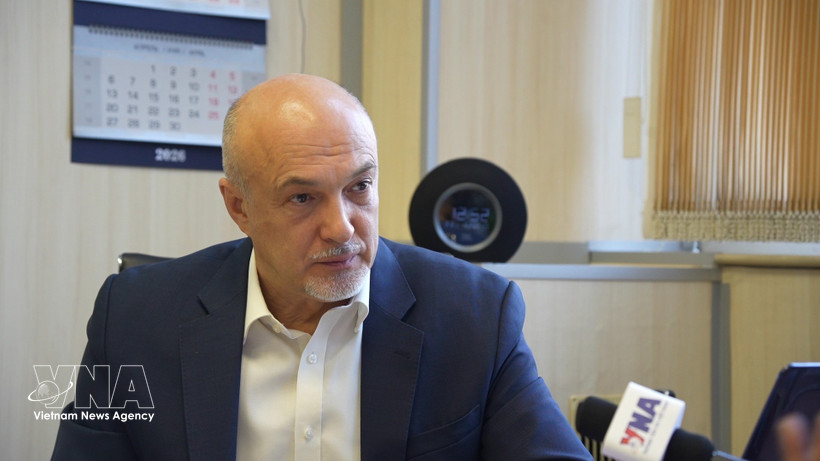
Dr. Oleg Ghermanovich Rumyantsev from the Russian Federal Bar Association. (Photo: VNA)

Moscow (VNA) – The election of deputies to the 16th National Assembly (NA) and People’s Councils at all levels for the 2026–2031 tenure will create a legal foundation for Vietnam’s development in a new era, according to a Russian constitutional expert.

In an interview with Vietnam News Agency correspondents in Russia, Dr. Oleg Ghermanovich Rumyantsev from the Russian Federal Bar Association, who is also head of the working group in charge of drafting Russia's Constitution, said the elections mark a new step forward in Vietnam’s institutional development.

He noted that Vietnam has recently carried out administrative reforms while accelerating digital governance, demonstrating the country’s determination to transform its state apparatus. Such reforms require new legal regulations, he said, placing significant responsibilities on the next legislature.

According to the scholar, newly elected lawmakers must fully understand the dual role of legal norms: both supervising and encouraging development. Modern lawmaking requires legislators to possess strong legal knowledge and the ability to shape regulations that both guide and promote national progress.

Rumyantsev said he has recently studied Vietnam's 2013 Constitution, particularly provisions relating to elections, and found many aspects he admires as a constitutional drafter.

He highlighted the constitutional provision that assigns the NA the power of supreme supervision over all activities of the State, including executive, judicial and other state agencies, ensuring strict compliance with the Constitution and laws.

According to him, this principle partly explains why elections in Vietnam receive such broad public attention, as they play an important role in shaping the quality and effectiveness of the state and society as well as the lives of citizens.

The Russian expert emphasised that deputies elected in the new term must meet increasingly high expectations from voters and citizens.

He also pointed to Article 8 of the Vietnamese Constitution, which requires state agencies, officials and public employees to respect the people, serve them devotedly, maintain close ties with them, listen to their opinions and submit to their supervision, while resolutely fighting corruption, wastefulness and bureaucratic practices.

Rumyantsev said this provision carries significant value in raising legal awareness among both the public and voters.

With such awareness, Vietnamese voters are likely to place serious demands on candidates for legislative bodies, he said, noting requirements for anti-corruption efforts and close connections with voters. /.
VNA

See more

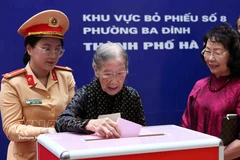
Doan Thi Thuan, a 101-year-old voter, casts her ballot at Polling Station No. 8 in Ba Dinh ward, Hanoi, on March 15. (Photo: VNA)

General election marks renewal in building modern Vietnamese state

The decision to hold the election two months earlier than usual represents not merely a technical adjustment but a historic and well-considered step, reflecting long-term vision in building, consolidating and operating the state apparatus, said Tran Thang, an aeronautical engineer and commentator in the US.

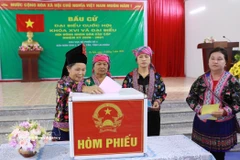
Voters in Nam Sao 2 village, Pa Tan commune of Lai Chau cast their ballots on March 15 (Photo: VNA)

Mexican lawmaker confident in Vietnamese legislature’s enhanced role

Ana Karina Rojo Pimentel, a congresswoman from the Labour Party (PT) of Mexico and Chairwoman of the Mexican Chamber of Deputies’ Welfare Committee, said the new representatives will help further strengthen the legislature’s role in policymaking and national development orientation.

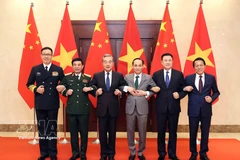
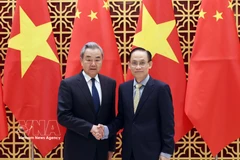
Vietnamese and Chinese ministers pose for a photo at the first ministerial-level Strategic Dialogue among their foreign affairs, defence and public security ministries. (Photo: VNA)

Vietnam, China hold first ministerial-level 3+3 strategic dialogue

The 3+3 Strategic Dialogue mechanism is important for implementing high-level common perceptions and promoting the role of key agencies in advancing Vietnam–China relations as well as sectoral cooperation in various fields, thereby enhancing political trust and contributing to peace, stability and development in the region and the world.

Vice President of the Vietnam – Malaysia Business Association Nguyen Thi Thanh Van. (Photo: VNA)

Vietnamese business leader in Malaysia hopes for streamlined, effective governance

Voters and the business community demand above all a unified, forward-looking legal framework, which resolves near-term frictions while anchoring sustained progress. NA and People's Council deputies must sustain their role as an effective bridge between constituents and authorities, converting grassroots input into meaningful policies.

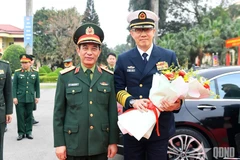
Defence Minister General Phan Van Giang welcomes Chinese Defence Minister Senior Lieutenant General Dong Jun during his visit to Commando Brigade 113. (Photo: qdnd.vn)

Chinese defence minister visits Commando Brigade 113

According to the ministry, the visit took place as Dong led a high-level Chinese defence delegation to attend the first meeting of the Vietnam–China strategic dialogue at the foreign, defence and public security minister level, as well as the 17th session of the Vietnam–China Steering Committee for Bilateral Cooperation.

The election of deputies to the 16th NA and People's Councils at all levels for the 2026-2031 tenure takes place on March 15. (Photo: VNA)

Vietnamese community in Laos expects 16th NA to drive development

Early election also serves as an important test to select capable deputies suited to the new governance model, helping policies reach citizens and overseas communities more efficiently. For overseas Vietnamese in Laos, stable and proactive leadership arrangements at home strengthen confidence and support sustained bilateral cooperation.

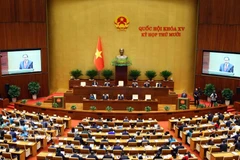
An overview of the opening of the 10th session of the 15th National Assembly. (Photo: VNA)

Indian scholar highlights Vietnamese NA’s legislative role and renovation

He noted that during its tenure, the legislature adopted 51 laws and 39 resolutions aimed at stabilising the national economy after the COVID-19 pandemic, reforming roughly 30% of the legal framework. Eight of the resolutions were normative, focusing on areas such as economic growth, education, healthcare and digital transformation.

Tay ethnic voters in Na O hamlet of An Lac commune, Bac Ninh province, cast their ballots on March 15. (Photo: VNA)

Voter turnout reaches 99.64% as of 22:00 on March 15

Lao Cai was the locality that completed voting the earliest (at 17:45) and, together with the central city of Hue, was one of two out of 34 localities to reach 100% voter participation. Notably, Lao Cai province has 173 voters aged 100 and above (31 men and 142 women).

Vietnamese Politburo member and Minister of Foreign Affairs Le Hoai Trung (right) welcomes Chinese Politburo member and Minister of Foreign Affairs Wang Yi in Hanoi on March 15. (Photo: VNA)

Vietnamese, Chinese FMs agree to make new breakthroughs in substantive cooperation

Vietnam and China should meticulously prepare for coming visits and meetings at all levels while working with ministries, sectors, and localities to make new breakthroughs in substantive cooperation, thereby bringing the relationship between the two Parties and the two countries to a new level, their foreign ministers said.

Dr. Nguyen Hong Son, Chairman of the Union of Vietnamese Associations in Japan (Photo: VNA)

Notable progress seen during legislature's 15th tenure

The overseas Vietnamese community always closely follows information related to the election and, where possible, will directly exercise their civic rights, said Dr. Nguyen Hong Son, Chairman of the Union of Vietnamese Associations in Japan.