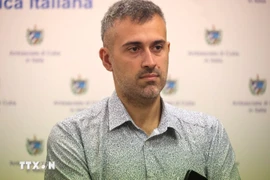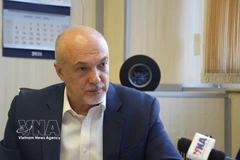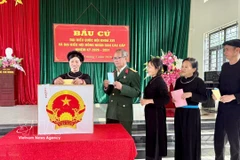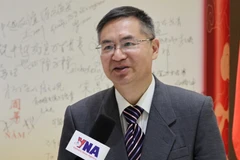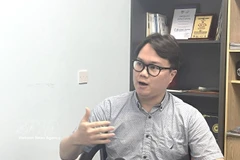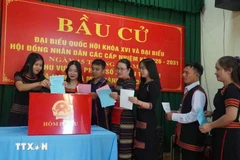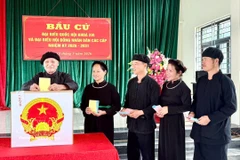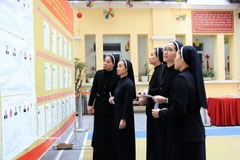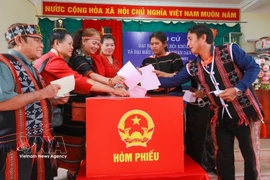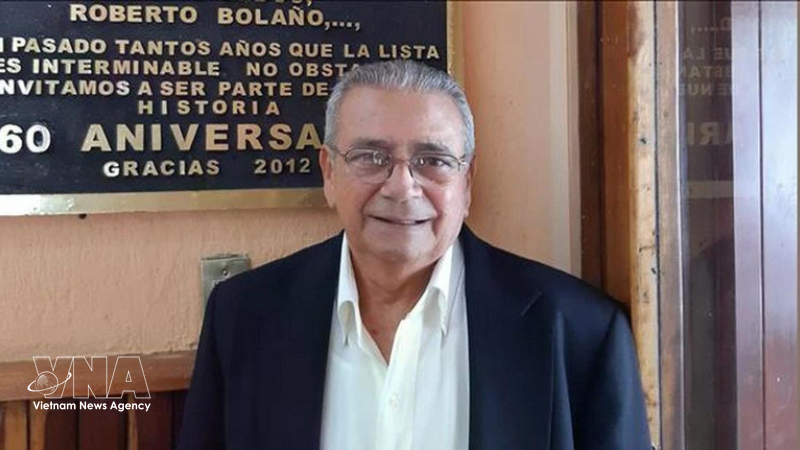
Havana (VNA) – Vietnam’s election of deputies to the 16th National Assembly and People’s Councils at all levels for the 2026–2031 tenure is an important event affirming and consolidating the power of the Vietnamese people while implementing the tasks set out by the 14th National Congress of the Communist Party of Vietnam (CPV), according to Cuban political scientist Luis Manuel Arce Isaac.
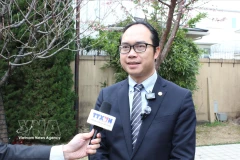
Talking to the Vietnam News Agency (VNA)'s resident correspondent in Havana, the Cuban expert described the election as a significant milestone, noting that since the country’s reunification, Vietnam has made continuous efforts to honour and strengthen the people’s power.
This power is expressed comprehensively and consistently, not only through representative democracy but also through mechanisms realised across the three branches of government. Among them, the legislative branch plays a key role in building and operating the institutional framework of the nation.
According to the expert, the decision to accelerate the election schedule was not made arbitrarily but was the result of careful consideration, stemming from important development goals that the country has set and is successfully pursuing step by step, helping Vietnam overcome obstacles on its path toward prosperity.
He noted that one of the most interesting aspects is that the election took place immediately after the CPV’s 14th National Congress, which mapped out the country’s economic, social, cultural and political development projects for the next five years and beyond. At the same time, the rapidly changing global context will inevitably affect Vietnam as it moves forward into a new era.
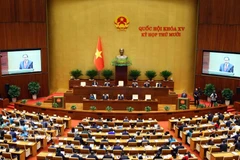
In that context, deputies elected to the NA and People’s Councils at all levels will play a key role in advancing the decisive development process outlined by the CPV at the 14th National Congress. The roadmap aims to transform the country into a developing nation with high income and eventually a developed one through high economic growth and improved competitiveness.
Arce Isaac expressed his belief that through their work and dedication, legislators will promote resolutions aimed at institutional progress, thereby renewing the drafting and implementation of laws. This will further shape a legal system that is democratic, fair, unified, transparent and feasible, meeting the aspirations of the Vietnamese people.
He stressed that lawmakers must carry out legislative work in a precise, transparent and creative manner, coordinating with other administrative bodies to unleash productive capacity and mobilise all development resources. Such efforts will help ensure freedom of business, property rights and equality among enterprises, while recognising the private sector as “an important driver” of the national economy, as identified by the CPV’s 14th National Congress.
The expert also said that Vietnam possesses the full potential to become not merely an “observer” but also a key actor in the current era of transformation, elaborating that parliamentary diplomacy can contribute significantly to the country’s comprehensive development as well as to that of other nations around the world.
Parliamentary diplomacy, he added, plays an important role in consolidating and strengthening the special solidarity and friendship between Vietnam and Cuba, a relationship founded by President Ho Chi Minh and Commander-in-Chief Fidel Castro and nurtured by generations of leaders and people of the two countries./.