Digital transformation helps shorten timeline, improve election quality: NA Vice Chairwoman

The use of digital platforms has facilitated many stages of the process, including candidate nominations and consultations. Candidates have been able to submit application dossiers electronically, which has made procedures more convenient and efficient.

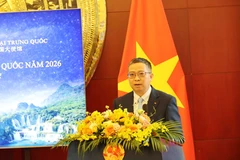
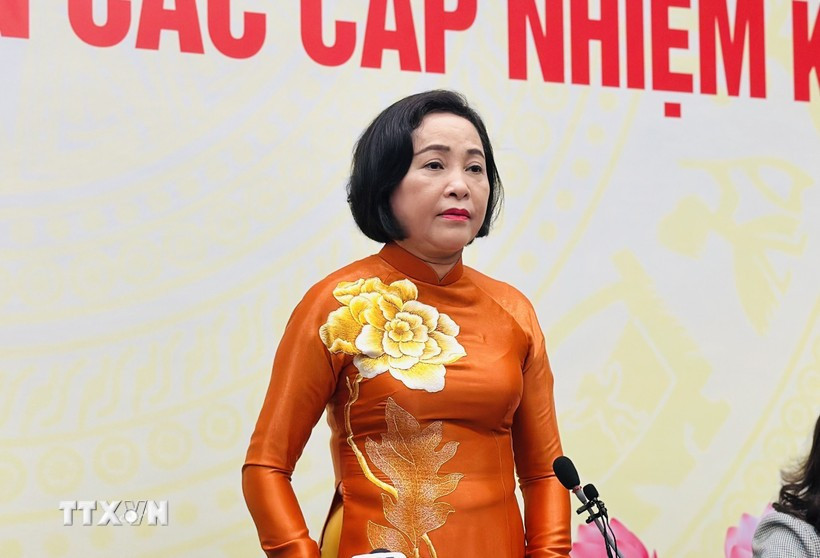
NA Vice Chairwoman Nguyen Thi Thanh speaks a press briefing about the progress of the 16th National Assembly (NA) and People’s Councils at all levels for the 2026–2031 tenure. (Photo: VNA)

Hanoi (VNA) – The application of digital transformation has helped streamline procedures, shorten the timeline, and enhance the quality of the election of deputies to the 16th National Assembly (NA) and People’s Councils at all levels for the 2026–2031 tenure, according to NA Vice Chairwoman Nguyen Thi Thanh.

NA Vice Chairwoman, who is also a member of the National Election Council, told the press that the most notable difference in this election compared with previous ones is the timeline, which was reduced by more than two months. Despite this adjustment, the established procedures and regulations governing the election were fully maintained, especially the three rounds of consultations and the requirements regarding personnel work.

Alongside the shorter timeframe, the effective application of digital transformation and information technology has played a key role in ensuring the election proceeds smoothly and in line with regulations.

According to Thanh, the use of digital platforms has facilitated many stages of the process, including candidate nominations and consultations. Candidates have been able to submit application dossiers electronically, which has made procedures more convenient and efficient.

tro-luc-quan-trong-cho-cong-tac-chuan-bi-bau-cu-8638454-7.jpg
Voters look up election-related information such as polling locations, candidate lists, candidate biographies, and action programs on the VNeID app. (Photo: VNA)

Digital tools have also been applied to voter registration, helping ensure the issuance of voter cards is both convenient and accurate.

Another new feature in this election is the combination of in-person and online voter meetings. This hybrid format enabled candidates to connect with voters more broadly and efficiently.

“Through online connections, candidates can interact with voters from multiple communes and wards simultaneously while presenting their action programmes,” Thanh said, adding that this approach allows voters to learn about candidates more easily without having to travel to each location.

The election took place shortly after the successful organisation of the 14th National Congress of the Communist Party of Vietnam, which has created a positive atmosphere across society and provided favourable conditions for the election’s organisation.

Preparations for candidate selection were carried out early and carefully, closely linked with preparations for Party congresses at all levels. The process followed strict guidelines regarding structure, standards, and composition to ensure balanced representation of different social groups while prioritising quality.

“We expect this election will select deputies of even higher quality who possess both capability and integrity,” Thanh said, expressing confidence that the new NA and People’s Councils will meet the country’s development and reform requirements in the coming period.

Regarding the next steps after polling day, Thanh said the immediate task is reviewing and announcing the election results. Thanks to the application of digital technology, the aggregation of results is expected to be completed quickly.

The election results are expected to be announced on March 22, after which they will be submitted to the National Election Council for official certification. A nationwide review of the election will be held, tentatively scheduled for April 3.

Preparations are also underway for the first sessions of the newly elected People’s Councils at all levels, while competent authorities are considering plans to convene the first sitting of the 16th NA in early April 2026 to carry out personnel work and other tasks./.
VNA

See more

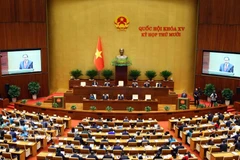
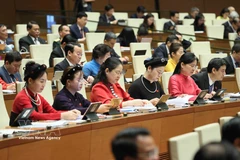
An overview of the opening of the 10th session of the 15th National Assembly. (Photo: VNA)

Indian scholar highlights Vietnamese NA’s legislative role and renovation

He noted that during its tenure, the legislature adopted 51 laws and 39 resolutions aimed at stabilising the national economy after the COVID-19 pandemic, reforming roughly 30% of the legal framework. Eight of the resolutions were normative, focusing on areas such as economic growth, education, healthcare and digital transformation.

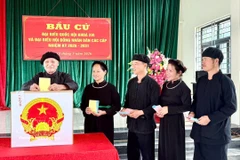
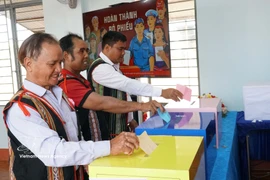
Tay ethnic voters in Na O hamlet of An Lac commune, Bac Ninh province, cast their ballots on March 15. (Photo: VNA)

Voter turnout reaches 99.64% as of 22:00 on March 15

Lao Cai was the locality that completed voting the earliest (at 17:45) and, together with the central city of Hue, was one of two out of 34 localities to reach 100% voter participation. Notably, Lao Cai province has 173 voters aged 100 and above (31 men and 142 women).

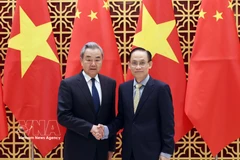
Vietnamese Politburo member and Minister of Foreign Affairs Le Hoai Trung (right) welcomes Chinese Politburo member and Minister of Foreign Affairs Wang Yi in Hanoi on March 15. (Photo: VNA)

Vietnamese, Chinese FMs agree to make new breakthroughs in substantive cooperation

Vietnam and China should meticulously prepare for coming visits and meetings at all levels while working with ministries, sectors, and localities to make new breakthroughs in substantive cooperation, thereby bringing the relationship between the two Parties and the two countries to a new level, their foreign ministers said.

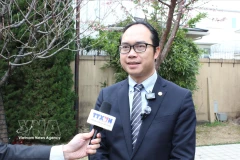
Dr. Nguyen Hong Son, Chairman of the Union of Vietnamese Associations in Japan (Photo: VNA)

Notable progress seen during legislature's 15th tenure

The overseas Vietnamese community always closely follows information related to the election and, where possible, will directly exercise their civic rights, said Dr. Nguyen Hong Son, Chairman of the Union of Vietnamese Associations in Japan.

Giulio Chinappi, Asia Regional Director of Italian publishing house Anteo Edizioni (Photo: VNA)

NA election ushers Vietnam into new era of rise: Italian expert

NA and People’s Council deputies must have strong political and moral qualities, professional competence, proven execution ability and a genuine commitment to public service. They must therefore serve as exemplary figures of integrity, responsibility and dedication to national interests and citizens’ well-being.

Soldiers examine ballot boxes before voting at a polling station in Truong Sa special zone, Khanh Hoa province. (Photo: VNA)

Voter turnout exceeds 80% nationwide by mid-afternoon

Many localities have recorded high voter turnout, particularly several northern mountainous provinces such as Lao Cai, Dien Bien, Lai Chau, and Tuyen Quang. Other localities, including Ha Tinh, Da Nang, Lang Son, Nghe An, and Thai Nguyen, have also reported a rate of more than 90%.

Pham Khanh Nam, Editor-in-Chief of Huong Viet Magazine in Germany (Photo published by VNA)

Voters place trust in new generation of representatives

The choosing of capable and dedicated representatives is expected to further strengthen public trust and lay a solid institutional foundation for Vietnam to advance towards rapid, sustainable development and deeper global integration in the coming period.

Ambassador of Timor Leste to Vietnam João Pereira (Photo: VNA)

Vietnam’s election marks peace, trust, democracy: Timor-Leste Ambassador

The representatives chosen through the 14th National Party Congress and the March 15 election will continue promoting the country's stature in the international arena and build on the foundation laid by earlier generations of Vietnamese leaders guided by President Ho Chi Minh’s thought, said Ambassador of Timor Leste João Pereira.

Beni Sukadis, Senior Coordinator at Indonesia’s Institute for Defence and Strategic Studies (Lesperssi), grants an interview to the Vietnam News Agency. (Photo: VNA)

Parliamentary diplomacy bolsters ASEAN cohesion: Indonesian expert

The Vietnamese legislature has been instrumental in shaping the legal foundations for economic growth, via the adoption and revision of laws governing investment, public–private partnerships, land management and digital governance as key steps in building a more stable regulatory environment, strengthening investor confidence and supporting Vietnam’s transition toward a market-oriented economy.