Parliamentary diplomacy bolsters ASEAN cohesion: Indonesian expert

The Vietnamese legislature has been instrumental in shaping the legal foundations for economic growth, via the adoption and revision of laws governing investment, public–private partnerships, land management and digital governance as key steps in building a more stable regulatory environment, strengthening investor confidence and supporting Vietnam’s transition toward a market-oriented economy.

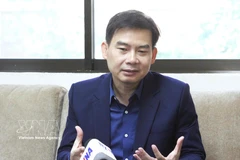
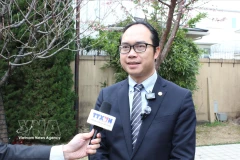
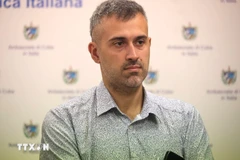
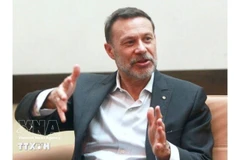
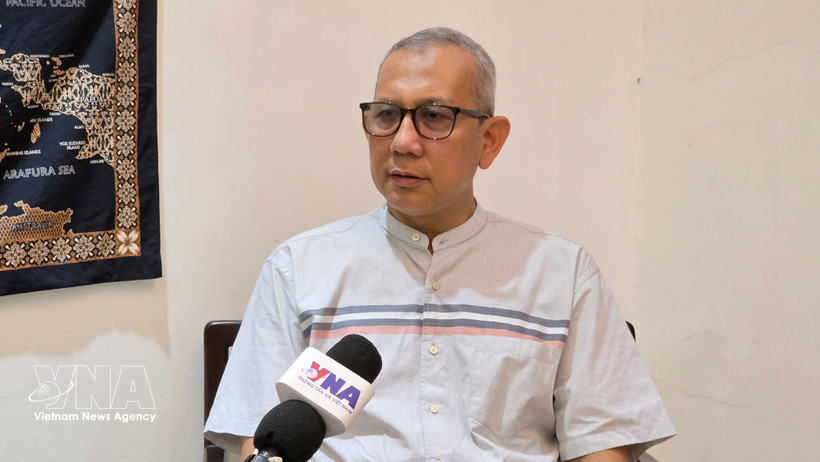
Beni Sukadis, Senior Coordinator at Indonesia’s Institute for Defence and Strategic Studies (Lesperssi), grants an interview to the Vietnam News Agency. (Photo: VNA)

Jakarta (VNA) – Beni Sukadis, Senior Coordinator at Indonesia’s Institute for Defence and Strategic Studies (Lesperssi), has underscored the growing role of Vietnam’s National Assembly (NA) and local authorities in driving socio-economic development and legal reform, saying parliamentary diplomacy is also helping reinforce ASEAN cohesion.

Talking to Vietnam News Agency (VNA) correspondents in Jakarta on the occasion of Vietnam’s election of deputies to the 16th NA and People’s Councils at all levels for the 2026–2031 tenure, Sukadis said the legislature has been instrumental in shaping the legal foundations for economic growth. He cited the adoption and revision of laws governing investment, public–private partnerships, land management and digital governance as key steps in building a more stable regulatory environment, strengthening investor confidence and supporting Vietnam’s transition toward a market-oriented economy.

At the provincial level, local administrations have taken an increasingly proactive approach to implementing development policies via competing to attract foreign direct investment (FDI), improving administrative services and accelerating infrastructure projects. Sukadis noted that close coordination between the NA and local authorities has reinforced Vietnam’s export-oriented development strategy, offering a model that could hold lessons for other countries while delivering tangible benefits for the economy and the public.

Reviewing the NA’s recent progress, the Indonesian expert pointed to greater transparency in parliamentary activities as a notable improvement. The live broadcasting of plenary debates, hearings and Q&A sessions with Government members, he said, reflects efforts to make decision-making more open and accountable, thereby strengthening public confidence.

He also highlighted the increasing professionalisation of deputies’ work. The NA has expanded the number of full-time legislators, helping clarify the division of responsibilities among committees and improve the quality of legislative scrutiny. Strengthening and broadening committees overseeing key economic sectors and specialised fields has further enhanced the legislature’s organisational structure and legislation effectiveness.

Another important development is the wider use of technology in the lawmaking process. Digital tools have been gradually introduced to support drafting, consultations and coordination among committees, improving connectivity and information access throughout the legislative cycle, particularly in areas related to investment and economic growth.

According to Sukadis, these advances have helped strengthen the legal framework while enhancing the capacity and efficiency of Vietnam’s NA.

Against the backdrop of global challenges, he noted that legislatures play a critical role in translating long-term national goals into concrete legal frameworks and budget priorities.

On parliamentary diplomacy, Sukadis said it serves as an important complement to state diplomacy and should be further strengthened within ASEAN. Through platforms such as the ASEAN Inter-Parliamentary Assembly (AIPA), regional legislatures can deepen consultations, exchange information, organise bilateral visits and foster dialogue aimed at aligning and harmonising regional legal frameworks. Such exchanges, he said, not only reinforce bilateral ties but also help build stronger institutional links across ASEAN.

As global geopolitical and economic dynamics continue to shift, Sukadis stressed that proactive legislatures will play an increasingly vital role in ensuring the stability, transparency and adaptability of national policy systems.

He added that Vietnam and Indonesia still have significant room to expand substantive parliamentary cooperation. Both sides could intensify information sharing and exchange experience in legislative work, oversight and decision-making on major national issues.

Capacity building for lawmakers and parliamentary staff was identified as a particularly promising area. Joint training programmes, thematic workshops, staff exchanges, and more frequent high-level visits and engagements between Vietnamese NA deputies and members of the Indonesian Parliament will help improve legislative performance while deepening the Comprehensive Strategic Partnership between the two countries./.
VNA

See more

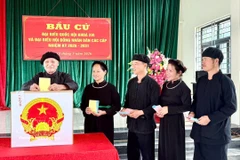
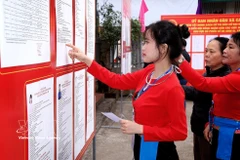
Tay ethnic voters in Na O hamlet of An Lac commune, Bac Ninh province, cast their ballots on March 15. (Photo: VNA)

Voter turnout reaches 99.64% as of 22:00 on March 15

Lao Cai was the locality that completed voting the earliest (at 17:45) and, together with the central city of Hue, was one of two out of 34 localities to reach 100% voter participation. Notably, Lao Cai province has 173 voters aged 100 and above (31 men and 142 women).

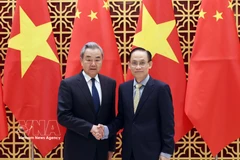
Vietnamese Politburo member and Minister of Foreign Affairs Le Hoai Trung (right) welcomes Chinese Politburo member and Minister of Foreign Affairs Wang Yi in Hanoi on March 15. (Photo: VNA)

Vietnamese, Chinese FMs agree to make new breakthroughs in substantive cooperation

Vietnam and China should meticulously prepare for coming visits and meetings at all levels while working with ministries, sectors, and localities to make new breakthroughs in substantive cooperation, thereby bringing the relationship between the two Parties and the two countries to a new level, their foreign ministers said.

Dr. Nguyen Hong Son, Chairman of the Union of Vietnamese Associations in Japan (Photo: VNA)

Notable progress seen during legislature's 15th tenure

The overseas Vietnamese community always closely follows information related to the election and, where possible, will directly exercise their civic rights, said Dr. Nguyen Hong Son, Chairman of the Union of Vietnamese Associations in Japan.

Giulio Chinappi, Asia Regional Director of Italian publishing house Anteo Edizioni (Photo: VNA)

NA election ushers Vietnam into new era of rise: Italian expert

NA and People’s Council deputies must have strong political and moral qualities, professional competence, proven execution ability and a genuine commitment to public service. They must therefore serve as exemplary figures of integrity, responsibility and dedication to national interests and citizens’ well-being.

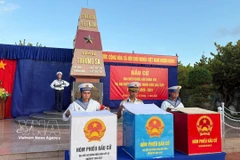
Soldiers examine ballot boxes before voting at a polling station in Truong Sa special zone, Khanh Hoa province. (Photo: VNA)

Voter turnout exceeds 80% nationwide by mid-afternoon

Many localities have recorded high voter turnout, particularly several northern mountainous provinces such as Lao Cai, Dien Bien, Lai Chau, and Tuyen Quang. Other localities, including Ha Tinh, Da Nang, Lang Son, Nghe An, and Thai Nguyen, have also reported a rate of more than 90%.

Pham Khanh Nam, Editor-in-Chief of Huong Viet Magazine in Germany (Photo published by VNA)

Voters place trust in new generation of representatives

The choosing of capable and dedicated representatives is expected to further strengthen public trust and lay a solid institutional foundation for Vietnam to advance towards rapid, sustainable development and deeper global integration in the coming period.

Ambassador of Timor Leste to Vietnam João Pereira (Photo: VNA)

Vietnam’s election marks peace, trust, democracy: Timor-Leste Ambassador

The representatives chosen through the 14th National Party Congress and the March 15 election will continue promoting the country's stature in the international arena and build on the foundation laid by earlier generations of Vietnamese leaders guided by President Ho Chi Minh’s thought, said Ambassador of Timor Leste João Pereira.

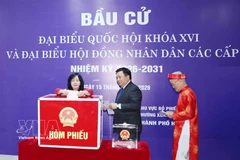
Politburo member and President of the Vietnam Fatherland Front Central Committee Bui Thi Minh Hoai ̣(first, left) casts her ballot alongside other voters at Polling Station No. 7 of Constituency No. 2 in Thanh Xuan ward, Hanoi, on March 15. (Photo: VNA)

Party, State leaders join Hanoi voters in Election Day

The election is taking place as the country continues efforts to advance renewal and development, with the selection of capable representatives expected to contribute to building a socialist rule-of-law state and promoting socio-economic progress.

Officers, soldiers and residents in the Truong Sa special zone come to cast their ballots at Polling Station No.1 on March 15. (Photo: VNA)

Voters in Truong Sa special zone join nationwide election day

Voters in Khanh Hoa will elect 12 deputies to the 16th NA from a list of 20 candidates; 67 deputies to the provincial People’s Council for the 2026–2031 term from 108 candidates; and 1,392 deputies to commune- and ward-level People’s Councils from 2,317 candidates.